Comment

Aria Opens a New Chapter with Rectify at Soho Album Launch

For an artist who has spent the past few years finding her voice between soul, jazz and contemporary R&B, Aria’s debut album Rectify arrived with the feeling of a milestone — and its London launch was appropriately personal.

On 21 September 2026, the London-based singer-songwriter returned to PizzaExpress Live Soho, the very venue where she first performed live in London three years earlier.This time, however, she was there to introduce a full album of her own.

That sense of coming full circle was impossible to miss.

Released through Sarah Gillespie’s Pastiche Records, Rectify brings together nine tracks shaped by relationships, desire, vulnerability, anger and self-discovery. The record sits comfortably in the space between neo-soul and jazz, while leaving plenty of room for contemporary R&B influences and Aria’s instinct for storytelling.

And this is very much a collaborative record. Chris Montague features prominently on guitar, while the album’s wider musical cast includes keyboard players William Hobson, Ross Stanley and James Pearson, bassist Harry Gould, drummer Daniel Hester, trumpeter Poppy Daniels and saxophonist Trish Clowes. Backing vocalists Elisha Zion, Siobhan Prince and Lauren Fretwell also play an important role in the album’s rich vocal sound.
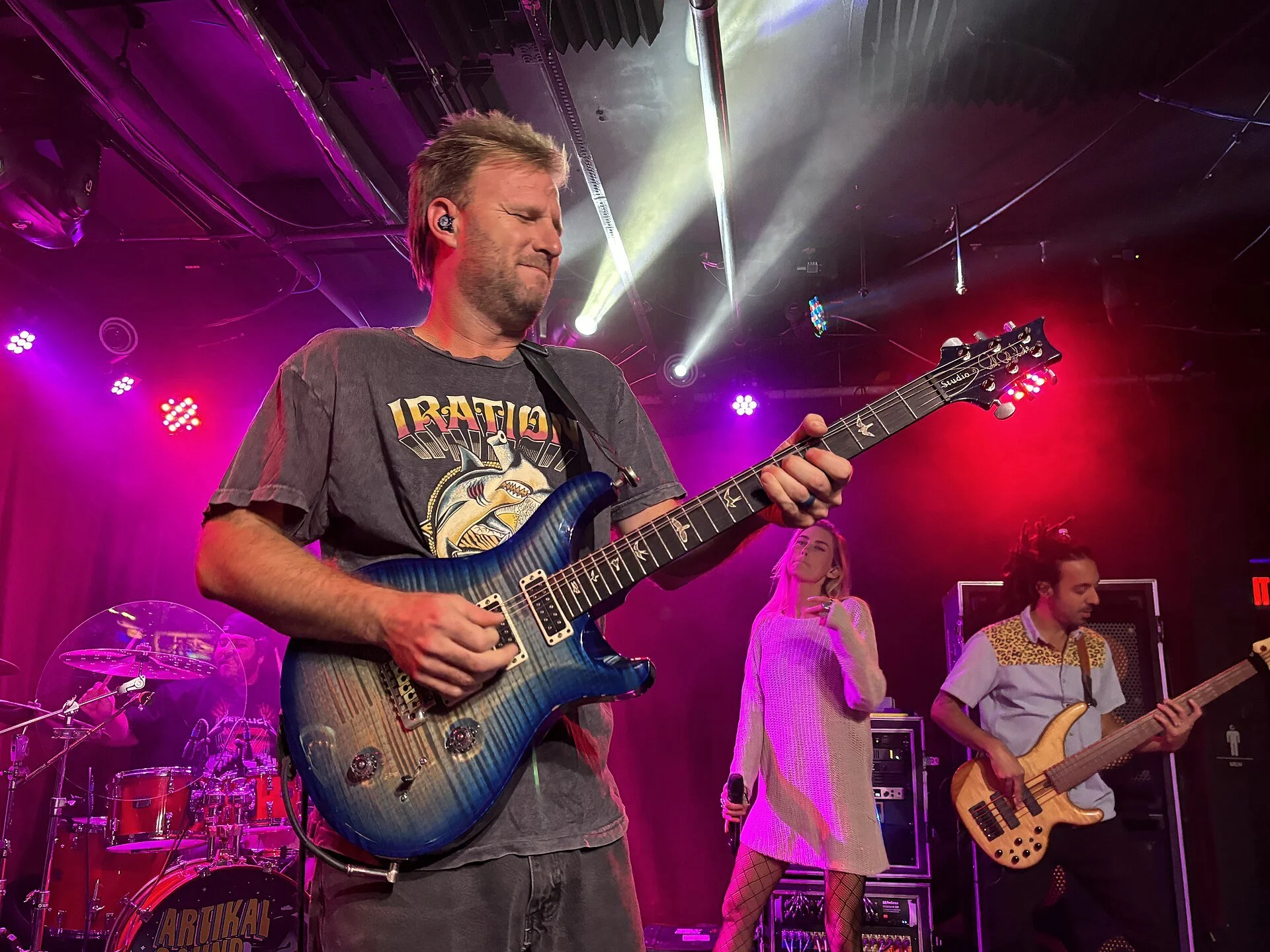
Chris Montague performing with Artikal Sound System at Wonder Bar, Asbury Park, 11 October 2024. Photograph by Constantino14, via Wikimedia Commons. CC BY-SA 4.0.

A live sound with plenty of soul

The Soho launch demonstrated why the album’s live dimension matters.

Opening with “Resentment”, Aria moved through original material including “Angel”, “Kiss Me”, “Only Time I Get”, “Belong” and the album’s title track. “Rectify” itself arrived in the second set as a slow-burning, funky number, with flute and trumpet adding extra colour to the groove.

The performance also made room for songs that have influenced Aria, including Erykah Badu, Lauryn Hill and Jill Scott, alongside Bonnie Raitt’s “Something To Talk About” andEdith Piaf’s “La Vie En Rose”. Rather than feeling like distractions from the album, thecovers helped underline the musical territory Aria is drawing from.

From Rectify Your Soul to Rectify

The album represents a substantial step forward from Aria’s earlier releases. Her debut single, “Rectify Your Soul”, arrived in August 2024, followed by “Lover Mine” and, in 2025, “It’s All Your Fault”. The latter was subsequently named Jazz FM’s Track of the Week and received BBC Radio 2 support.

“Rectify Your Soul” also established the collaborative approach that runs through the wider album. Recorded at Eastcote Studios with live musicians playing together, theproject was produced with Sarah Gillespie and Polly Gibbons, with Grammy-winningengineers George Murphy and Andrew Tulloch involved in the recording and masteringprocess.

That live-in-the-room philosophy seems particularly important to understanding Rectify. This isn't a project built around stripping everything back to a solitary vocal and studio polish. The arrangements leave space for musicians to interact, while Aria remains at the centre.

The next stop: London Jazz Festival

The Soho launch is only the beginning of the album's live story.

Aria is scheduled to bring Rectify to the 2026 EFG London Jazz Festival on 17 November at Crazy Coqs – Live At Zédel. The festival describes the performance as a celebration of the debut album, with Aria fronting her band for an evening combining neo-soul, jazz and contemporary songwriting.

After three years of developing her sound, Rectify gives Aria a proper introduction: soulful without being confined to soul, jazz-aware without becoming a conventional jazzrecord, and built around songs that are clearly personal to their writer and performer.

The Soho launch may have marked the album's arrival, but Rectify feels more like the opening chapter of something considerably bigger.
Comment

Comment

Kai Hansen Unleashes Born With A Hammer: A Wild, Genre-Hopping Metal Workout

Kai Hansen has spent four decades helping define European power metal. On his new solo album, he sounds less interested in preserving that legacy than smashing it open and seeing what happens.

There are musicians who carefully tend their legacy, and then there is Kai Hansen. Afterhelping establish Helloween and later building Gamma Ray into one of Germany's defining metal acts, Hansen could be forgiven for sticking to the formula that made his name.

Instead, Born With A Hammer goes wandering.

Released on 18 September 2026 through earMUSIC, the ten-track album is Hansen'sfirst solo studio album since XXX – Three Decades in Metal, released in 2016 under the Hansen & Friends banner. The official announcement describes the new record as drawing together heavy metal, punk attitude, hard rock, melodic hooks and guitar-driven energy — and that description turns out to be remarkably accurate.

The Hansen DNA is still all over it

The opening track, “Feeding The Beast,” initially takes a surprisingly restrained route before the guitars kick the door in. It is a useful introduction to the album because Hansen's familiar melodic instincts are still there, but the arrangements aren't simply trying to recreate classic Helloween or Gamma Ray.

That distinction matters.

Hansen co-founded Helloween in the 1980s and left the band in 1989, subsequently forming Gamma Ray. Gamma Ray's own history confirms that Heading for Tomorrowarrived in January 1990 and established the band's melodic, bombastic power-metal approach.

More than three decades later, Born With A Hammer feels like Hansen giving himself permission to step sideways.

“Welcome To Life” brings a punkier attitude and even an unexpected reggae/ska-flavoured passage, while “Don't Care” leans into a playful, rebellious energy. “Wait And See” heads somewhere darker, with a heavier, more mechanical feel. Those stylistic shifts are also reflected across contemporary reviews, which variously identify punk, hard rock, industrial textures, pop elements and traditional metal in the album's musical palette.

And then there is the title track.

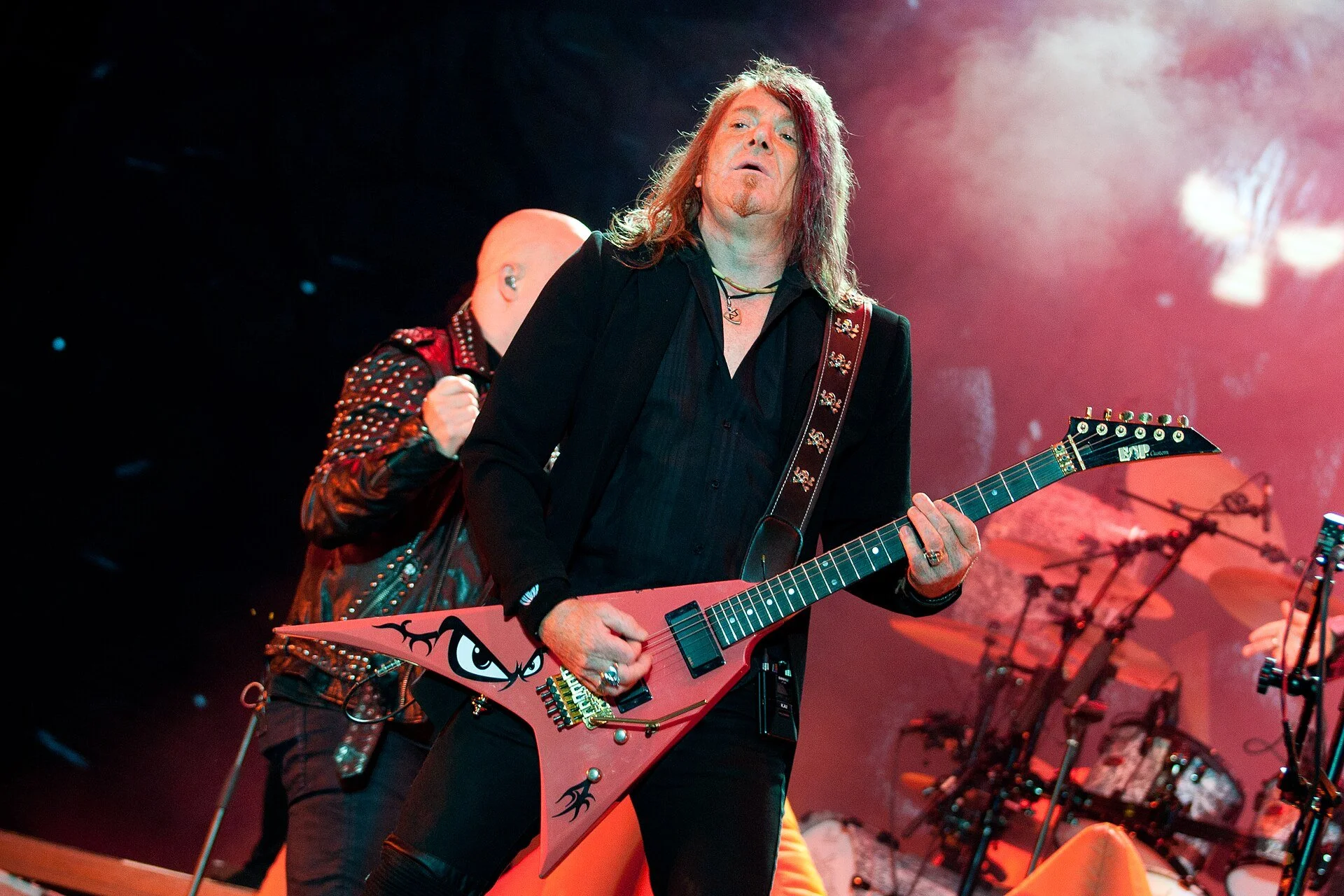
Helloween-Kai Hansen by vSpectrum.jpg, via Wikimedia Commons, licensed CC BY-SA 4.0

Eight minutes of glorious excess

At more than eight minutes, “Born With A Hammer” is the album's great sprawling centrepiece. It begins comparatively gently, develops through several contrasting passages and eventually embraces a distinctly theatrical scale, with multiple reviewers noting the influence of Queen.

It is precisely the sort of track that could have become hopelessly overstuffed in lessconfident hands. Instead, Hansen uses the extended running time to let the song breathe, change direction and indulge in the sort of grand melodic gestures that havealways been part of his musical vocabulary.

Elsewhere, “I.D.G.A.F.” is one of the record's biggest left turns, while “End Of TheRoad” provides something closer to the classic Hansen sound. “Triple Trouble” features Hansen's son Tim Hansen on guitar, and the album's core lineup also includesguitarist/producer Eike Freese, Alexander Dietz of Heaven Shall Burn and Dan Wildingof Carcass on drums.

Not another Keeper — and that's the point

There is an obvious temptation with any new Kai Hansen record to measure it againstthe history of Helloween and Gamma Ray. After all, Hansen was part of the earlyHelloween lineup and contributed to the band's formative records before departing, while Gamma Ray went on to become a major force in German power metal.

Born With A Hammer makes that comparison less useful than it might initially seem.

This isn't an attempt to recreate Keeper of the Seven Keys. Nor is it simply a Gamma Ray album wearing a different jacket. Instead, Hansen throws familiar heavy-metal muscle into a much broader musical playground. The result moves between traditional metal, power metal, hard rock and punk-flavoured material, occasionally adding strangertextures along the way.

That doesn't mean every experiment is destined to land perfectly. Reviews havedisagreed about the album's consistency, with some finding its stylistic variety exhilarating and others feeling that the different ideas occasionally pull against each other.

But perhaps that's what makes the record interesting.

After spending so much of his career helping define what European power metal could sound like, Hansen doesn't seem particularly interested in following his own rulebook.

The hammer is still there. He's just decided to hit a few different things with it.

Comment

Comment

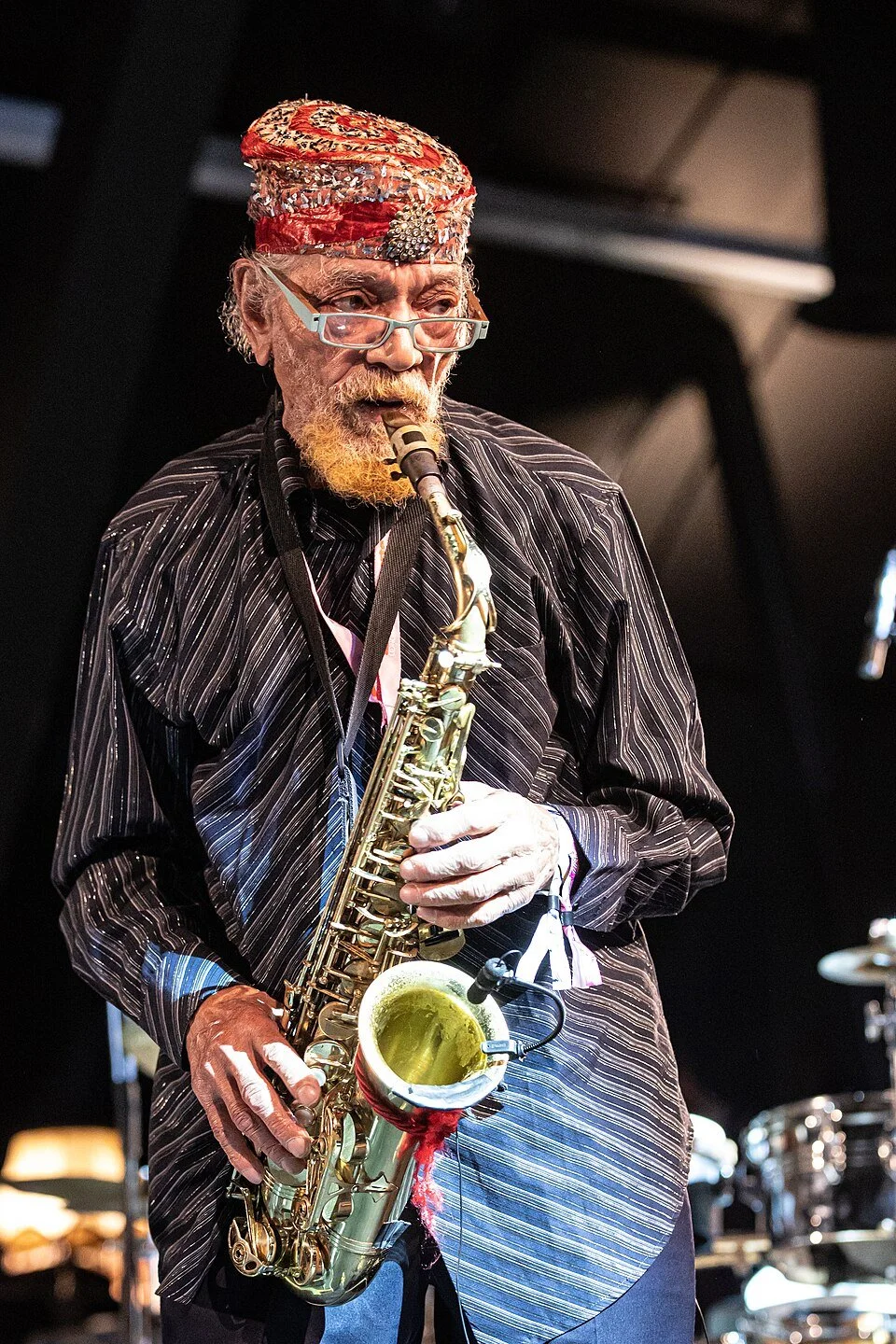
Marshall Allen’s 101: An Audio Odyssey — Cosmic Jazz Still Refuses to Stand Still

Released by Ropeadope on 24 July 2026, the album finds the veteran alto saxophonist and leader of the Sun Ra Arkestra surrounded by a remarkably eclectic cast, including Jamaaladeen Tacuma, Nels Cline, Immanuel Wilkins, Braxton Bateman and King Noli. Allen contributes alto saxophone, electronic wind instrument (EWI) and kora, whileTacuma serves as a central musical force and producer.

And if that lineup sounds like the ingredients for a beautifully unpredictable session, that's because it is.

A century of music, but no looking backwards

Allen was born in Louisville, Kentucky, on 25 May 1924, and became a member of Sun Ra's Arkestra in the late 1950s. He has led the ensemble since 1995, following the deaths of Sun Ra and then John Gilmore. The Sun Ra Arkestra's own biography lists Allen as a multi-instrumentalist who works across alto saxophone, flute, clarinet, oboe, kora and electronic wind instruments.

That history is impossible to ignore on 101, but the album doesn't behave like a museum piece. Instead, it feels like Allen is taking everything he's accumulated over thosedecades and throwing it into a new laboratory.

The record's eleven tracks move between free improvisation, funk, electronic textures, avant-garde jazz and something considerably harder to pin down. The official tracklist runs from the opening “Bass Thrust” and “Slingshot Effect” through “The Vernacular of the Cosmic,” “Well of Being,” “The Deepest Love,” “Extraterrestrial Groove,” “Funky Robot,” “Cosmic String Slinger,” “Meteor Gathering” and the closing“Ancestral Astral Traveler.”

It's an album that repeatedly changes shape underneath you.

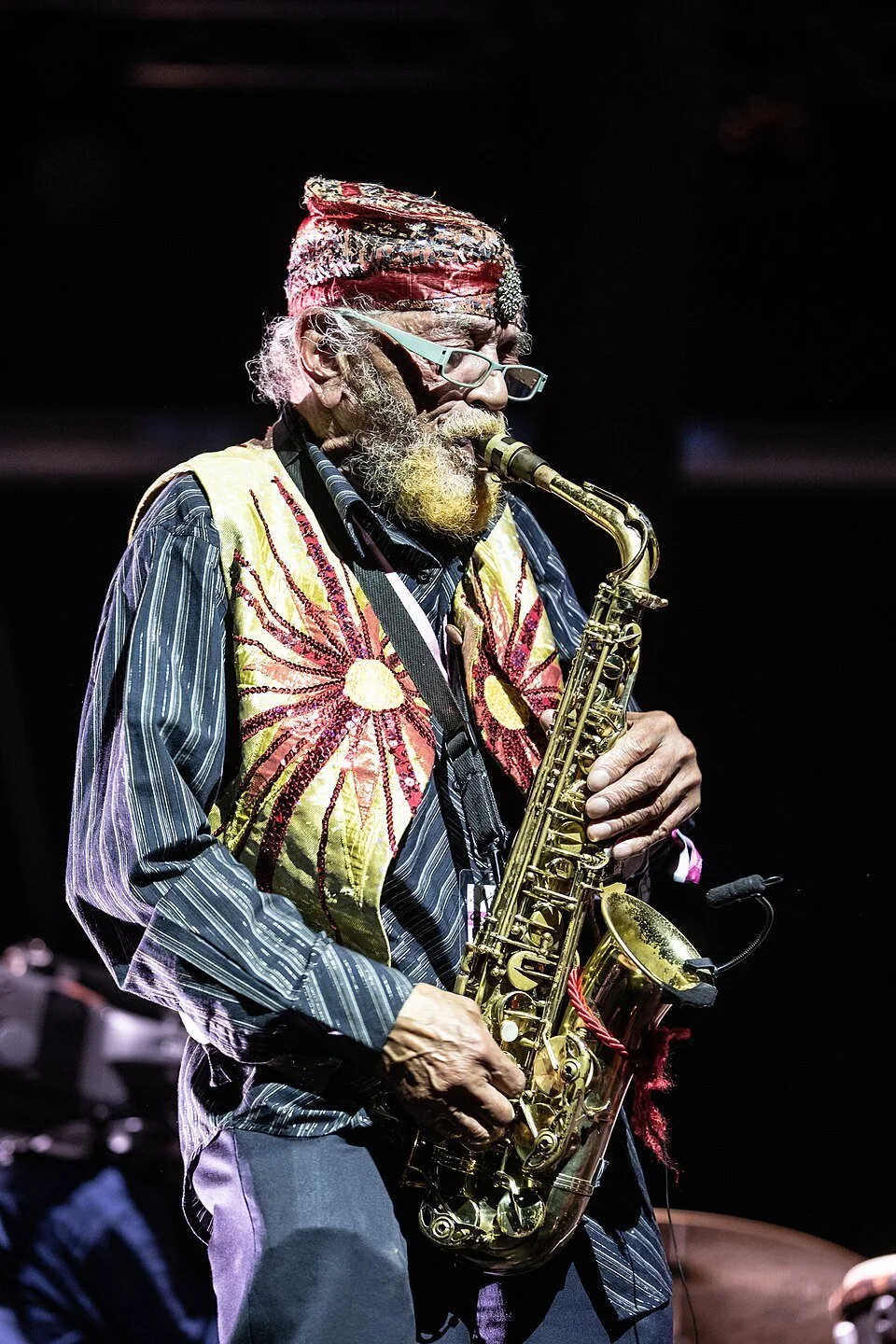
Image credit: Marshall Allen at the Moers Festival, 7 June 2019. Photo by Harald Krichel. Licensed under Creative Commons Attribution-ShareAlike 3.0 Unported (CC BY-SA 3.0). Via Wikimedia Commons.

Big Ears, big ideas

One of the most intriguing parts of the story is how the project came together.

According to Ropeadope, a last-minute cancellation at the Big Ears Festival created an unexpected opportunity for Tacuma and a group of musicians to get into the studio. Nels Cline, Immanuel Wilkins, Braxton Bateman and King Noli were among those involved, with the resulting recordings subsequently developed further with Allen and additional musicians.

A review in PostGenre similarly reports that much of the material originated around the 2025 Big Ears Festival in Knoxville, with further production work taking place afterwards.

That spontaneous beginning makes sense when you hear the music. 101 doesn't sound like a project assembled around a rigid master plan. It sounds like musicians being given enough room to collide, react, disappear and suddenly reappear somewhere completely unexpected.

“Bass Thrust”, for example, places Allen alongside Tacuma and Wilkins, while Cline and Malcolm Charles contribute to the surrounding electronic and rhythmic landscape. Wilkins also switches instruments elsewhere on the album, adding another layer to an already unusually fluid set of combinations.

Then there's “The Deepest Love,” which brings vocalist Tara Middleton into the picture. The track's more recognisable song shape provides a fascinating contrast with Allen's increasingly otherworldly saxophone work.

The Allen effect

Perhaps the most remarkable thing about 101: An Audio Odyssey is that Allen's age is never the musical point.

He turned 100 in 2024 and 102 in May 2026, but the record isn't constructed aroundnostalgia or reverence. His playing remains part of an active musical conversation, rather than an archival footnote. His EWI work can sound startlingly abrasive; his alto can slice through dense arrangements; and on the closing “Ancestral Astral Traveler”, he plays kora while Middleton contributes vocals.

That final appearance on kora is particularly fitting. The National Endowment for the Arts notes that Allen constructed his own kora and has long explored connections betweenavant-garde jazz and traditional African music.

Image credit: Marshall Allen at the Moers Festival, 7 June 2019. Photo by Harald Krichel. Licensed under Creative Commons Attribution-ShareAlike 3.0 Unported (CC BY-SA 3.0). Via Wikimedia Commons.

It's another reminder that Allen's musical universe has never really respected genreboundaries.

And perhaps that's the real secret of 101. Rather than attempting to recreate the sound of Sun Ra's Arkestra, or present Allen as a relic of a particularly adventurous period in jazz history, the album keeps asking what happens next.

Tacuma's electric bass supplies muscular propulsion. Cline brings guitar textures that can be simultaneously melodic and abrasive. Wilkins moves between roles with remarkable flexibility. Around them, Allen seems entirely at home amid electronics, funk grooves, open-ended improvisation and cosmic abstraction.

The result is a record that feels less like a retrospective than another chapter.

101: An Audio Odyssey is out now via Ropeadope, and its eleven-track journey suggests that, for Marshall Allen, the spaceways remain very much open.

Comment

Comment

Andy Sheppard’s Salt Catchers: A Quietly Powerful New Chapter in the ECM Story

There is something wonderfully unhurried about Andy Sheppard’s latest project. Rather than chasing volume, virtuosity or obvious drama, Salt Catchers settles into the spaces between notes — an intimate new trio recording that brings the British saxophonist together with Italian pianist Rita Marcotulli and French double bassist Michel Benita.

Released by ECM on 11 September 2026, the album was recorded in March 2025 at the Auditorio Stelio Molo RSI in Lugano, Switzerland, with Manfred Eicher producing. It is Sheppard’s latest ECM project and introduces a trio whose chemistry is built around melody, atmosphere and close musical conversation.

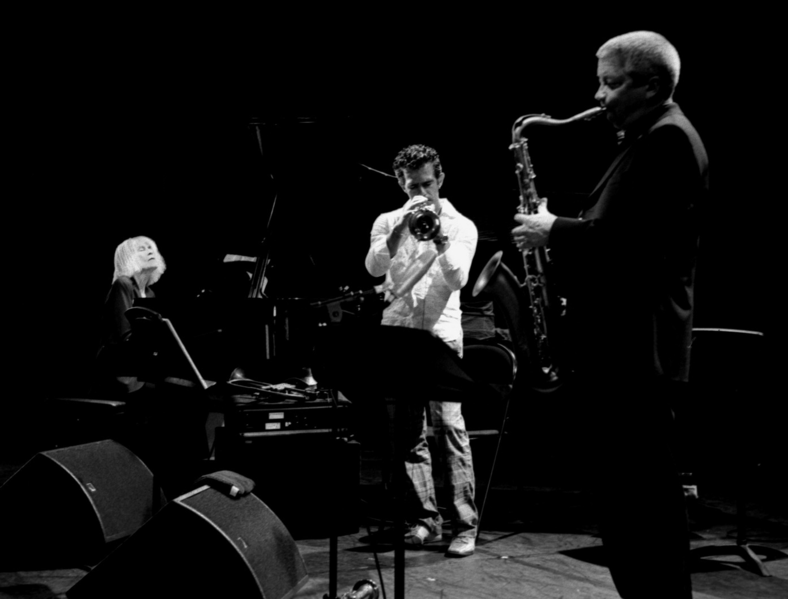
Image credit: Adam Cuerden, Paolo Fresu, Carla Bley e Andy Sheppard, Wikimedia Commons. CC BY-SA 3.0.

Three musicians, one remarkably spacious sound

The most striking thing about Salt Catchers is its instrumentation. There are no drums here. Instead, Sheppard’s tenor and soprano saxophones, Marcotulli’s piano and Benita’s double bass create an unusually open sonic landscape, allowing individual phrases to hang in the air before another player answers.

That spaciousness is very much in keeping with Sheppard’s ECM work, but this is notsimply a continuation of one of his earlier groups. Marcotulli and Benita are musicians Sheppard has known for a long time and worked with in live settings, although Salt Catchers marks the first time the three have recorded together as a collective.

The album contains nine tracks, eight written by Sheppard and one — the beautifully understated “Lawns” — by the late American composer and pianist Carla Bley. The remaining programme includes the title track alongside “Elevation”, “Encantos”, “Draw You In Stars”, “This Too – Three Hills”, “Salgado”, “Those That Left” and “Irene”.

A familiar musical connection

Bley’s presence on Salt Catchers carries particular resonance. Sheppard spent decadesworking with Bley and bassist Steve Swallow, recording a series of celebrated trio albums including Trios, Andando el Tiempo and Life Goes On. “Lawns” therefore placesa small but significant thread of that history inside this new trio.

It also makes Salt Catchers feel less like a reset than another chapter in Sheppard’s long-running interest in lyrical, highly conversational jazz. His ECM catalogue has previously taken him through the exploratory Trio Libero, the Andy Sheppard Quartet and various collaborations with Bley and Swallow. The new recording pares the formatback even further, giving the music plenty of room to breathe.

And Marcotulli is hardly a newcomer to Sheppard's musical world. The pair have collaborated previously, including on recordings such as Koine, On the Edge of a PerfectMoment and Us and Them. Her long experience as a pianist and composer gives the trio another distinctive melodic voice rather than simply a conventional rhythm-section role.

Rita Marcotulli. Image credit: Hreinn Gudlaugsson, Wikimedia Commons, CC BY 4.0.

An album built on restraint

The title track gives the record its centre of gravity, but the overall impression is lessabout one grand statement than a sequence of carefully balanced encounters. ECM describes the music as characterised by melodic beauty, delicate harmony and thoughtful interplay — a description that fits the drumless configuration particularly well.

There is also a sense of continuity in the recording location. Sheppard has repeatedly returned to the Auditorio Stelio Molo RSI in Lugano for important ECM sessions, including Trio Libero and other projects. The hall has consequently become part of the sonic geography surrounding some of his most intimate recordings.

Salt Catchers arrives, then, as a record concerned with detail rather than spectacle. Sheppard’s saxophone remains the unmistakable focal voice, but Marcotulli and Benita are never reduced to accompaniment. The three musicians operate more like three sides of the same conversation — sometimes answering, sometimes shadowing, sometimes simply allowing silence to do part of the work.

For listeners who enjoy their jazz spacious, melodic and finely textured, Salt Catchersoffers another intriguing entry in Andy Sheppard’s ECM journey — and a meeting of three musicians whose shared history finally gets the recording it has been waiting for.

Comment

Comment

A Night In Texas Drag Deathcore Into Its Bleakest Territory Yet

There are few bands in modern deathcore who seem quite as comfortable staring directly into the abyss as A Night In Texas. On The Darkest Side Of Humanity, the Australian outfit don't simply turn up the distortion and start swinging the breakdown hammer. They go looking for the uglier corners of the human experience — mortality, suffering, instinct, exploitation and the darker impulses that sit beneath civilisation — and build a suitably monstrous soundtrack around them.

Due for release on September 4, 2026 through Unique Leader Records, the album is the band's fifth full-length and follows 2024's Digital Apocalypse. The record also marks the first A Night In Texas album to feature drummer Chris Whitbread, who joined the lineup during 2026. The current quartet is completed by vocalist Sam Cameron, guitarist Cory Judd and guitarist Thomas (Tommy) Williams, with David Finlay also credited in recent band lineups.

If the title sounds like a warning, the music backs it up.

From the opening moments of “Oblivion's Dominion”, A Night In Texas establish a world where atmosphere matters almost as much as sheer violence. The technical guitar work is fast, intricate and punishing, but it is the contrast between claustrophobic atmosphere and sudden eruptions of brutality that gives the record much of its character. MetalTalk described the album as a return to the ferocity of the band's earlier work, while retaining the technical precision that has become central to their identity.

Then comes “Rot From Within”, and the gloves are very firmly off.

This is where the band's technical deathcore credentials really come to the foreground. Rapid-fire guitars, hyperactive drumming and Cameron's extreme vocal range collide with the kind of breakdown that sounds engineered specifically to turn a pit into a demolition site. It is intricate without becoming sterile, and brutally physical without reducing everything to a sequence of predictable chugs.

That balance has been an important part of A Night In Texas since the band's early records. Formed in Cairns in 2009 before relocating to Brisbane, the group built its reputation through a particularly technical strain of deathcore, with The God Delusionand Global Slaughter establishing a taste for blistering tempos, intricate riffing, savage vocals and bleak subject matter. Their 2021 double album The Divine Dichotomyexpanded that approach before Digital Apocalypse pushed into a more futuristic, cybernetic world.

The Darkest Side Of Humanity feels like a different kind of darkness.

Take “Metastatic Misery”, the album's first single. Beneath the relentless blast beats and suffocating guitars is a genuinely grim concept: the song examines the commercialisation of disease and the way human suffering can become entangled with profit. Rather than using darkness merely as an aesthetic, A Night In Texas are aiming their brutality at something recognisably human.

That idea appears to permeate the album. The ten-track sequence moves through themes of death, suffering, mortality, deception and primal human behaviour, giving the record a conceptual weight that goes beyond simply being another exercise in extreme-metal excess. The track list runs from “Oblivion's Dominion” through “Rot From Within”, “Fed To Death”, “Metastatic Misery”, “Evolved From Hate”, “When The Sun Burns Out” and “A Primal Conditioning”, before closing with “The Chronicles Of Nihilism”, “The Infinite Maw” and the title track.

And there are some particularly interesting names lurking in the credits.

Former A Night In Texas vocalist Rheese Peters returns for “The Chronicles Of Nihilism”, while Ryan Vail of Synestia/Larcenia Roe appears on “The Infinite Maw”. Those guest appearances add another layer to a record already designed to sound cinematic and enormous.

Behind the desk, guitarist Cory Judd takes production duties, while Christian Donaldson handles the mix and mastering. Donaldson's work with extreme-metal heavyweights including Cryptopsy, Ingested and Despised Icon makes him a particularly appropriate choice for a record that needs to retain both microscopic technical detail and devastating low-end impact.

Early reviews suggest the gamble has paid off. MetalTalk praised the record's technical musicianship, symphonic touches and relentless aggression, highlighting tracks including “Rot From Within”, “Fed To Death”, “When The Sun Burns Out” and the title track. Another review noted the way the band combines precision with an oppressive, contemporary deathcore sound rather than relying purely on breakdowns.

The result is an album that understands something fundamental about extreme metal: heaviness isn't always about playing faster or tuning lower. Sometimes it is about creating an atmosphere so bleak that the listener feels trapped inside it.

A Night In Texas have spent more than a decade sharpening that weapon. With The Darkest Side Of Humanity, they appear to have found an especially vicious target — humanity itself.

And judging by the evidence so far, they aren't interested in looking away.

Comment