
Released by Ropeadope on 24 July 2026, the album finds the veteran alto saxophonist and leader of the Sun Ra Arkestra surrounded by a remarkably eclectic cast, including Jamaaladeen Tacuma, Nels Cline, Immanuel Wilkins, Braxton Bateman and King Noli. Allen contributes alto saxophone, electronic wind instrument (EWI) and kora, whileTacuma serves as a central musical force and producer.
And if that lineup sounds like the ingredients for a beautifully unpredictable session, that's because it is.
A century of music, but no looking backwards
Allen was born in Louisville, Kentucky, on 25 May 1924, and became a member of Sun Ra's Arkestra in the late 1950s. He has led the ensemble since 1995, following the deaths of Sun Ra and then John Gilmore. The Sun Ra Arkestra's own biography lists Allen as a multi-instrumentalist who works across alto saxophone, flute, clarinet, oboe, kora and electronic wind instruments.
That history is impossible to ignore on 101, but the album doesn't behave like a museum piece. Instead, it feels like Allen is taking everything he's accumulated over thosedecades and throwing it into a new laboratory.
The record's eleven tracks move between free improvisation, funk, electronic textures, avant-garde jazz and something considerably harder to pin down. The official tracklist runs from the opening “Bass Thrust” and “Slingshot Effect” through “The Vernacular of the Cosmic,” “Well of Being,” “The Deepest Love,” “Extraterrestrial Groove,” “Funky Robot,” “Cosmic String Slinger,” “Meteor Gathering” and the closing“Ancestral Astral Traveler.”
It's an album that repeatedly changes shape underneath you.
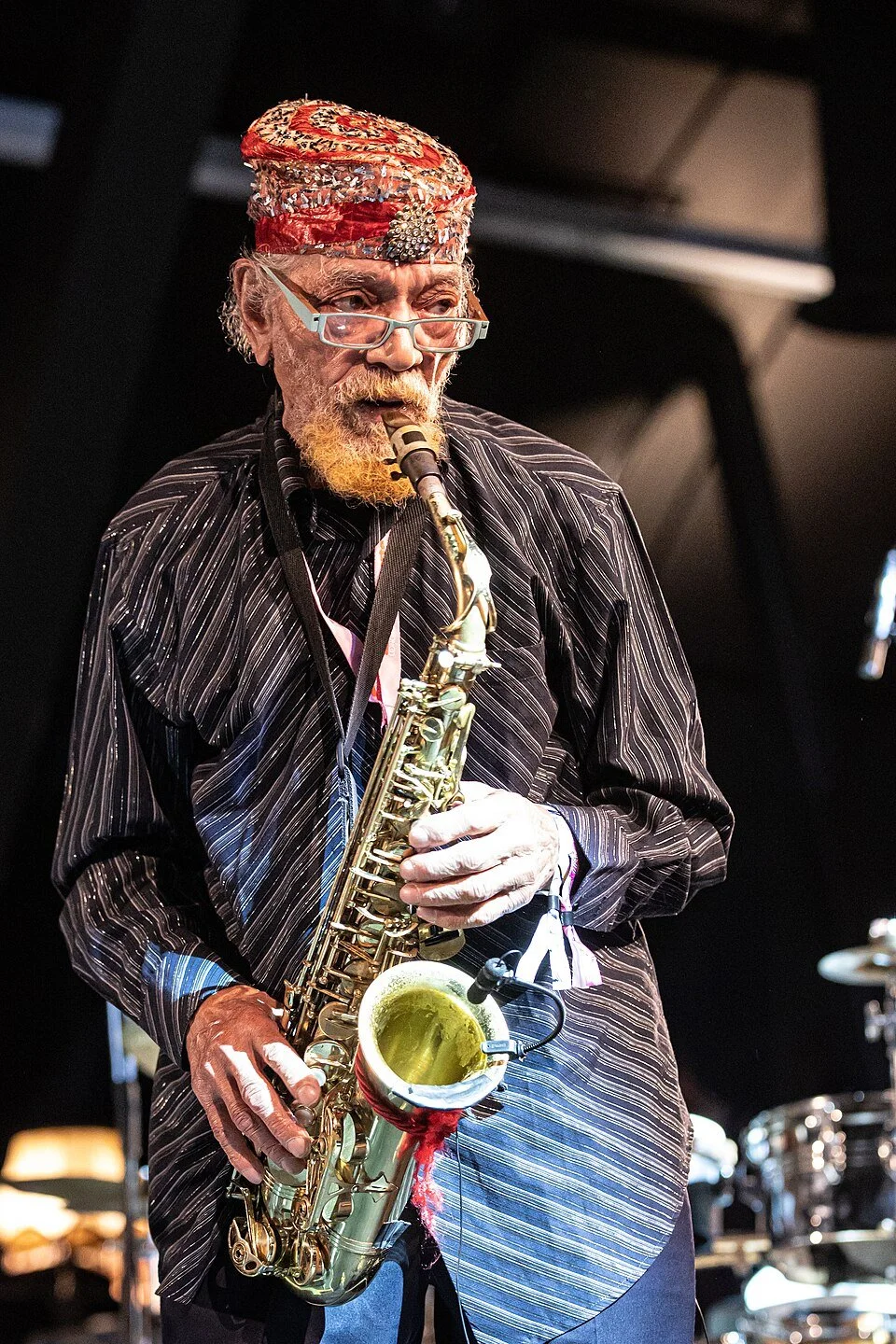
Image credit: Marshall Allen at the Moers Festival, 7 June 2019. Photo by Harald Krichel. Licensed under Creative Commons Attribution-ShareAlike 3.0 Unported (CC BY-SA 3.0). Via Wikimedia Commons.
Big Ears, big ideas
One of the most intriguing parts of the story is how the project came together.
According to Ropeadope, a last-minute cancellation at the Big Ears Festival created an unexpected opportunity for Tacuma and a group of musicians to get into the studio. Nels Cline, Immanuel Wilkins, Braxton Bateman and King Noli were among those involved, with the resulting recordings subsequently developed further with Allen and additional musicians.
A review in PostGenre similarly reports that much of the material originated around the 2025 Big Ears Festival in Knoxville, with further production work taking place afterwards.
That spontaneous beginning makes sense when you hear the music. 101 doesn't sound like a project assembled around a rigid master plan. It sounds like musicians being given enough room to collide, react, disappear and suddenly reappear somewhere completely unexpected.
“Bass Thrust”, for example, places Allen alongside Tacuma and Wilkins, while Cline and Malcolm Charles contribute to the surrounding electronic and rhythmic landscape. Wilkins also switches instruments elsewhere on the album, adding another layer to an already unusually fluid set of combinations.
Then there's “The Deepest Love,” which brings vocalist Tara Middleton into the picture. The track's more recognisable song shape provides a fascinating contrast with Allen's increasingly otherworldly saxophone work.
The Allen effect
Perhaps the most remarkable thing about 101: An Audio Odyssey is that Allen's age is never the musical point.
He turned 100 in 2024 and 102 in May 2026, but the record isn't constructed aroundnostalgia or reverence. His playing remains part of an active musical conversation, rather than an archival footnote. His EWI work can sound startlingly abrasive; his alto can slice through dense arrangements; and on the closing “Ancestral Astral Traveler”, he plays kora while Middleton contributes vocals.
That final appearance on kora is particularly fitting. The National Endowment for the Arts notes that Allen constructed his own kora and has long explored connections betweenavant-garde jazz and traditional African music.
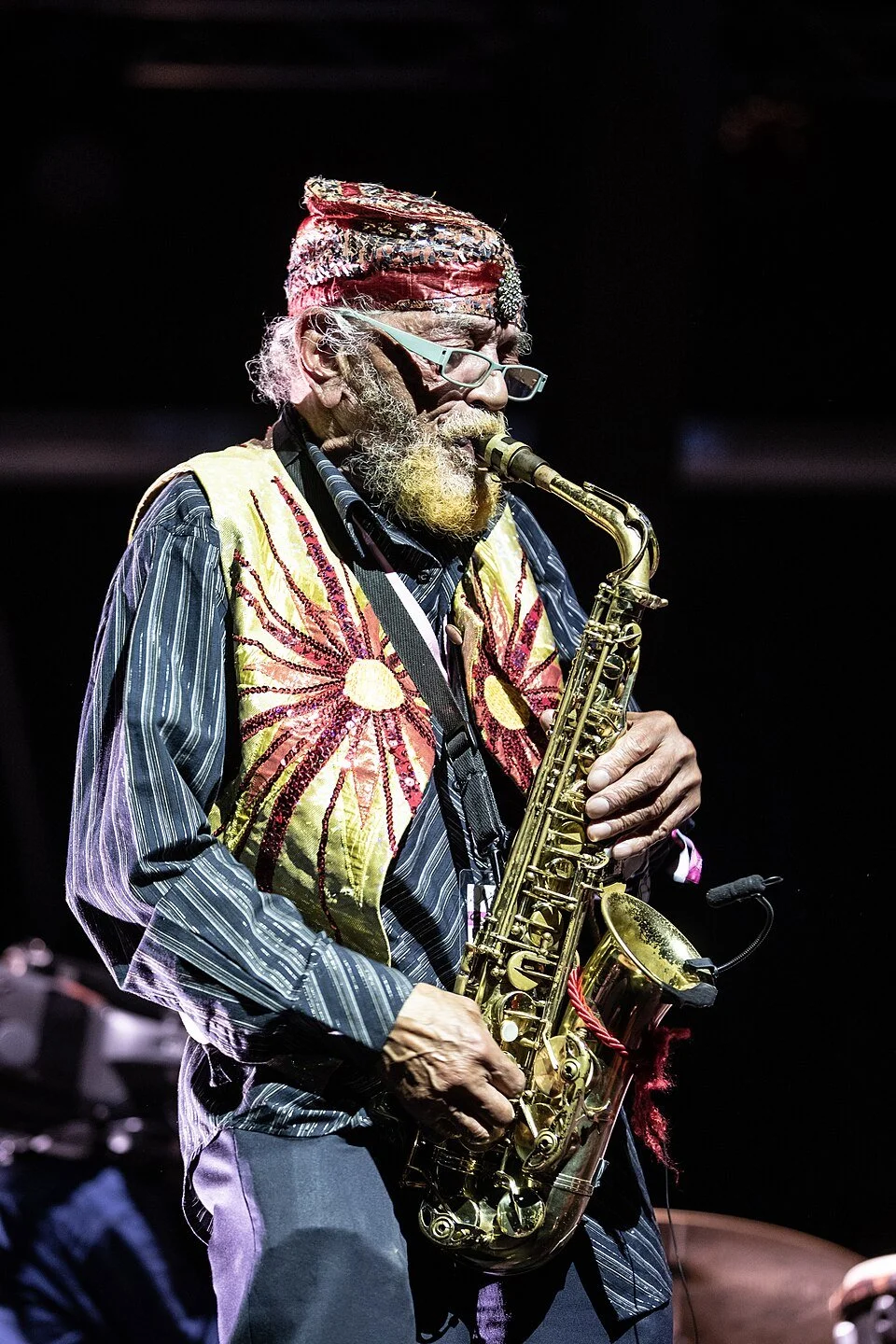
Image credit: Marshall Allen at the Moers Festival, 7 June 2019. Photo by Harald Krichel. Licensed under Creative Commons Attribution-ShareAlike 3.0 Unported (CC BY-SA 3.0). Via Wikimedia Commons.
It's another reminder that Allen's musical universe has never really respected genreboundaries.
And perhaps that's the real secret of 101. Rather than attempting to recreate the sound of Sun Ra's Arkestra, or present Allen as a relic of a particularly adventurous period in jazz history, the album keeps asking what happens next.
Tacuma's electric bass supplies muscular propulsion. Cline brings guitar textures that can be simultaneously melodic and abrasive. Wilkins moves between roles with remarkable flexibility. Around them, Allen seems entirely at home amid electronics, funk grooves, open-ended improvisation and cosmic abstraction.
The result is a record that feels less like a retrospective than another chapter.
101: An Audio Odyssey is out now via Ropeadope, and its eleven-track journey suggests that, for Marshall Allen, the spaceways remain very much open.