
Comment

Welcoming A New Dawn: The Timeless Beauty Of Hannah Gill's I Like the Sunrise

Few singers working in contemporary jazz bridge the gap between classic sophistication and modern accessibility quite like Hannah Gill, and her latest album, I Like the Sunrise, is another reminder of why she's become such a respected voice on today's jazz scene.

Released on 19 June 2026, the eleven-track collection sees Gill embracing the rich tradition of the Great American Songbook while bringing her own warmth, elegance and effortless vocal style to every performance. Rather than reinventing these much-loved standards, she leans into their timeless qualities, allowing expressive phrasing and impeccable musicianship to do the talking.

Long-time followers will already know Gill from her acclaimed solo work and her years touring internationally with Postmodern Jukebox, where her vintage-inspired performances introduced her voice to millions of listeners online. Her musical background stretches from original singer-songwriter releases to traditional jazz, making this latest record feel like a natural continuation of an already impressive career.
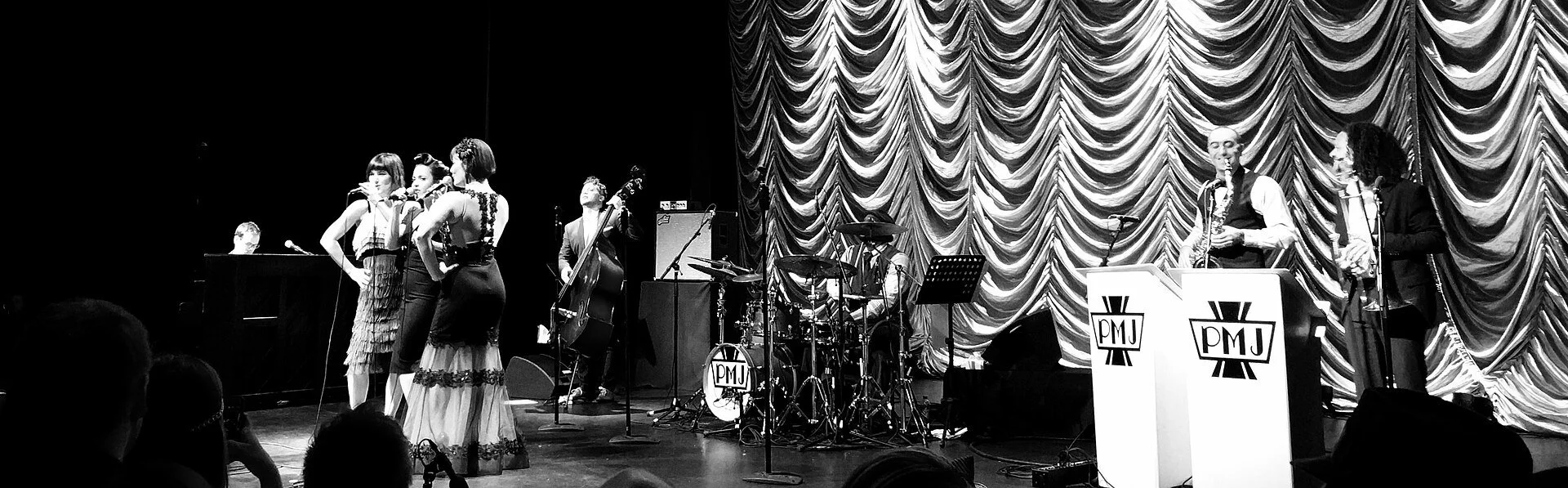
Scott Bradlee's Postmodern Jukebox, by Pasi Välkkynen via Wikimedia Commons. Licensed under CC BY 2.0.

Opening with the title track, I Like the Sunrise immediately establishes the album's relaxed, intimate atmosphere. Elsewhere, interpretations of classics including Azure, Take Love Easy, Do Nothing till You Hear from Me, Azalea and Love You Madly showcase Gill's ability to balance technical precision with genuine emotional connection. The arrangements favour subtlety over spectacle, allowing each melody room to breathe while highlighting the chemistry between vocalist and accompanying musicians.

What makes Gill particularly compelling is her versatility. Equally comfortable performing soulful original material or swing-era standards, she has built a reputation as one of the standout vocalists of the modern jazz revival. Her career has included appearances at prestigious venues around the world while earning praise from major outlets including The New York Times, NPR and Teen Vogue. Even Irish singer-songwriter Hozier publicly praised her interpretation of Take Me To Church, commenting that her "ability is beyond her years."

In an era where many jazz releases chase novelty, I Like the Sunrise succeeds by trusting the enduring power of exceptional songs, tasteful arrangements and a vocalist who understands exactly when to dazzle and when to simply let the music speak.

For jazz enthusiasts, fans of vocal standards and newcomers alike, Hannah Gill's latest release offers a beautifully crafted collection that feels both nostalgic and refreshingly contemporary. It's an album that rewards repeated listening and confirms that classic jazz singing remains as captivating today as ever.
Comment

Comment

Espen Berg Trio Find Beauty in Chaos on Stunning New Album Entropies

Norwegian jazz continues to punch well above its weight, and Espen Berg Trio have once again demonstrated exactly why they're regarded as one of Europe's most compelling contemporary piano trios. Their fifth studio album, Entropies, marks a welcome return after a four-year recording break, delivering a captivating collection that balances meticulous composition with fearless spontaneity.

Released on 5 June 2026 via Svale Records, Entropies finds pianist and composer Espen Berg, alongside bassist Bárður Reinert Poulsen and drummer Simon Albertsen, exploring the fascinating space where structure meets unpredictability. It's an album whose title couldn't be more appropriate.

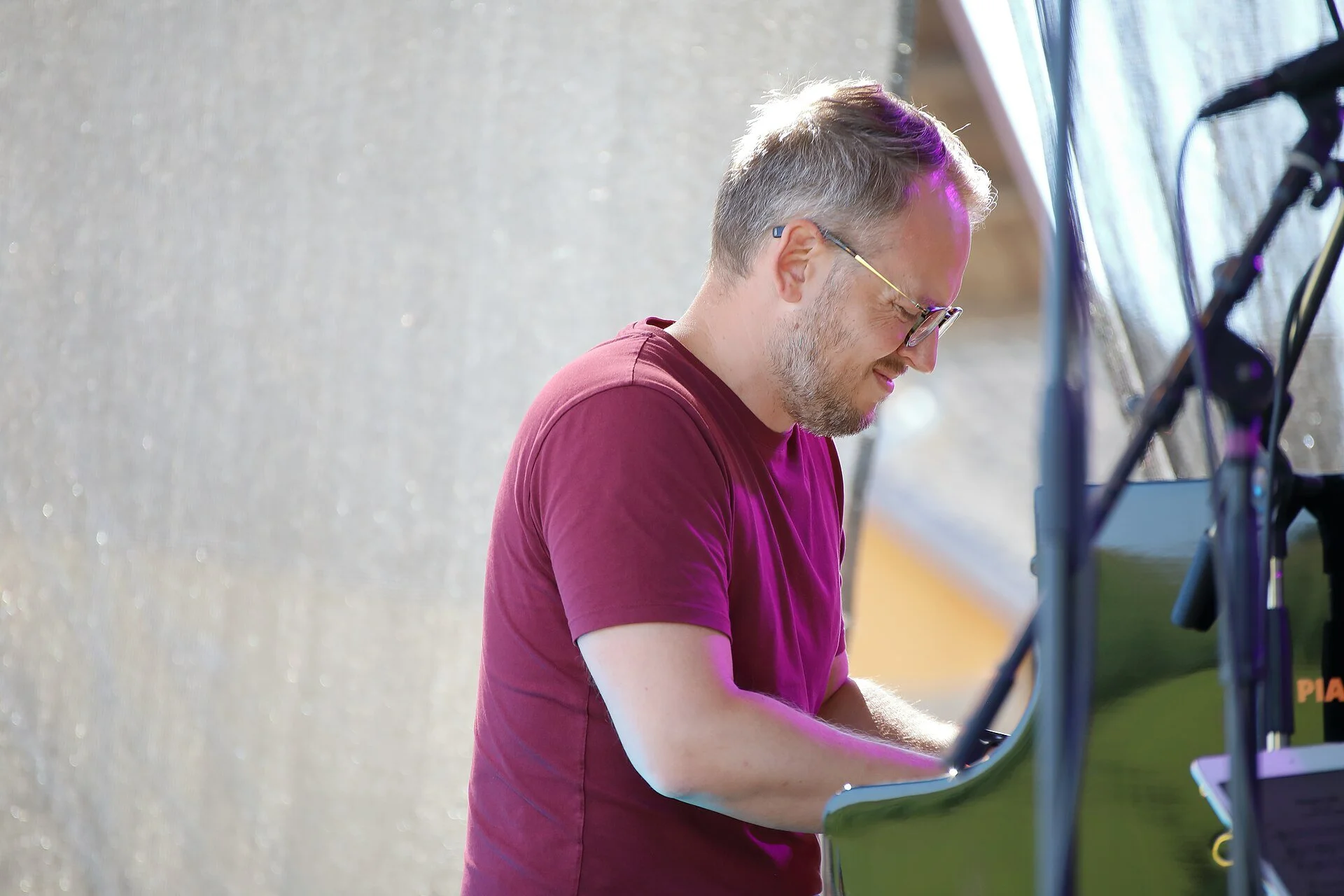
"Espen Berg 01" by Schorle, Wikimedia Commons. Licenced under CC BY-SA 4.0.

For Berg, the concept behind Entropies extends well beyond science. Drawing inspiration from the idea of disorder and unpredictability, the music reflects both the uncertainty of today's world and the exhilarating possibilities that emerge when exceptional musicians trust each other's instincts. Throughout the record, memorable melodies intertwine with spontaneous improvisation and intricate polymetric rhythms, resulting in music that constantly shifts beneath the listener's feet without ever losing its emotional centre.

That adventurous spirit has become something of a trademark for the trio since they first emerged in 2014. Their reputation has steadily grown through acclaimed releases and international touring, with performances spanning Europe, Japan, China and India, while appearances at iconic venues such as London's Ronnie Scott's have cemented their standing as one of modern jazz's most exciting live acts.

The new album also showcases Berg's wide-ranging influences. Alongside original compositions inspired by artists including Craig Taborn, Nik Bärtsch, Keith Jarrett and Brad Mehldau, the trio also offers a striking new interpretation of Sting's classic Russians. Rather than feeling like an outlier, it sits naturally within the album's broader narrative, adding another unexpected colour to an already richly textured musical landscape.

While guest appearances from flautist Flavia Huarachi, cellist Joakim Munkner and guitarist/vocalist Nils Olav Johansen add subtle new textures across selected tracks, Entropies never loses sight of its central identity: three outstanding musicians communicating with remarkable intuition and technical brilliance.

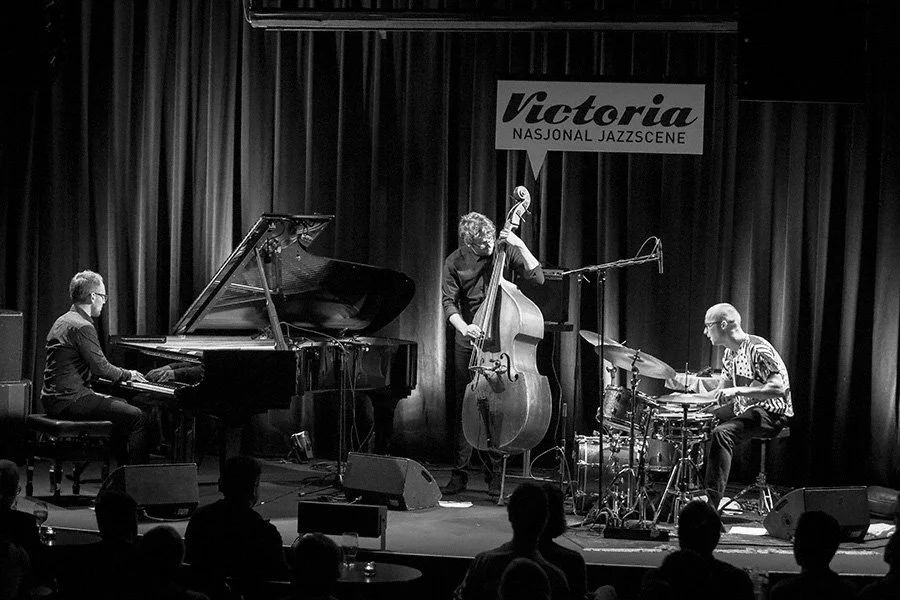
“Espen Berg Trio Victoria Nasjonal Jazzscene (201540)" by Tore Sætre, Wikimedia Commons. Licenced by CC BY-SA 4.0.

Clocking in at just over 44 minutes, the nine-track collection flows like a carefully crafted suite, moving effortlessly between moments of lyrical beauty, rhythmic complexity and explosive improvisational energy. It's music that rewards repeat listening, revealing fresh details and hidden conversations every time the needle drops.

With Entropies, Espen Berg Trio haven't simply returned—they've reaffirmed why they're considered one of the leading voices in contemporary European jazz. Intelligent without becoming inaccessible, technically astonishing without sacrificing emotion, and endlessly inventive without losing its melodic appeal, this is another major statement from a trio operating at the very top of their game.

For jazz fans seeking adventurous modern music that continues to push the piano trio format forward, Entropies is essential listening.

Comment

Comment

On "Volcano Shock" VORAX Ignite an Old-School Death Metal Inferno

Old-school death metal is alive, well, and spewing molten lava thanks to Swiss wrecking crew VORAX, whose debut full-length album Volcano Shock arrives as a crushing celebration of everything that made the genre legendary in the late '80s and early '90s.

Rather than chasing modern production trends or over-polished perfection, VORAX have deliberately taken the opposite route. Recorded, mixed and mastered largely using restored analogue equipment from the 1980s and '90s, the album was tracked to tape and mixed through a vintage Studer console, giving every riff, drum hit and growl an unmistakably organic character. Even more impressively, the band built much of the recording studio themselves, making Volcano Shock a genuinely DIY labour of love from beginning to end.

From the opening blast of "Magma Ocean", VORAX waste no time making their intentions clear. Thick, groove-laden riffs collide with thunderous drums and savage vocals to produce a sound that owes more to death metal's formative years than today's polished productions. Instead of relying on triggers, samples or digital editing, the band embraces raw human performance, allowing every song to breathe with an authenticity that's becoming increasingly rare.

The album's prehistoric concept is another welcome twist. Continuing the themes introduced on their 2022 EP Jurassic Dawn, Volcano Shock transports listeners into a world of volcanic cataclysms, extinct giants and the brutal struggle for survival. Songs like "Flight of the Pteranodon," "The Great Dying," and the title track evoke images of a savage prehistoric Earth, giving the record a distinctive identity that sets it apart from the more familiar horror and gore themes common throughout death metal.

Tavurvur volcano eruption, Papua New Guinea (2010). Photograph by: Dr Peter James Chisholm. Licence: CC0 1.0 Universal (Public Domain Dedication).

Elsewhere, tracks including "Devouring Raw Flesh," "Burning Lava," "Hunter Killer," and "Reign Supreme"maintain the album's relentless pace, combining memorable riffing with punishing grooves rather than simply chasing speed for its own sake. At a lean running time of just over half an hour, Volcano Shock never overstays its welcome, instead delivering eight tightly written songs that reward repeat listens as new details emerge from the dense wall of sound.

VORAX also arrive with considerable pedigree. The line-up features musicians whose past and present work includes respected Swiss extreme metal acts Messiah, Omophagia and Death Kommander, experience that shines through in both the songwriting and musicianship. The performances are confident and powerful without ever descending into unnecessary technical showmanship.

Perhaps the album's greatest strength is its honesty. In an era where so much extreme metal is meticulously edited into clinical perfection, Volcano Shock feels dangerous, physical and refreshingly alive. Every performance carries grit, every riff has weight, and every drum fill feels earned. It's exactly the sort of record that reminds listeners why old-school death metal continues to inspire new generations of bands decades after the genre first exploded.

With Volcano Shock, VORAX haven't simply recreated a classic sound—they've captured the spirit that made it timeless. For fans of vintage death metal with a love of crushing riffs, analogue production and prehistoric destruction, this debut erupts with enough force to leave a sizeable crater.

Comment

Comment

When Heavy Metal Looks Back Without Falling Back

In a genre that often reinvents itself by erasing its own past, Lex Legion does something far more stubborn—and arguably more satisfying. Their self-titled debut arrives not as a reinvention of heavy metal, but as a carefully reconstructed memory of it: sharpened, polished, and played by people who were there the first time around.

If the phrase “heavy metal nostalgia done right” sounds like a loaded compliment, that’s because it is. But Lex Legion earns it by refusing to treat nostalgia as decoration. Instead, it becomes the framework.

A lineup built from metal history itself

Lex Legion is, at its core, a reunion of some of the most recognisable names from King Diamond’s late-1980s era. The band brings together guitarist Andy LaRocque, drummer Mikkey Dee, guitarist Pete Blakk, and bassist Hal Patino, with vocals handled by Nils K. Rue of Pagan’s Mind.

That alone would be enough to raise eyebrows in any metal circle, but what makes the project more than a novelty is how naturally the chemistry appears to translate into new material. These are musicians whose shared history stretches back decades, and that familiarity is audible in the way the album leans into tight, deliberate songwriting rather than chaos or experimentation.

There’s a reason comparisons keep circling back to the King Diamond catalog: not because Lex Legion is copying it, but because many of the people who helped define that era are now revisiting its language with more control and less urgency.

“Sleep Eternally” and the sound of deliberate throwback metal

Early singles like “Sleep Eternally” set the tone immediately: galloping rhythms, sharply defined riffs, and a vocal performance that sits somewhere between theatrical classic metal and modern clarity. The production avoids excessive gloss, instead opting for a direct, punchy presentation that recalls the late-80s European metal wave without sounding like a museum piece.

Follow-up tracks such as “Gypsy Tears” continue that approach, leaning into melodic phrasing and structured pacing rather than sprawling excess. The result is music that feels familiar in shape, but not necessarily in execution—like a restored classic car that still drives with modern precision.

Across the album, reviewers consistently point out that Lex Legion’s strength lies in execution rather than innovation: this is a band revisiting a style rather than attempting to redefine it.

Nostalgia, but not imitation

One of the more interesting tensions in Lex Legion is how self-aware the project feels. Interviews with guitarist Andy LaRocque have emphasized that the material is not meant as a continuation of King Diamond songwriting, but rather a return to a shared creative mindset from decades ago.

That distinction matters. Instead of trying to recreate a specific discography, Lex Legion appears to be chasing a feeling: the sense of writing without overthinking, prioritising riffs, dynamics, and melody over conceptual complexity.

It’s also where the album divides opinion slightly. Some listeners hear a lack of risk-taking, while others hear discipline—metal stripped back to its core mechanics.

Final impression: familiar ground, expertly walked

Lex Legion doesn’t try to surprise you. That’s not really the point. The album is built like a well-rehearsed ritual: the same ingredients that defined a golden era of heavy metal, now performed by the people who helped invent it.

If there’s a criticism embedded in that praise, it’s that the record rarely steps outside its chosen boundaries. But within those boundaries, it is confident, cohesive, and unmistakably authentic to the musicians involved.

This is not nostalgia as regression. It’s nostalgia as craftsmanship.

Or put more plainly: Lex Legion sounds like a band remembering exactly how heavy metal used to feel—and playing it like they never forgot.

Comment

Comment

When Rivers Meet Turn Up the Heat on Rhythm Rust & Static

There’s a certain kind of album that sounds less like a studio creation and more like a statement of intent. Rhythm Rust & Static, the latest release from British blues-rock powerhouse When Rivers Meet, falls firmly into that category.

For a band that has built its reputation outside the traditional music industry machine, Grace and Aaron Bond have never sounded more confident in who they are. The duo’s fifth studio album strips away unnecessary polish and heads straight for the heart of what made fans fall in love with them in the first place: gritty guitars, soul-stirring vocals, and songs that feel lived-in rather than manufactured.

From the opening moments, Rhythm Rust & Static crackles with energy. There’s a rough-edged honesty running through the record, a feeling that every riff, vocal line and drum hit has been captured in real time rather than assembled piece by piece. It’s an approach that perfectly suits a band whose story has always been rooted in hard work, relentless touring and a fiercely independent spirit.

Lead single The Tide Is Turning sets the tone beautifully. Inspired by life on the road, the track captures the exhilaration, uncertainty and determination that comes with chasing a dream night after night. It’s an anthem for anyone who has ever kept going despite the odds, fuelled by belief rather than guarantees.

What makes Rhythm Rust & Static particularly compelling is its refusal to chase trends. While modern rock production often leans towards bigger and more layered arrangements, When Rivers Meet have intentionally moved in the opposite direction. The result is a record that feels immediate, organic and refreshingly authentic. Every track carries the sense that it could explode into life on stage exactly as it sounds on record.

Grace Bond’s commanding vocals remain one of the band’s greatest strengths, balancing vulnerability with sheer power, while Aaron Bond’s guitar work delivers the kind of blues-infused fire that has become a signature of the duo’s sound. Together, they create a chemistry that few contemporary rock acts can match.

At a time when so much music is carefully calculated, Rhythm Rust & Static feels gloriously human. It’s raw without being reckless, polished enough to hit hard but never so refined that it loses its edge.

More than anything, this is an album that sounds like When Rivers Meet embracing exactly who they are. No compromises. No distractions. Just great songs, played with conviction.

And that’s precisely why it might be their most powerful release yet.

Comment