Comment

Joe Webb’s New Album Turns Stride Piano Tradition Into Something Entirely Modern

There’s a growing sense that pianist Joe Webb is becoming one of the most distinctive voices in British jazz, and his latest release, Neath Beat, makes a compelling case for exactly why.

Fresh from the acclaim of his Mercury Prize-shortlisted album Hamstrings & Hurricanes, Webb returns with a record that feels both deeply rooted in jazz history and completely alive to the present day. Released through Edition Records, Neath Beat sees the Anglo-Welsh pianist continuing to carve out a musical identity that draws equally from Harlem stride piano, British pop songwriting and the culture of his South Wales upbringing.

At the heart of Neath Beat is a fascinating balancing act. Webb has long been celebrated for his command of stride piano, a demanding style pioneered by giants such as Fats Waller and James P. Johnson. Yet rather than treating those traditions as museum pieces, he folds them into music shaped by Britpop melodies, modern jazz sensibilities and a sharp sense of personality. Critics have highlighted the album’s unusual ability to move effortlessly between vintage jazz language and contemporary songwriting influences.

The album’s title is a nod to Neath, the South Wales town where Webb grew up. That connection to place runs throughout the record, giving the music a sense of identity that feels authentic rather than nostalgic. Webb’s compositions paint vivid musical snapshots while maintaining the energetic swing and virtuosity that have become his trademark.

Backed by long-time collaborators Will Sach on double bass and Sam Jesson on drums, Webb delivers a set that is as playful as it is technically impressive. Tracks such as “Goalmouth Scramble” showcase his knack for combining ragtime influences with unexpected contemporary references, while “James P” stands as a thrilling tribute to the stride tradition. Elsewhere, his interpretations of “Dy-Na-Mi-Tee” and the jazz standard “I’m Confessin’ (That I Love You)” demonstrate an ability to make wildly different material feel perfectly at home within the same artistic vision.

One of the album’s most striking moments arrives with “Myfanwy”, the beloved Welsh song that closes the record. Presented with elegance and emotional weight, it underlines the personal nature of Neath Beat and reinforces the album’s central theme: a musician exploring where he comes from while pushing confidently forward.

The jazz world has taken notice. Webb has been championed by figures including Wynton Marsalis and Jools Holland, while recent collaborations with RAYE have introduced his playing to audiences far beyond the traditional jazz scene. Those connections make sense when listening to Neath Beat: this is music that respects jazz history without ever sounding trapped by it.

What makes Neath Beat such an exciting release is its refusal to choose between tradition and innovation. Instead, Joe Webb demonstrates that the two can coexist beautifully. The result is a record packed with dazzling piano work, memorable melodies and a strong sense of identity—an album that confirms Webb’s place among the most intriguing musicians currently emerging from the UK jazz landscape.

For listeners searching for jazz that swings hard while still feeling fresh, personal and unmistakably modern, Neath Beatis well worth the journey.
Comment

Comment

With Debut Album "Now’s The Time" Jon Onabowu Steps Into the Spotlight

London's contemporary jazz scene has produced no shortage of exciting new voices in recent years, but few have generated the kind of momentum currently surrounding Nigerian-British drummer and bandleader Jon Onabowu. With the release of his debut album Now's The Time, Onabowu makes a powerful statement of intent, delivering a collection that captures the energy, groove and musical freedom that have made him one of the capital's most talked-about emerging jazz figures.

For those familiar with London's thriving live jazz circuit, Onabowu is hardly a newcomer. As the driving force behind the Cosmic Fusion residency at Ronnie Scott's Jazz Club, he has spent recent years building a reputation for high-energy performances that blend contemporary jazz with elements of funk, gospel, hip-hop and fusion. The residency has become a showcase for a new generation of musicians eager to push jazz into fresh territory while keeping groove firmly at the centre of the experience.

That philosophy runs throughout Now's The Time. Rather than delivering a traditional straight-ahead jazz record, Onabowu opts for something more expansive. The album draws together a wide range of influences while maintaining a strong rhythmic identity, creating music that feels equally at home in a jazz club, a festival setting or through headphones on a late-night journey home.

Several tracks have already begun attracting attention ahead of and following the album's release. Highlights include "The Bounce" featuring David Mrakpor, the atmospheric "When The Light Finds Us" featuring Anatole Muster and Brandon Rose, and the evocative "The Emergence." Collectively, they showcase Onabowu's ability not only as a drummer but as a composer capable of balancing technical sophistication with genuine emotional impact.

What makes Now's The Time particularly compelling is the sense that it documents an artist arriving at exactly the right moment. Having performed alongside respected names including Theo Croker, Venna and the Balimaya Project, Onabowu has spent years absorbing influences and refining his musical voice. This debut feels like the culmination of that journey while simultaneously hinting at even bigger things to come.

At a time when UK jazz continues to enjoy a creative renaissance, Now's The Time arrives as another reminder that the scene remains rich with innovation. For listeners seeking groove-heavy contemporary jazz that values both musicianship and accessibility, Jon Onabowu's debut is an album well worth exploring. If this record is any indication, the drummer's rise is only just beginning.

Comment

Comment

Gershwin Reimagined: Ingrid Jensen Brings Fiery Jazz Brilliance to “Porgy and Bess”

Few works in American music have inspired as many bold reinventions as Porgy and Bess. Since its 1935 debut, George Gershwin’s landmark “folk opera” has lived simultaneously in the worlds of classical music, blues, gospel and jazz, producing timeless standards like “Summertime” and “I Loves You, Porgy.”

Now, acclaimed Canadian trumpeter Ingrid Jensen is adding her own electrifying voice to that legacy — and jazz audiences are paying attention.

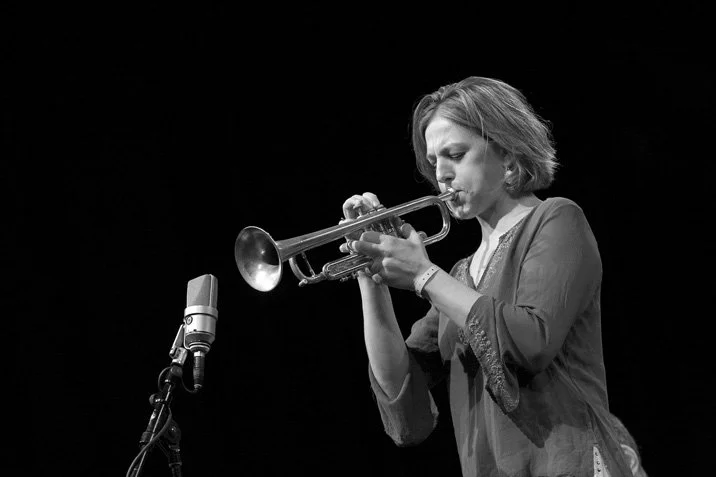
“Ingrid Jensen” — Photo by Geert Vandepoele, via Wikimedia Commons. Licensed under Creative Commons Attribution-ShareAlike 2.0 (CC BY-SA 2.0).

Jensen has long been regarded as one of the most adventurous trumpet players in modern jazz. A graduate of Berklee College of Music, she rose to prominence in the 1990s through collaborations with the Vienna Art Orchestra, the DIVA Jazz Orchestra, and later with visionary bandleaders including Maria Schneider and Darcy James Argue. Critics have praised her muscular tone, fearless improvisation and ability to move effortlessly between lyrical elegance and explosive avant-garde energy.

That makes her a natural fit for the emotionally charged world of Porgy and Bess.

Over the decades, Gershwin’s masterpiece has become a rite of passage for jazz musicians. Legendary interpretations by Miles Davis and Ella Fitzgerald transformed the score into fertile territory for improvisation, proving that the music could thrive far beyond the opera stage.

Jensen’s approach feels both respectful of that tradition and thrillingly contemporary. Whether soaring through the aching melancholy of “Summertime” or attacking ensemble passages with blazing post-bop intensity, she brings a modern edge that keeps Gershwin’s material feeling alive rather than museum-bound. Her phrasing balances precision with spontaneity — the kind of playing that can turn a familiar melody into something startlingly new.

And that’s exactly what jazz audiences crave from Porgy and Bess: reinvention.

The original opera itself remains one of the most discussed and debated works in American music history. Set in a South Carolina fishing community known as Catfish Row, the story follows the fragile relationship between Porgy and Bess amid poverty, addiction and violence. While celebrated for its fusion of jazz, blues and classical composition, the work has also faced decades of scrutiny over racial representation and cultural authenticity.

Yet musically, its influence is undeniable.

For artists like Jensen, the score offers an emotional and harmonic playground — rich with dramatic tension, sweeping melodies and rhythmic flexibility. Her style, shaped by everything from straight-ahead swing to contemporary large ensemble jazz, seems uniquely equipped to unlock the opera’s darker corners and ecstatic highs.

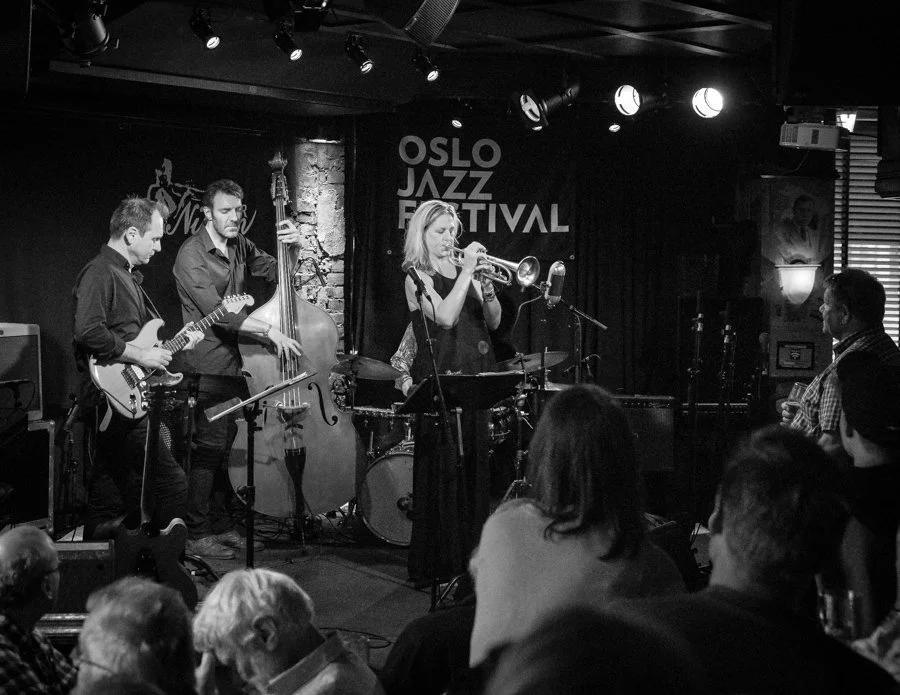
“Ingrid Jensen Quartet Herr Nilsen Oslo Jazzfestival” — Via Wikimedia Commons. Licensed under CC BY-SA 4.0.

Recent performances and collaborations continue to reinforce Jensen’s standing as one of jazz’s most dynamic modern voices. Whether leading her own ensembles or appearing with major orchestras and festivals around the world, she has built a reputation for performances that combine virtuosity with deep emotional connection.

In other words: if Porgy and Bess is about emotional intensity, Ingrid Jensen speaks its language fluently.

For jazz fans, this meeting of Gershwin’s immortal music and Jensen’s fearless trumpet artistry is more than another tribute project. It’s a reminder that great music survives because each generation reshapes it — bends it, stretches it and pushes it into the future.

And in Jensen’s hands, Porgy and Bess still burns.

Comment

Comment

On "The House Beyond the Fires" The Virginmarys Find Beauty in Restraint

There’s always been a raw, combustible energy at the heart of The Virginmarys. From the bruising riffs of King of Conflictto the jagged urgency that made them one of Britain’s most underrated modern rock exports, the Macclesfield duo have built a reputation on volume, intensity and emotional abrasion. But on The House Beyond the Fires, the band reveal something equally powerful: vulnerability.

Released in November 2024, the album marks the latest chapter for vocalist/guitarist Ally Dickaty and drummer Danny Dolan, who have continued evolving the project since transitioning from a trio into a leaner two-piece setup.

What makes The House Beyond the Fires so compelling is its balance. The record still burns with the grit and defiance longtime fans expect, but there’s a newfound spaciousness running through these songs — moments where silence, atmosphere and melody are allowed to breathe. Instead of overwhelming the listener with sheer force, The Virginmarys often pull back just enough to let the emotional weight hit harder.

The stripped-back passages throughout the album feel deliberate rather than accidental. Dickaty’s vocals sound weathered and human, carrying the kind of lived-in honesty that can’t be manufactured in a studio. Meanwhile, Dolan’s drumming avoids excess, serving the songs with restraint and precision rather than bombast. It’s a mature approach that gives the album a cinematic quality, as though the band are soundtracking the aftermath of the fire rather than the blaze itself.

Critics and fans alike have long associated The Virginmarys with explosive live performances and garage-rock ferocity. Earlier coverage from outlets including CBS highlighted the band’s “urgency” and relentless energy on stage. What’s fascinating here is how that same urgency survives even in the quieter moments. The tension never disappears — it just simmers beneath the surface.

There’s also a sense that the duo are entirely comfortable operating outside trends. In an era where many rock bands chase polish or algorithm-friendly hooks, The House Beyond the Fires feels defiantly human. Rough edges remain intact. Emotions aren’t cleaned up for mass consumption. That authenticity becomes the album’s greatest strength.

For a band now nearly two decades into their journey, this record doesn’t sound like a group slowing down — it sounds like artists refining their identity. The Virginmarys haven’t abandoned the fire that built their reputation; they’ve simply learned how to control it.

And in doing so, they may have delivered their most affecting work yet.

Comment

Comment

Emmet Cohen Reaches for Something Bigger on Universal Truth

There’s a particular electricity surrounding Emmet Cohen right now — the kind that only appears when a jazz artist stops simply revisiting tradition and starts expanding it. On his forthcoming album Universal Truth, Cohen doesn’t just salute the giants of the past; he steps directly into conversation with them.

Set for release on May 29 through Mack Avenue Records, Universal Truth arrives during the centennial year celebrations of both Miles Davis and John Coltrane, and the influence of those towering figures runs deep through the project. But this is no museum-piece tribute album. Cohen’s approach feels alive, urgent and modern — rooted in hard-swinging classicism while still reaching toward something spiritual and exploratory.

Photo by Jimmy Baikovicius / Wikimedia Commons. Creative Commons Attribution-ShareAlike 2.0 (CC BY-SA 2.0)

Anyone familiar with Cohen’s wildly successful Live From Emmet’s Place sessions already knows his greatest strength: connection. Whether he’s channeling bebop fire or easing into a ballad, his playing carries warmth and spontaneity that make even the most technically dazzling moments feel human. That same spirit appears to drive Universal Truth.

The album mixes revered jazz standards like “Well You Needn’t,” “My Funny Valentine,” and “Blue Train” with original material, including the ambitious three-part “Universal Truth Suite.” Early previews suggest the suite could become one of Cohen’s defining compositional statements — expansive, emotional and deeply personal without losing the rhythmic snap that has made him one of contemporary jazz’s most exciting pianists.

And the personnel? Absolutely stacked.

Cohen is joined by drummer Joe Farnsworth, bassist Yasushi Nakamura, trumpeter Jeremy Pelt and saxophonist Tivon Pennicott, while jazz royalty Ron Carter and George Coleman also make guest appearances. That lineup alone tells you this record is operating on a serious level.

What makes the project especially compelling is its balance between reverence and forward momentum. Cohen clearly understands the architecture of classic jazz, but he refuses to freeze it in time. There’s a cinematic quality to the way the album has been described — less like a history lesson and more like a continuation of an unfinished conversation started decades ago by Davis and Coltrane themselves.

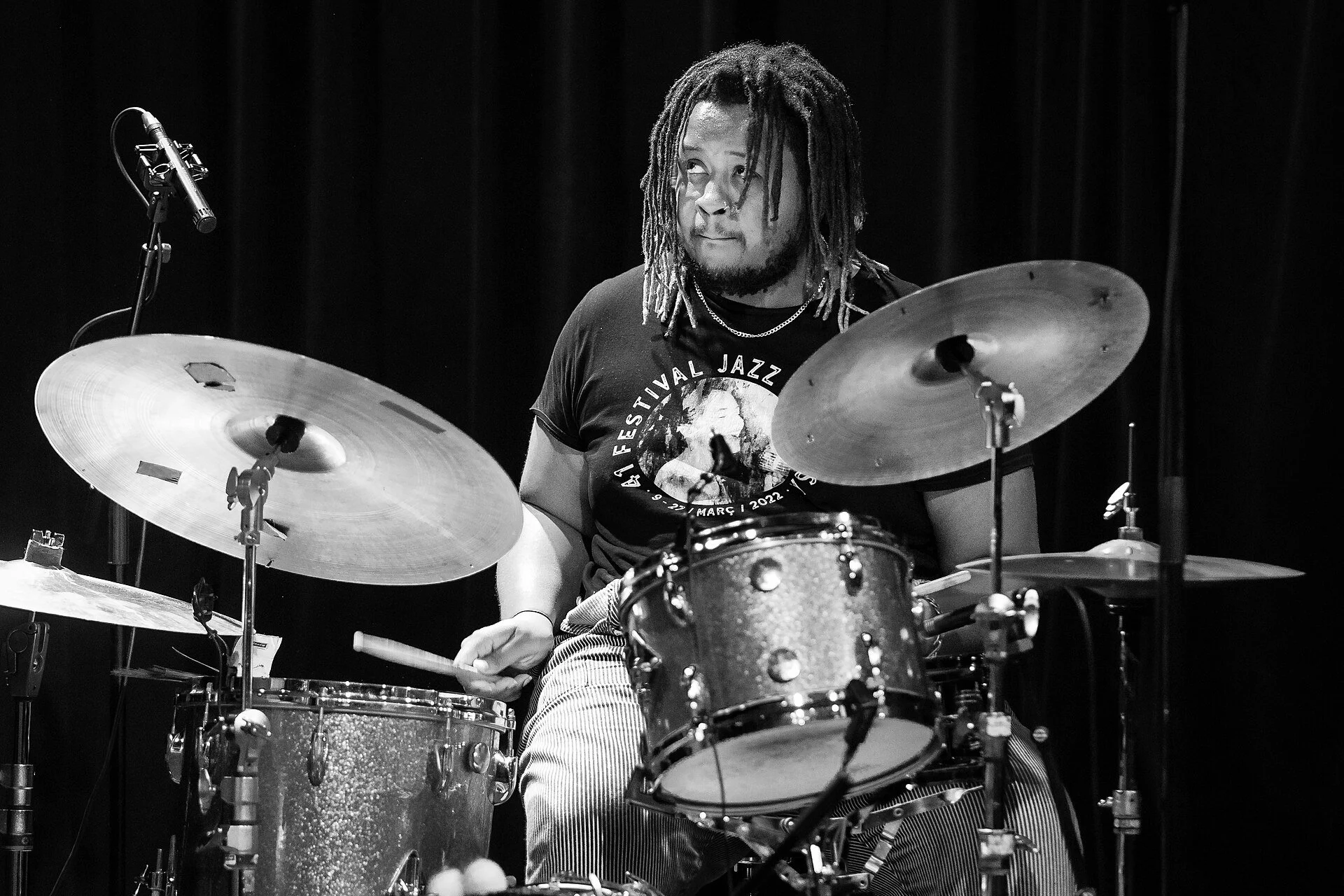
Kyle Poole on drums with Emmet Cohen Trio at Victoria Teater, Oslo, 12 August 2024. Photo by Tore Sætre / Wikimedia Commons. Creative Commons Attribution-ShareAlike 4.0 (CC BY-SA 4.0)

Cohen’s rise over the past few years has felt both organic and unstoppable. Named DownBeat’s 2025 Pianist of the Year, he has steadily built a reputation as one of jazz’s most compelling bridge-builders — equally capable of thrilling longtime purists and drawing younger audiences into the genre.

If the early buzz is anything to go by, Universal Truth may be the album that fully cements that status.

At a moment when jazz is increasingly fractured into scenes, styles and algorithms, Cohen seems focused on something refreshingly ambitious: bringing the emotional core of the music back into focus. And judging from the scope, musicianship and sheer conviction behind this record, he may have done exactly that.

Comment