
There’s a particular electricity surrounding Emmet Cohen right now — the kind that only appears when a jazz artist stops simply revisiting tradition and starts expanding it. On his forthcoming album Universal Truth, Cohen doesn’t just salute the giants of the past; he steps directly into conversation with them.
Set for release on May 29 through Mack Avenue Records, Universal Truth arrives during the centennial year celebrations of both Miles Davis and John Coltrane, and the influence of those towering figures runs deep through the project. But this is no museum-piece tribute album. Cohen’s approach feels alive, urgent and modern — rooted in hard-swinging classicism while still reaching toward something spiritual and exploratory.

Photo by Jimmy Baikovicius / Wikimedia Commons. Creative Commons Attribution-ShareAlike 2.0 (CC BY-SA 2.0)
Anyone familiar with Cohen’s wildly successful Live From Emmet’s Place sessions already knows his greatest strength: connection. Whether he’s channeling bebop fire or easing into a ballad, his playing carries warmth and spontaneity that make even the most technically dazzling moments feel human. That same spirit appears to drive Universal Truth.
The album mixes revered jazz standards like “Well You Needn’t,” “My Funny Valentine,” and “Blue Train” with original material, including the ambitious three-part “Universal Truth Suite.” Early previews suggest the suite could become one of Cohen’s defining compositional statements — expansive, emotional and deeply personal without losing the rhythmic snap that has made him one of contemporary jazz’s most exciting pianists.
And the personnel? Absolutely stacked.
Cohen is joined by drummer Joe Farnsworth, bassist Yasushi Nakamura, trumpeter Jeremy Pelt and saxophonist Tivon Pennicott, while jazz royalty Ron Carter and George Coleman also make guest appearances. That lineup alone tells you this record is operating on a serious level.
What makes the project especially compelling is its balance between reverence and forward momentum. Cohen clearly understands the architecture of classic jazz, but he refuses to freeze it in time. There’s a cinematic quality to the way the album has been described — less like a history lesson and more like a continuation of an unfinished conversation started decades ago by Davis and Coltrane themselves.
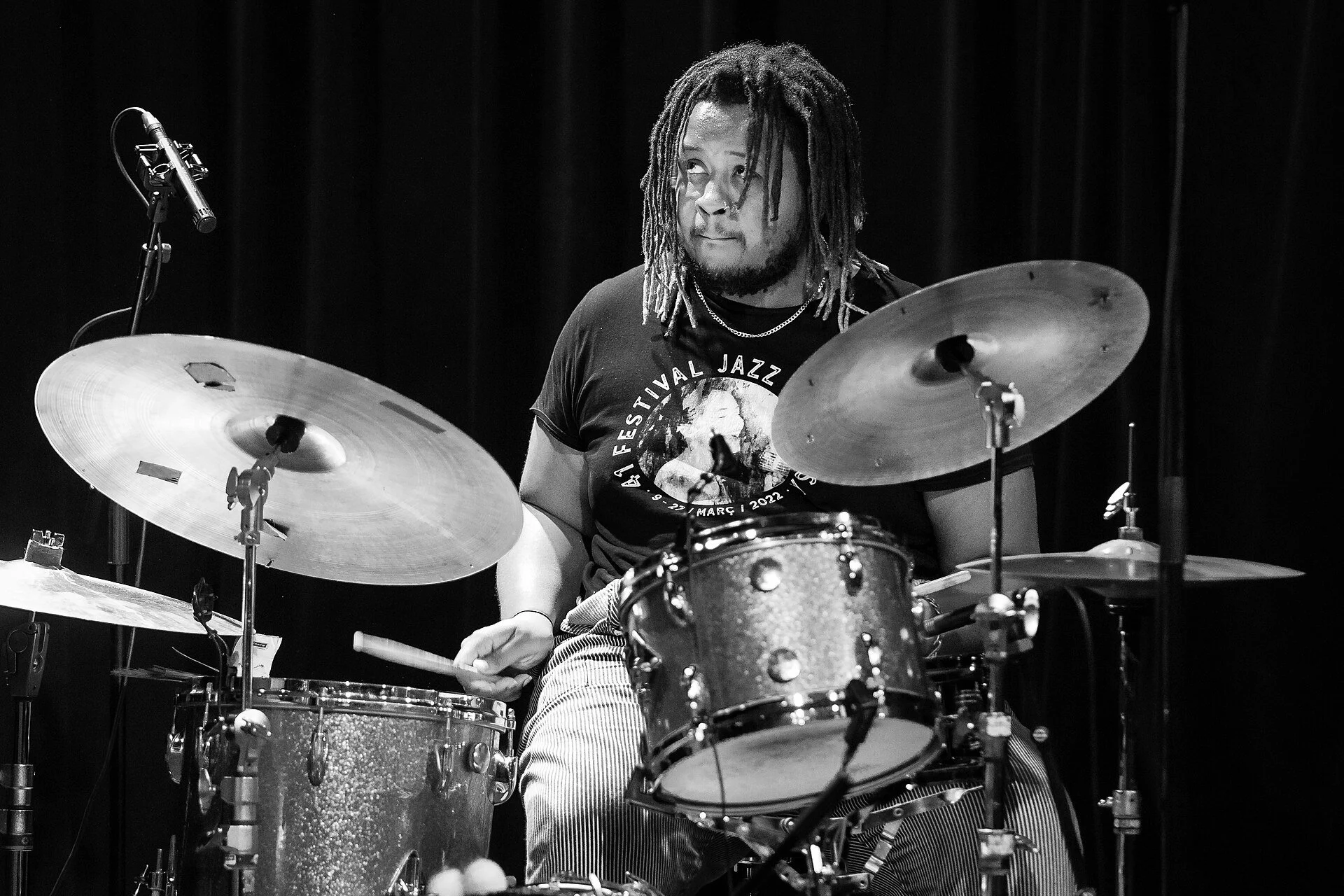
Kyle Poole on drums with Emmet Cohen Trio at Victoria Teater, Oslo, 12 August 2024. Photo by Tore Sætre / Wikimedia Commons. Creative Commons Attribution-ShareAlike 4.0 (CC BY-SA 4.0)
Cohen’s rise over the past few years has felt both organic and unstoppable. Named DownBeat’s 2025 Pianist of the Year, he has steadily built a reputation as one of jazz’s most compelling bridge-builders — equally capable of thrilling longtime purists and drawing younger audiences into the genre.
If the early buzz is anything to go by, Universal Truth may be the album that fully cements that status.
At a moment when jazz is increasingly fractured into scenes, styles and algorithms, Cohen seems focused on something refreshingly ambitious: bringing the emotional core of the music back into focus. And judging from the scope, musicianship and sheer conviction behind this record, he may have done exactly that.