Comment

Joshua Cavanagh-Brierley Turns Big-Band Ambition Into Something Gloriously Alive

There is something wonderfully mischievous about Joshua Cavanagh-Brierley’s The Mild Mannered and the Mortal. The title sounds almost self-effacing, but the music underneath it is anything but.

Released by Manchester’s Efpi Records on 7 August 2026, the album is the fourth release as a leader from the Manchester-based double bassist and composer. It brings together a new sextet built around the rhythm-section chemistry of Cavanagh-Brierley’s Angle Shades trio — pianist Richard Jones and drummer Johnny Hunter — with trumpeter Graham South, tenor saxophonist Kyran Matthews and trombonist Ellie Smith completing the frontline. Olivia Cuttill also appears on trumpet on “Rich and Catherine”.

The result is a record that repeatedly sounds bigger than the personnel on the sleeve. Cavanagh-Brierley has a history of writing for larger ensembles — his 2021 album Joy in Bewilderment expanded as far as a 12-piece group and featured American saxophonist Chris Potter — but here he achieves a similarly expansive effect with considerably fewer musicians.

A dream, a ghost of Mingus, and eight new compositions

The strangest part of the story may be how the album began. Cavanagh-Brierley has explained that the project grew from a vivid dream about discovering a previously unknown Charles Mingus album. Rather than simply waking up and forgetting it, he tried to reconstruct the music he had heard in the dream, eventually producing “Toby Would’ve Hated This”, a piece that gives Smith’s trombone a particularly prominent role.

That Mingus connection is important, but The Mild Mannered and the Mortal isn't simply an exercise in retro jazz cosplay. Cavanagh-Brierley has been clear that he wasn't attempting to make a Mingus album — instead, the aim was to capture something of the older bassist-composer's exuberance, unpredictability and sheer delight in musical interaction. The distinction matters.
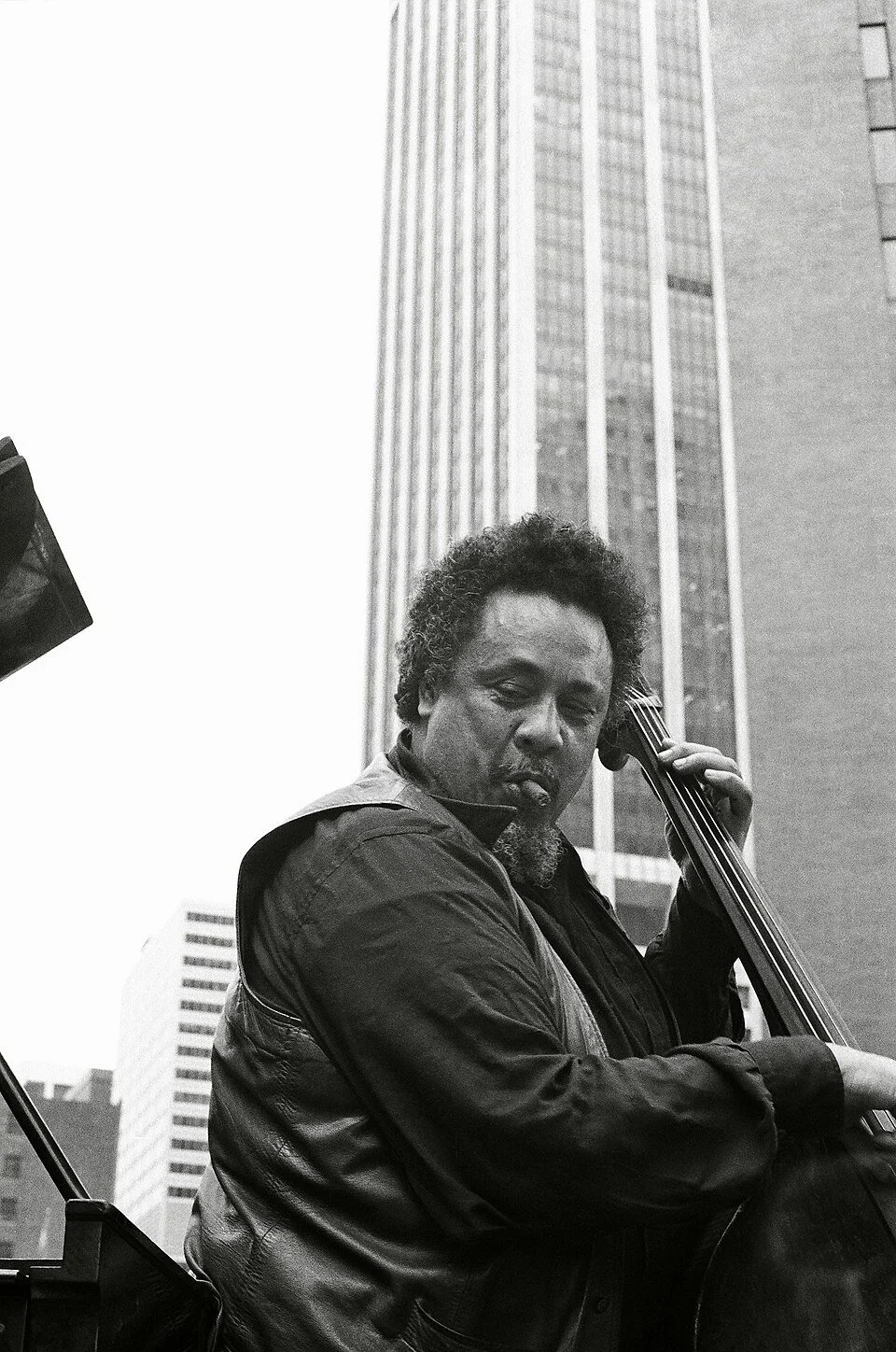
Image credit: Charles Mingus, photographed by Tom Marcello at the Bi-Centennial celebration in Lower Manhattan, 4 July 1976. Wikimedia Commons. Licensed CC BY-SA 2.0.

When a sextet sounds like a small orchestra

The album's opening track, “Elvin's Lullaby”, establishes the approach immediately: long horn melodies, richly layered ensemble writing and Jones's piano threading through the arrangement before South takes an expansive solo. “25 O'clock” pushes harder, with Hunter driving the group into something approaching miniature big-band territory.

Then comes “Can't Get A Luckin'”, a 12½-minute journey through shifting styles and tempos that finally gives Cavanagh-Brierley a chance to step out from behind the composer's desk and put his double-bass playing front and centre. “Rich and Catherine”, meanwhile, changes the temperature, allowing Cuttill's trumpet to bring a warmer, more lyrical quality to the record.

It's this ability to change shape without losing the identity of the band that makes the record particularly compelling. One moment the horns suggest a compact big band; the next, the music is opening into something looser and more abstract.

“Lift Off” lives up to its name, turning the sextet into a punchy, high-energy unit, while the title track — listed as “The Mild Mannered are the Mortal” — moves through multiple dynamic and stylistic shifts. Jones, previously operating largely as an ensemble player, gets room to really stretch out, producing one of the album's standout piano performances.

The North's new jazz energy

Perhaps the most exciting thing about the record is that it feels less like a showcase for one composer than a conversation between musicians who know exactly how far they can push one another.

Cavanagh-Brierley has described the familiarity between the core players as a major part of the writing process, and that familiarity comes through in the looseness beneath the elaborate arrangements. The recording was made in Manchester in March 2024 with the musicians playing together in the same room, rather than being separated into isolation booths — a choice that helps explain the unusually immediate ensemble sound.

Kyran Matthews is particularly prominent, delivering a muscular tenor presence throughout, while Hunter's drumming provides a flexible engine capable of moving from supportive propulsion to full-on rhythmic attack. Smith's trombone gives the three-horn front line an earthy weight, while Jones and Cavanagh-Brierley keep the harmonic and rhythmic machinery constantly shifting beneath it.

Potter's appearance on Joy in Bewilderment also provides a useful reminder of how wide Cavanagh-Brierley's musical world already is. His official biography lists work with Potter alongside artists including Matthew Halsall, Nishla Smith, Caoilfhionn Rose Birley and the Beats & Pieces Big Band, as well as orchestral work and theatre productions.
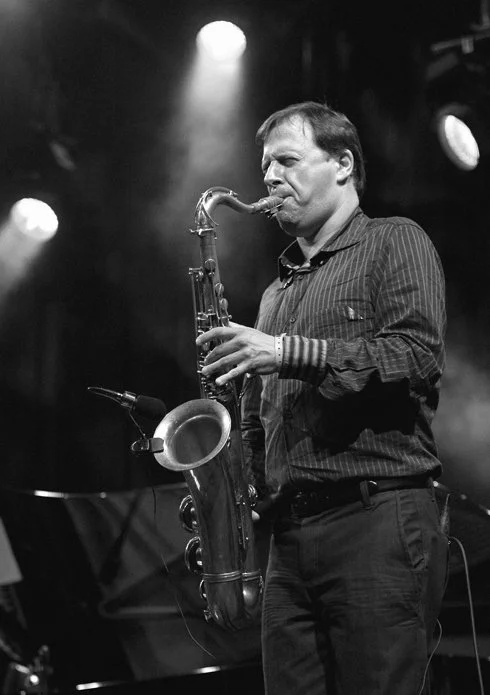
Image credit: Chris Potter at the North Sea Jazz Festival, photographed by Geert Vandepoele. Wikimedia Commons. Licensed CC BY-SA 2.0.

Mild manners, mortal consequences

For all its sophistication, The Mild Mannered and the Mortal never seems overly concerned with proving how clever it is. That's arguably its greatest strength.

There are complex harmonies, abrupt turns, extended improvisations and carefully orchestrated passages everywhere, but the arrangements leave genuine space for the players. Even the album's more intricate moments retain a sense of movement and personality rather than becoming exercises in compositional gymnastics. Independent reviews have similarly singled out the balance between detailed writing and freedom for the soloists.

And then there is “Mr. Relaxed”, the closing track whose title proves to be a wonderfully unreliable description. The piece is lively, with energetic ensemble interplay followed by solos from South, Jones and Matthews. It's a fitting finale for an album whose supposed mildness repeatedly gives way to something much more animated.

At well over an hour, this isn't background music. It's an album that demands a little time — but rewards it with the sense that something is constantly happening just around the corner.

Joshua Cavanagh-Brierley's The Mild Mannered and the Mortal may borrow a mischievous spark from Mingus, but it ultimately belongs to its own moment: a Manchester-made, forward-looking jazz record full of restless arrangements, heavyweight ensemble playing and musicians clearly enjoying the freedom to surprise one another.

And for a record called The Mild Mannered and the Mortal, that's a pretty lively way to be.
Comment

Comment

On "Pure Devotion" Overmono Turn Up the Heat

The Welsh electronic duo return with a tactile, unruly second album that pushes their club sound into stranger and more physical territory.

Overmono have never been particularly interested in making electronic music that feels overly polished. On Pure Devotion, the Welsh brothers Tom and Ed Russell take that instinct several steps further, turning the studio itself into an instrument.

Released on 7 August 2026 through XL Recordings, Pure Devotion is the duo’s second album, following 2023’s Good Lies. Across 11 tracks, Overmono combine the heavyweight bass pressure and euphoric rush of their live sets with an unusually hands-on approach to sound design.

And if the album’s title suggests something serene, the music has other ideas.

Where the machines get messy

The central idea behind Pure Devotion is physicality. Rather than simply reaching for pristine digital sounds, Overmono have been deliberately abusing, reshaping and re-recording their equipment.

The pair have described running tape over magnets, pushing sounds through old speakers and experimenting with ageing effects hardware. One particularly eccentric experiment involved baking a cymbal covered in coffee grounds, crisps and vinegar — an idea attributed to producer Sylvia Massy.

It sounds ridiculous on paper. In the context of Overmono, however, it makes perfect sense. Their music has always thrived on the tension between machine precision and human messiness: rigid rhythms collide with warped samples, emotional vocals and sounds that seem to be on the verge of breaking apart.

That philosophy is all over Pure Devotion.

From Lockup to the deeper cuts

The album opens with “Lockup”, a track that immediately establishes the record’s tougher, more kinetic side. The single reworks Birmingham post-punk group Fast Relief’s “What A Waste” into a driving four-to-the-floor track, giving Overmono another opportunity to blur the boundaries between rave, punk and electronic music.

From there, the record moves through a surprisingly compact collection of ideas. “Knight In Shining Prada” features John Joseph Holt, while Kindora appears on “Even Angels Ghost” and alongside Rock Floyd on “Ballad”. Ruthven also contributes to “Gem Lingo (ovr now)”.

The tracklist reads almost like a snapshot of Overmono’s increasingly broad musical world: club weapons sit alongside more spacious, melodic moments, while vocal collaborations add colour without pulling the album away from its electronic core.

The songs are also strikingly concise, with the individual tracks mostly landing between roughly two-and-a-half and four-and-a-half minutes. That gives the album a brisk, constantly moving feel rather than the extended runtime of a traditional techno record.

The live show is still the beating heart

Perhaps the most important thing about Pure Devotion is that it feels connected to what Overmono have become onstage.

Since Good Lies, Tom and Ed Russell have spent considerable time developing their live performances, including touring internationally, appearing at Glastonbury and recording a Boiler Room set in Manchester. Their new material has therefore been developing alongside a live identity that has become increasingly central to the project.

That helps explain why Pure Devotion seems designed less as a collection of isolated studio experiments and more as fuel for a room full of people.

The contrast is crucial. Overmono can make something feel enormous without making it sound unnecessarily complicated. A bassline hits hard, a vocal slips into focus, a melody briefly appears through the smoke — and suddenly a track that might look deceptively simple on paper becomes enormous when played through a proper sound system.

A bigger, stranger Overmono

What makes Pure Devotion interesting is that the duo haven't simply tried to make a bigger version of Good Lies. Instead, they have doubled down on the imperfections that made their music distinctive in the first place.

The result is an album built around a very Overmono idea: take something familiar, damage it slightly, push it through something inappropriate, and see what happens.

There are still the huge beats and chest-rattling low end, but the surfaces feel more tactile. The electronic machinery is audible in the music rather than hidden behind it. Even the album artwork — featuring the Doberman image created by long-time collaborator Rollo Jackson — reflects that combination of menace and elegance.

With Pure Devotion, Overmono sound increasingly comfortable occupying their own space: somewhere between rave nostalgia, experimental production and unabashed emotional release.

It is dance music that wants to be felt physically — but also inspected closely once the adrenaline wears off.

And that might be the most devoted thing about it.

Comment

Comment

Tony Lakatos’ George In Our Minds: A Lost Trio Session Gets Its Moment

A previously recorded 2004 performance brings Tony Lakatos, George Mraz and Adam Nussbaum together for a sophisticated salute to Gershwin — and an unexpectedly moving farewell to Mraz himself.

There is something wonderfully old-school about George In Our Minds. The title points towards George Gershwin, whose compositions form the heart of the set, but the forthcoming SKIP Records release carries another, much more poignant meaning: it is also a tribute to the great Czech-American bassist George Mraz, who died in Prague in 2021.

Recorded live in Slovakia in 2004, the album features Hungarian saxophonist Tony Lakatos alongside Mraz on double bass and American drummer Adam Nussbaum. SKIP Records is scheduled to release the previously recorded performance on 28 August 2026, with catalogue number SKP9168.

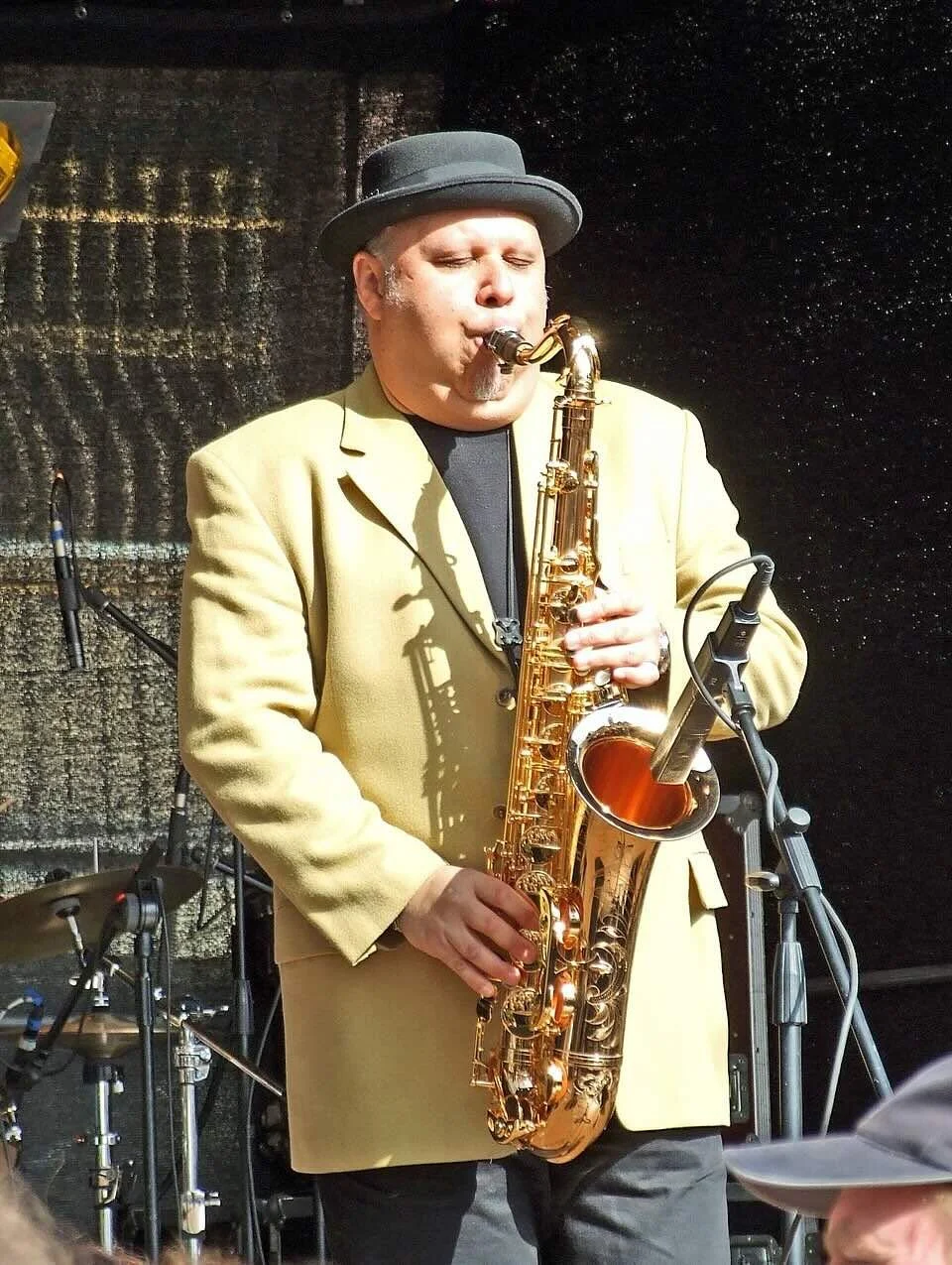
Image credit: Tony Lakatos with the Paul Kuhn Trio at Römerberg, Frankfurt am Main, October 2008. Photograph by Dontworry. CC BY-SA 3.0.

Gershwin with plenty of jazz muscle

The tracklist is an intriguing mixture of familiar standards and more adventurous material. “I Get Along Without You Very Well”, “Georgia On My Mind”, “The Nearness Of You” and “Stardust” sit alongside “Played Twice” — a Thelonious Monk composition — plus two Lakatos originals, “Double Reality” and “Vintage”.

That makes George In Our Minds sound less like a conventional songbook exercise and more like a proper musicians’ session: familiar melodies are the starting point, rather than the destination. Lakatos' tenor saxophone supplies the melodic personality, while Mraz and Nussbaum give the music the conversational rhythmic foundation that only a seasoned trio can really achieve.

The Lakatos–Mraz connection was already well established. Lakatos' 1994 album The News featured George Mraz alongside pianist Kirk Lightsey and drummer Al Foster, while his SKIP Records album I Get Along With You Very Well brought Lakatos, Mraz and Nussbaum together for a programme devoted to Hoagy Carmichael, with Jimmy Scott also appearing.

That history makes the rediscovery of this live recording all the more appealing.

A tribute within a tribute

This double meaning is what gives the record its emotional weight.

The album is fundamentally a celebration of Gershwin's music, but the title and accompanying release information also frame it as a remembrance of Mraz. The bassist had a remarkable career spanning European and American jazz, and his partnership with Lakatos was clearly a meaningful musical one.

Then there is Adam Nussbaum, a drummer whose career has included major associations with John Scofield, Dave Liebman, Stan Getz, Gil Evans and numerous other leading jazz figures. His ability to respond rather than simply accompany is a key part of the classic small-group jazz sound, and it makes this particular trio combination especially compelling.

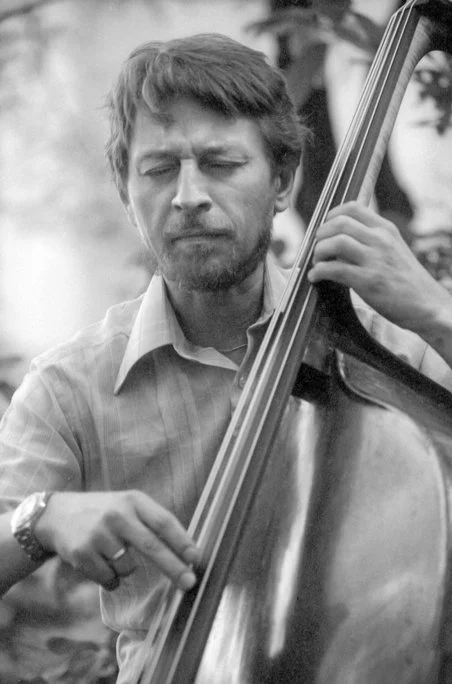
Image credit: George Mraz at Exxon Park, New York City, 7 July 1983, with the Tommy Flanagan Trio and drummer Vernell Fournier. Photograph by Brian McMillen. Licence: CC BY-SA 4.0.

What makes George In Our Minds exciting, then, is that it isn't simply an archival curiosity. It documents three heavyweight musicians interacting in real time, tackling some of the most enduring melodies in American music while leaving plenty of space for improvisation, tension and swing.

For anyone drawn to sophisticated European jazz, the Great American Songbook or classic saxophone-bass-drums interplay, this is a release worth keeping firmly on the radar. And with George Mraz's presence at its centre, George In Our Minds looks set to be more than just another posthumous archival release — it could be a genuinely affecting snapshot of a trio at work.

Comment

Comment

On "We Dream" Lakecia Benjamin Reaches for New Heights

Few artists in contemporary jazz possess the fire, vision and sheer magnetic presence of Lakecia Benjamin, and her latest album, We Dream, is another bold statement from one of the genre's most exciting voices.

Released in June 2026, the New York saxophonist and composer continues to push beyond traditional jazz boundaries, blending hard-hitting improvisation with soul, funk, hip-hop and spoken-word influences. Following the Grammy-nominated success of Phoenix and Phoenix Reimagined (Live), We Dream feels like a natural progression—ambitious in scope while remaining deeply personal.

Rather than simply assembling an all-star cast, Benjamin uses her impressive list of collaborators to enhance the emotional journey of the record. The album features contributions from acclaimed musicians including Terence Blanchard, Hiromi, Chris Potter, Jeff "Tain" Watts, Chief Xian aTunde Adjuah, Bilal, Kassa Overall, and Tarriona "Tank" Ball, each adding their own distinctive flavour while allowing Benjamin's expressive alto saxophone to remain at the centre of the music.

The title track, "We Dream," perfectly captures the album's spirit. Featuring the unmistakable voice of Tarriona "Tank" Ball, the song carries an uplifting message of hope, unity and possibility. Benjamin's soaring saxophone lines weave effortlessly around Tank's soulful vocal performance, creating a piece that feels equally rooted in jazz tradition and modern social consciousness.

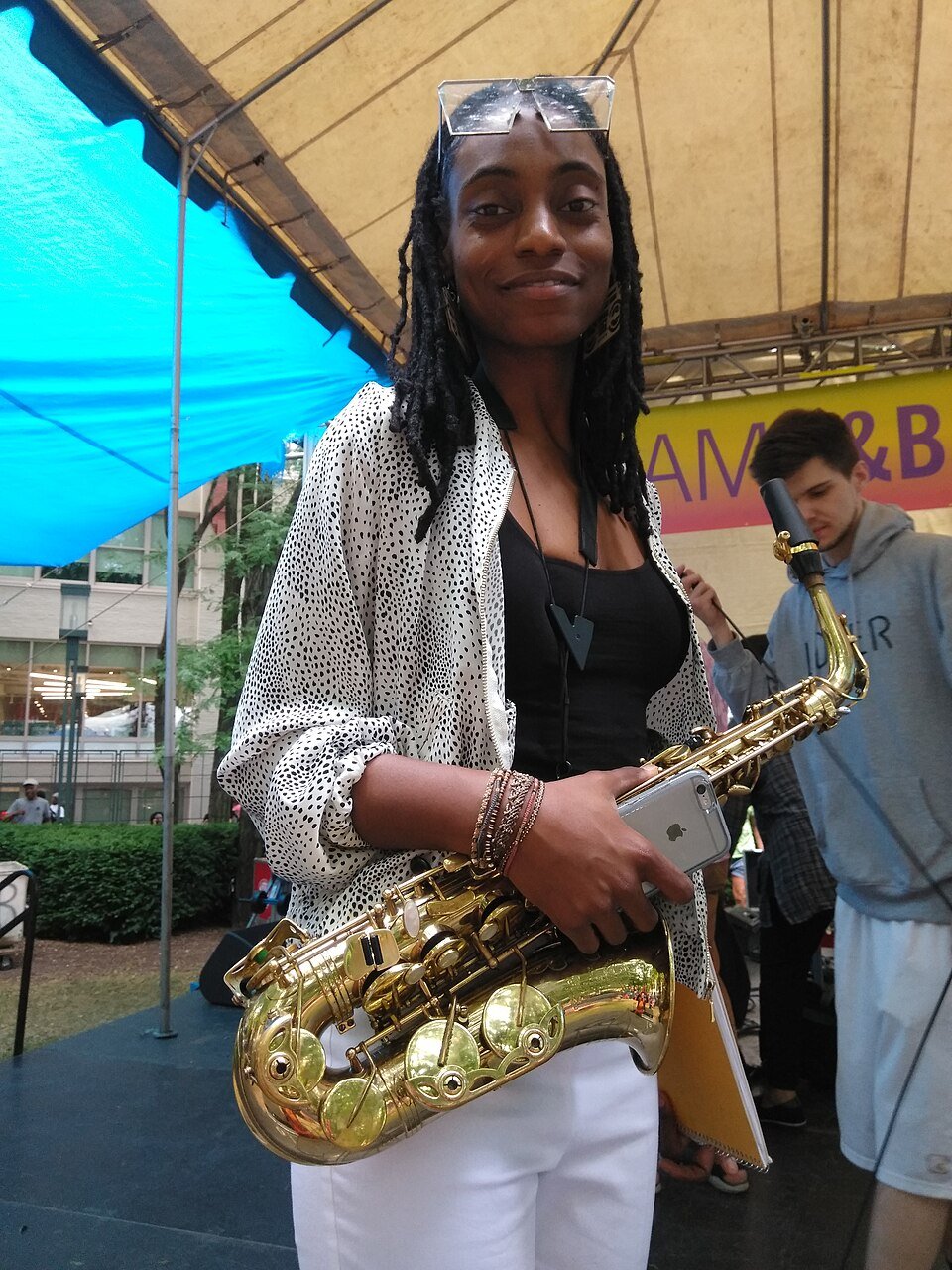
Lakecia Benjamin (2018) in NYC by Adjoajo, via Wikimedia Commons. Licensed under CC BY-SA 3.0.

It's a reminder that Benjamin has never been interested in musical boundaries. Throughout her career she's collaborated with artists ranging from Stevie Wonder and Alicia Keys to The Roots, while also paying tribute to jazz legends John and Alice Coltrane. That broad musical background shines throughout We Dream, giving the album an accessibility that should appeal well beyond dedicated jazz audiences.

Production across the album is polished yet organic, allowing each performance room to breathe. The interplay between the musicians is consistently thrilling, whether the arrangements lean into explosive improvisation or settle into reflective, melodic passages. Benjamin's confidence as both composer and bandleader is unmistakable, guiding every performance with energy and purpose.

Ultimately, We Dream is more than just another impressive jazz release—it's an affirmation of Benjamin's growing status as one of the defining artists of her generation. Rich in groove, fearless in its improvisation and driven by an unmistakable sense of optimism, the album demonstrates why she continues to attract critical acclaim and an ever-expanding audience.

For listeners discovering Lakecia Benjamin for the first time, We Dream offers a perfect introduction to an artist who refuses to stand still. For longtime fans, it's yet another exhilarating chapter in a career that continues to redefine what modern jazz can be.

Comment

Comment

Cairiss Return with a Landmark Debut as Wilderness Stakes Its Claim Among 2026's Finest Releases

More than a decade after first turning heads with their acclaimed 2014 demo Disgraced, Southampton's Cairiss have finally delivered the full-length album fans have been waiting for—and it has been worth every second of the wait.

Released on 31 July 2026, Wilderness marks the band's long-awaited debut album, arriving after an extraordinary ten-year silence. Rather than feeling like a comeback built on nostalgia, the record sounds like the work of musicians who have spent years refining every detail before unveiling something deeply personal and emotionally devastating. The album follows themes of trauma, dissociation, grief, identity and healing, with the band describing it as a conceptual journey through recovery after life-altering experiences.

Musically, Wilderness sits comfortably alongside modern blackgaze's most compelling artists while carving out its own identity. The band's combination of soaring post-rock atmospherics, crushing post-metal weight and emotionally charged dual-vocal performances creates an experience that's as cinematic as it is punishing.

Opening track "Nervosa" immediately establishes the emotional landscape, balancing shimmering melodies with explosive heaviness before flowing into "The Guide,"arguably one of the album's defining moments. Elsewhere, the haunting restraint of "Integrate" provides a brief moment to breathe before the colossal "Dissociate" and the sprawling "Retrace" continue the record's emotional ascent. Closing track "Wildfire" brings the journey to an unforgettable conclusion, leaving listeners with a rare sense of catharsis rather than simple closure. The six-track record consists of Nervosa, The Guide, Integrate, Dissociate, Retrace and Wildfire.

One of the album's greatest strengths is its patience. Cairiss resist the temptation to chase instant gratification, instead allowing songs to breathe, build and evolve naturally. Every crescendo feels earned, every quiet passage serves a purpose, and every eruption carries genuine emotional weight.

It's this maturity that separates Wilderness from many of its contemporaries. Rather than relying solely on the familiar blackgaze formula of beauty versus brutality, Cairiss weave together elements of shoegaze, atmospheric black metal and post-metal into something remarkably cohesive and deeply human.

Early critical reaction has been overwhelmingly enthusiastic, with reviewers praising both its emotional depth and its ambitious songwriting. After more than ten years away from the spotlight, Cairiss have achieved something few bands manage: a debut album that not only meets long-held expectations but comfortably exceeds them.

If there is any justice, Wilderness won't simply be remembered as an impressive debut—it deserves to be part of every serious conversation surrounding the very best heavy records released in 2026.

For fans of emotionally immersive, genre-defying heavy music, this isn't merely an album worth hearing. It's one that demands to be experienced from beginning to end.

Comment