Comment

Quiet Thunder in Norwich: Cowboy Junkies Bring 40 Years of Haunted Americana to The Halls

Norwich is set to become a temporary outpost of Canadian alt-country atmosphere this May as Cowboy Junkies arrive for a highly anticipated stop on their “Celebrating 40 Years and Beyond” tour. The performance lands at The Halls Norwichon 14 May 2026, as part of the broader Norfolk & Norwich Festival 2026 programme—one of the city’s most diverse annual cultural gatherings.

Formed in Toronto in the mid-1980s, Cowboy Junkies have long operated in a space far removed from mainstream rock theatrics. Their signature sound—slow-burning, intimate, and drenched in reverb—first crystallised on the landmark 1988 release The Trinity Session, a record that helped define a generation of atmospheric folk and alt-country.

At the centre of it all remains Margo Timmins, whose understated vocal style has become one of alternative music’s most recognisable textures, supported by guitarist Michael Timmins, drummer Peter Timmins, and bassist Alan Anton.
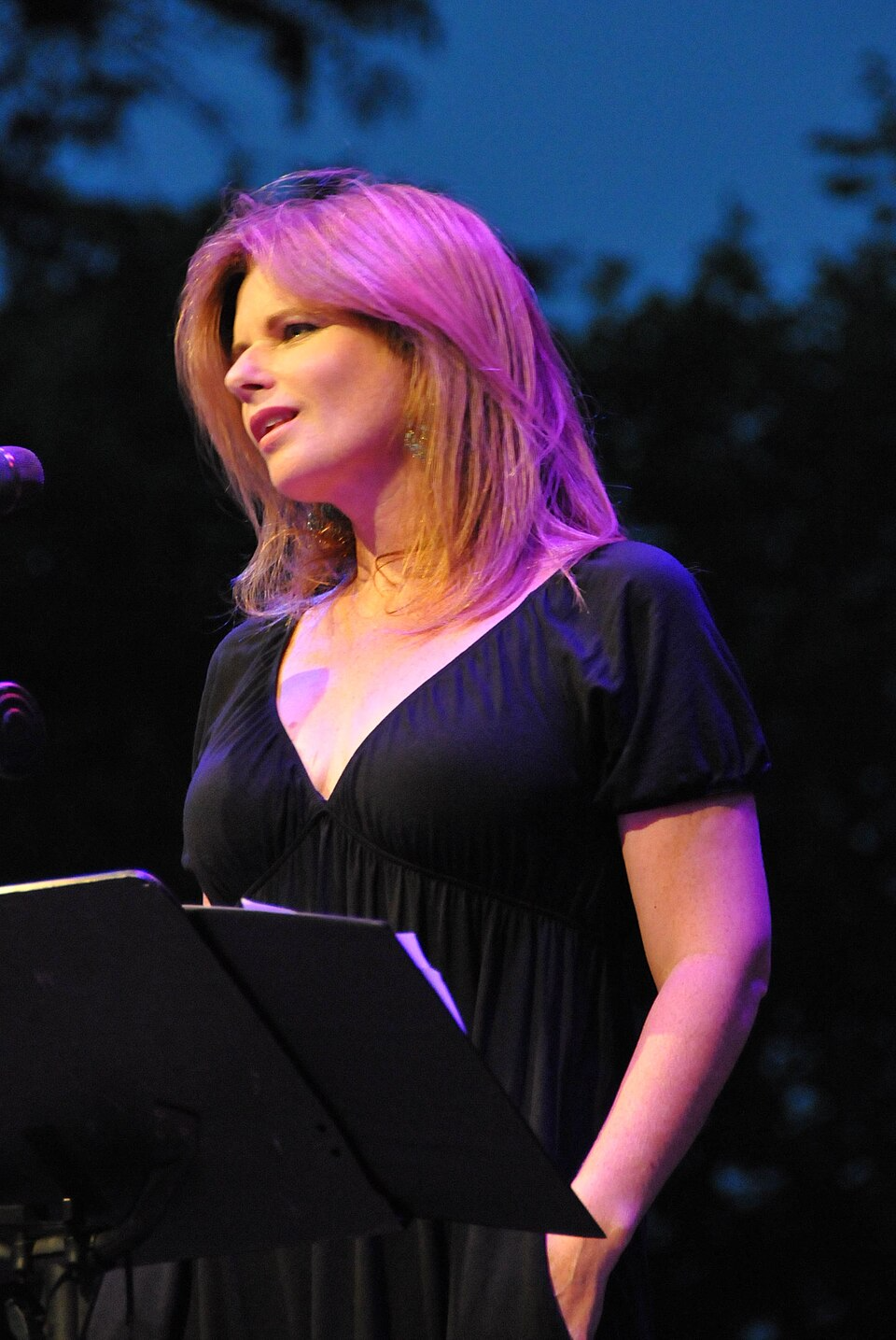
Photo by sidrguelph, via Wikimedia Commons — licensed under CC BY-SA 2.0

Photo by sidrguelph, via Wikimedia Commons — licensed under CC BY-SA 2.0

A Career-Spanning Set in a City of Silence and Sound

The Norwich concert is being billed as a full retrospective experience, drawing material from across their four-decade catalogue, including early breakthroughs, reinterpretations of classic covers, and recent work such as Such Ferocious Beauty (2023).

Recent tour descriptions suggest audiences can expect the band’s familiar balance of restraint and emotional weight—where silence matters as much as sound, and even familiar songs are reshaped into something newly fragile and immediate.

This isn’t a nostalgia act in the usual sense. Cowboy Junkies’ live shows tend to feel more like collective memory reconstruction—songs stretched, slowed, and re-lit from different angles, often revealing details that studio recordings hold back.

The Atmosphere: Less “Gig,” More “Listening Room”

Cowboy Junkies have always leaned into minimalism, and their live staging reflects that ethos. Instruments are spaced carefully, arrangements breathe, and the spotlight rarely overwhelms the performance.

What emerges is less a traditional rock concert and more a shared listening space—an environment where audiences are pulled into quiet intensity rather than driven by volume or spectacle.

The Norwich setting of The Halls, known for its warm acoustics and historic character, feels especially suited to that approach. It’s the kind of venue where subtle dynamics can carry as much emotional force as distortion ever could.

Why This Tour Matters

At over 40 years into their career, Cowboy Junkies remain an unusual presence: a band that never broke up, never radically reinvented itself for trends, and never stopped touring.

Instead, they’ve refined a language built on understatement—cover songs slowed into meditations, originals shaped like private conversations, and performances that feel intentionally unhurried.

For Norwich audiences, the upcoming show is less about spectacle and more about immersion. In a festival line-up that spans orchestral works, contemporary installations, and experimental theatre, Cowboy Junkies offer something deceptively simple: space, mood, and a steady emotional pull that doesn’t rely on volume to make its presence felt.
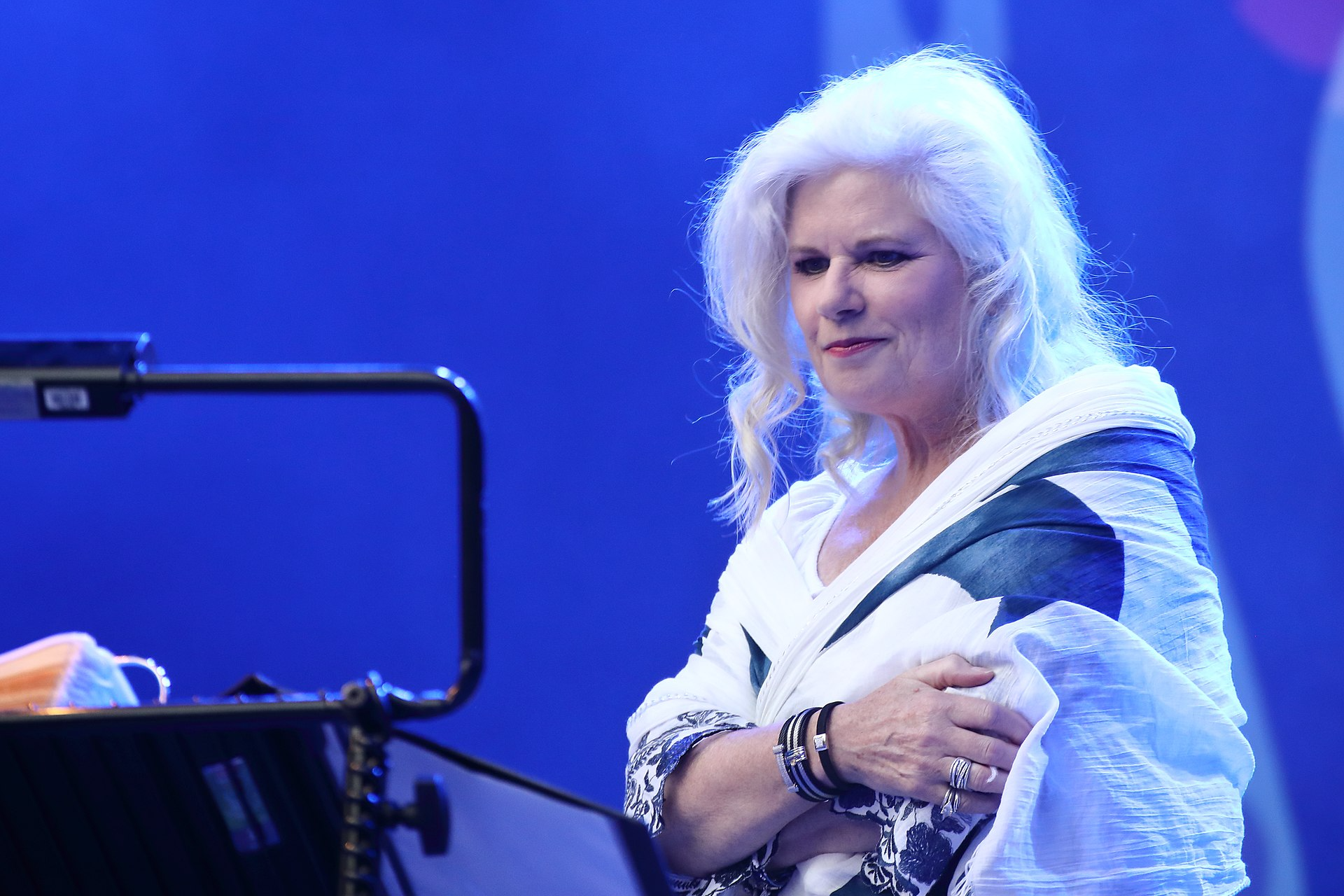
Cowboy Junkies performing live at Rudolstadt Festival (2019)
Photo by Schorle, via Wikimedia Commons — licensed under CC BY-SA 4.0

Final Word

If the band’s history is anything to go by, the Norwich performance won’t be loud—but it will likely linger. Cowboy Junkies have spent decades proving that quiet music can carry its own kind of thunder, and The Halls looks set to become the next room where that philosophy resonates.
Comment

Comment

Acid Reign Unleash a Thrash Metal Storm on Daze Of The Week

For a band that first detonated out of the UK thrash underground in the late 1980s, Acid Reign sound remarkably dangerous in 2026. Their new album Daze Of The Week arrives not as a nostalgia trip, but as a full-force reminder that British thrash still has teeth — and plenty of venom left in the tank.

Formed in 1985 and long regarded as part of the unofficial “Big Four” of British thrash alongside Onslaught, Sabbat and Xentrix, Acid Reign originally carved out a reputation for mixing razor-edged riffs with a twisted sense of humour and a chaotic live energy. After splitting in 1991, the band re-emerged in 2015 under the leadership of vocalist Howard “H” Smith, the sole remaining original member.

Now comes Daze Of The Week, their first studio album since 2019’s The Age Of Entitlement, and by all accounts this is not a band easing quietly into veteran status. Early reactions from metal press and underground fans point toward a faster, sharper and more aggressive Acid Reign than many expected.

The album reportedly pushes harder into classic thrash territory while still keeping the off-kilter personality that made the band stand out in the first place. Tracks like “Sorrowsworn” and “The Who Of You” lean into precision riffing, muscular groove changes and snarling hooks, while the title itself feels like a perfectly sarcastic Acid Reign statement — bleak, funny and completely unhinged.

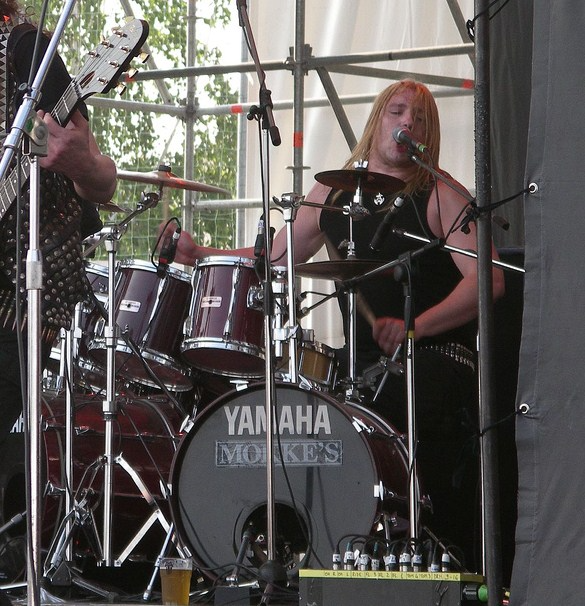
“Marc Reign” by Shadowgate via Wikimedia Commons. Licensed under Creative Commons Attribution 2.0 Generic (CC BY 2.0).

One of the biggest talking points surrounding the record is the refreshed lineup. Guitarist Matt Smith and drummer Johnny Grimley have injected a more modern attack into the band’s sound, with reviewers already highlighting tighter rhythms and flashes of death metal influence woven into the classic thrash framework.

And perhaps that’s the secret to Acid Reign’s latest rebirth: they aren’t trying to recreate 1989. While many legacy thrash acts survive on retro appeal, Acid Reign seem determined to evolve without losing the grime and speed that built their cult following in the first place.

The timing also feels right. Thrash metal has been enjoying another underground resurgence in recent years, with younger fans rediscovering overlooked UK acts through streaming platforms, festival appearances and online metal communities. On Reddit threads discussing underrated thrash bands and the so-called British “Big Four,” Acid Reign’s name repeatedly surfaces as a cult favourite deserving wider recognition.

If Daze Of The Week proves anything, it’s that Acid Reign are no museum piece. This is still music made for sweat-soaked clubs, flying beer cups and neck-breaking circle pits. Four decades into their existence, the band sound revitalised, furious and absolutely unwilling to fade quietly into metal history.

Thrash never really died — it just needed another Acid Reign.

Comment

Comment

Cool Jazz Comes to the Coast: On Matt Skelton’s Blackhawk Quintet

There are jazz gigs, and then there are nights that feel like stepping into another era entirely. That was the atmosphere surrounding drummer Matt Skelton and his acclaimed Blackhawk Quintet when they rolled into Lowestoft’s long-running Milestones Jazz Club at the Hotel Hatfield.

The performance — part tribute, part revival, part blazing contemporary statement — paid homage to legendary West Coast jazz drummer Shelly Manne and the immortal At the Black Hawk recordings captured in San Francisco in September 1959. Skelton’s project has steadily become one of the UK jazz scene’s most talked-about live acts, celebrated for reimagining the spirit of those sessions without slipping into mere imitation.

Image credit: William P. Gottlieb / Library of Congress via Wikimedia Commons. Public Domain

Backed by a formidable line-up featuring trumpeter Tom Dennis, saxophonist Mark Crooks, pianist Leon Greening and bassist Simon Read, Skelton channelled the restless energy and hard-swinging sophistication that made Manne’s original quintet such a cornerstone of post-bop jazz. Reviewers described the group as “off-the-chart superb,” with fiery ensemble passages and telepathic interplay between Skelton and Greening drawing particular praise.

What makes this project especially compelling is that it doesn’t treat the music like a museum piece. Instead, Skelton’s Blackhawk Quintet approaches the repertoire with the same adventurous spirit that defined the original recordings. The set reportedly moved effortlessly from Tad Dameron burners to Victor Feldman compositions, balancing razor-sharp arrangements with exhilarating improvisation.

And the audience in Lowestoft clearly knew they were witnessing something special.

Milestones Jazz Club itself has become something of an East Anglian institution, surviving for three decades through sheer passion and dedication. In an age where independent jazz venues are increasingly rare, nights like this feel vital — proof that world-class jazz still thrives far beyond London’s major stages.

Skelton has spent years building a reputation as one of Britain’s finest jazz drummers, performing alongside internationally respected names including Kurt Elling, Scott Hamilton and Curtis Stigers. His Blackhawk project, however, feels deeply personal — a labour of love rooted in the explosive creativity of late-1950s jazz.

The result is more than nostalgia. It’s a reminder of how alive this music still sounds when played by musicians who truly understand its heartbeat.

For one night on the Suffolk coast, the spirit of San Francisco’s legendary Black Hawk club lived again. And judging by the standing ovation that closed the evening, Lowestoft absolutely loved every minute of it.

Comment

Comment

On " Fateful Birds & Fledgling Stories" Olivia Murphy Takes Flight

There’s a certain kind of jazz record that feels less like an album and more like stepping into an entirely imagined world. With her sweeping orchestral debut Fateful Birds & Fledgling Stories, London-based composer and conductor Olivia Murphy has delivered exactly that — a richly cinematic, myth-soaked journey that blurs the lines between contemporary jazz, chamber music, spoken storytelling and free improvisation.

Released on 8 May 2026 through Murphy’s own bandcamp page, the album marks a major moment for one of the UK jazz scene’s most inventive emerging arrangers. Built around themes of transformation, folklore and emotional upheaval, the record unfolds across ten movements performed by the expansive Olivia Murphy Jazz Orchestra.

Murphy has already built a formidable reputation in British jazz circles through her large-ensemble writing and work with the National Youth Jazz Orchestra, where she now serves as a Resident Musical Director. Critics have previously described her music as “some of the most exciting large ensemble jazz emerging from the London scene today,” and this latest project makes it easy to understand why.

At the heart of Fateful Birds & Fledgling Stories is an obsession with metamorphosis. Mythological references weave through the album’s architecture: “Calliope and the Magpies” revisits the Greek tale of the muse transforming rival singers into birds, while the multi-part “Honey Thieves” draws from an ancient story of men cursed after stealing sacred honey. Elsewhere, the gorgeous “Sister Suite” borrows imagery from Little Women, framing each sister as a different bird navigating adulthood in contrasting ways.

Musically, the record refuses to sit still. One moment it drifts into haunting vocal minimalism; the next it erupts into vast brass swells and ecstatic improvisation. Vocalists Becca Wilkins and Rebecka Edlund glide through Murphy’s arrangements like spectral narrators, while the orchestra itself moves with the unpredictability of a murmuration — fluid, restless and thrillingly alive.

There’s also an impressive pedigree behind the scenes. Trumpeter and composer Laura Jurd co-produced the album alongside Murphy, while legendary composer Django Bates contributed liner notes praising the project’s “courageous self-expression.” The sessions were recorded at London’s Livingston Studios with a cast featuring many of the UK jazz underground’s most exciting improvisers.

What makes the album particularly compelling is how unapologetically personal it feels. Even at its most technically dazzling, the music never loses sight of storytelling. Murphy’s compositions are deeply emotional but never sentimental, ambitious without becoming inaccessible. It’s orchestral jazz that still feels intimate — music designed not just to impress, but to pull listeners into its strange, dreamlike universe.

With sold-out performances already under her belt at venues including Birmingham Symphony Hall, PizzaExpress Jazz Club and Cheltenham Jazz Festival, Murphy’s ascent has been gathering momentum for several years. Fateful Birds & Fledgling Stories feels like the moment the wider world finally catches up.

And if this album is only the beginning of Murphy’s large-scale orchestral vision, British jazz may have just found its next truly essential composer.

Comment

Comment

Albion’s Enchanting Return: Inside the Mythic World of It Was In The Month Of May

There’s something wonderfully out of time about Albion. In an era dominated by algorithm-chasing singles and disposable streaming trends, the London folk-rock collective are leaning harder into ancient myth, progressive ambition, and richly textured storytelling — and their upcoming album It Was In The Month Of May might just be their boldest statement yet.

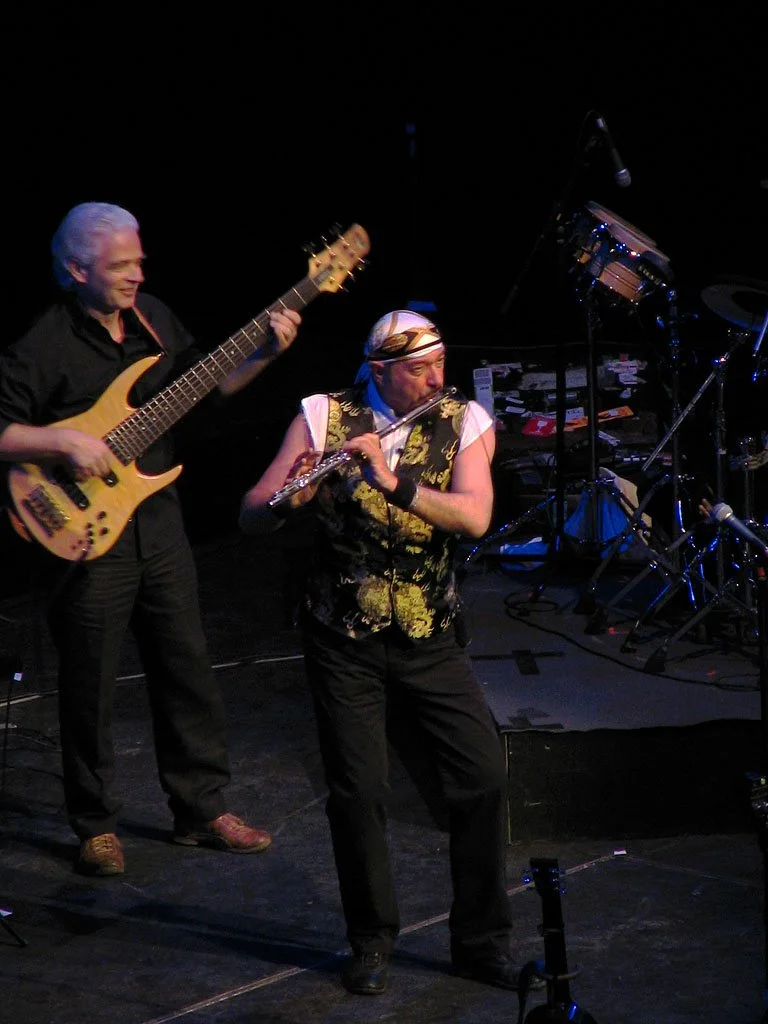
Image credit: “Ian Anderson in concert” by Melyviz, via Wikimedia Commons. Licensed under Creative Commons CC BY-SA 2.0. Suitable for editorial and commercial reuse with attribution.

Formed in 2019 by guitarist and composer Joe Parrish-James, the band emerged with a mission to preserve traditional folk music while filtering it through progressive rock and folk-metal energy. Their 2024 debut Lakesongs of Elbid established Albion as one of the UK underground’s most intriguing genre-bending acts, but the new record appears to elevate everything: bigger arrangements, deeper literary themes, and an even more cinematic atmosphere.

What makes the project especially fascinating is its connection to the world of Ian Anderson and Jethro Tull. Albion’s Joe Parrish-James and Jack Clark both have links to Anderson’s orbit, and that influence is impossible to ignore. Flutes whirl through heavy riffs, acoustic passages bloom into expansive prog-rock crescendos, and the entire album carries the unmistakable spirit of classic British folk experimentation.

The album itself reads like a lost folklore manuscript unearthed from a rain-soaked British hillside. Song titles such as The Green Knight, Hymn To Elbereth, and Eldest (Tom Bombadil) openly embrace the influence of J. R. R. Tolkien, weaving fantasy literature into Albion’s blend of Celtic folk, progressive rock, and metal.

Early reviews have praised the record’s ability to move fluidly between delicate acoustic passages and thunderous, almost soundtrack-like climaxes. Folk & Honey described the album as a more focused and mature evolution of Albion’s debut, while MetalTalk called it a “medieval journey” rich with “movie-like orchestra” textures and immersive storytelling.

There’s also a distinctly Welsh thread running through the project. Opening track Mis Mai translates to “Month of May” in Welsh, while the closing epic Calan Mai references traditional May Day celebrations. Rather than simply borrowing imagery, Albion seem intent on building a fully realised mythological landscape where British folk tradition, fantasy literature, and modern progressive music collide.

Image credit: “Ian Anderson blacksheep 2016 3924.jpg” by Rs-foto, via Wikimedia Commons. Licensed under Creative Commons CC BY-SA 3.0.

Perhaps most excitingly, Albion aren’t treating this album like a niche studio curiosity. A run of UK live dates has already been announced in support of the release, including shows in Birmingham, Cardiff, Liverpool, Manchester, and London. The band have promised performances spanning material from their earlier EPs alongside the expansive new songs from It Was In The Month Of May.

At a time when folk-rock can sometimes feel trapped between nostalgia and novelty, Albion are carving out something genuinely immersive. Their music doesn’t simply revisit old traditions — it transforms them into sprawling modern legends filled with storm clouds, ancient forests, and the ghostly echo of flutes drifting through distorted guitars.

If the early reactions are any indication, It Was In The Month Of May could become one of 2026’s most captivating underground folk-rock releases — a record designed less for passive listening and more for total escape.

Comment