Comment

On "Pure Devotion" Overmono Turn Up the Heat

The Welsh electronic duo return with a tactile, unruly second album that pushes their club sound into stranger and more physical territory.

Overmono have never been particularly interested in making electronic music that feels overly polished. On Pure Devotion, the Welsh brothers Tom and Ed Russell take that instinct several steps further, turning the studio itself into an instrument.

Released on 7 August 2026 through XL Recordings, Pure Devotion is the duo’s second album, following 2023’s Good Lies. Across 11 tracks, Overmono combine the heavyweight bass pressure and euphoric rush of their live sets with an unusually hands-on approach to sound design.

And if the album’s title suggests something serene, the music has other ideas.

Where the machines get messy

The central idea behind Pure Devotion is physicality. Rather than simply reaching for pristine digital sounds, Overmono have been deliberately abusing, reshaping and re-recording their equipment.

The pair have described running tape over magnets, pushing sounds through old speakers and experimenting with ageing effects hardware. One particularly eccentric experiment involved baking a cymbal covered in coffee grounds, crisps and vinegar — an idea attributed to producer Sylvia Massy.

It sounds ridiculous on paper. In the context of Overmono, however, it makes perfect sense. Their music has always thrived on the tension between machine precision and human messiness: rigid rhythms collide with warped samples, emotional vocals and sounds that seem to be on the verge of breaking apart.

That philosophy is all over Pure Devotion.

From Lockup to the deeper cuts

The album opens with “Lockup”, a track that immediately establishes the record’s tougher, more kinetic side. The single reworks Birmingham post-punk group Fast Relief’s “What A Waste” into a driving four-to-the-floor track, giving Overmono another opportunity to blur the boundaries between rave, punk and electronic music.

From there, the record moves through a surprisingly compact collection of ideas. “Knight In Shining Prada” features John Joseph Holt, while Kindora appears on “Even Angels Ghost” and alongside Rock Floyd on “Ballad”. Ruthven also contributes to “Gem Lingo (ovr now)”.

The tracklist reads almost like a snapshot of Overmono’s increasingly broad musical world: club weapons sit alongside more spacious, melodic moments, while vocal collaborations add colour without pulling the album away from its electronic core.

The songs are also strikingly concise, with the individual tracks mostly landing between roughly two-and-a-half and four-and-a-half minutes. That gives the album a brisk, constantly moving feel rather than the extended runtime of a traditional techno record.

The live show is still the beating heart

Perhaps the most important thing about Pure Devotion is that it feels connected to what Overmono have become onstage.

Since Good Lies, Tom and Ed Russell have spent considerable time developing their live performances, including touring internationally, appearing at Glastonbury and recording a Boiler Room set in Manchester. Their new material has therefore been developing alongside a live identity that has become increasingly central to the project.

That helps explain why Pure Devotion seems designed less as a collection of isolated studio experiments and more as fuel for a room full of people.

The contrast is crucial. Overmono can make something feel enormous without making it sound unnecessarily complicated. A bassline hits hard, a vocal slips into focus, a melody briefly appears through the smoke — and suddenly a track that might look deceptively simple on paper becomes enormous when played through a proper sound system.

A bigger, stranger Overmono

What makes Pure Devotion interesting is that the duo haven't simply tried to make a bigger version of Good Lies. Instead, they have doubled down on the imperfections that made their music distinctive in the first place.

The result is an album built around a very Overmono idea: take something familiar, damage it slightly, push it through something inappropriate, and see what happens.

There are still the huge beats and chest-rattling low end, but the surfaces feel more tactile. The electronic machinery is audible in the music rather than hidden behind it. Even the album artwork — featuring the Doberman image created by long-time collaborator Rollo Jackson — reflects that combination of menace and elegance.

With Pure Devotion, Overmono sound increasingly comfortable occupying their own space: somewhere between rave nostalgia, experimental production and unabashed emotional release.

It is dance music that wants to be felt physically — but also inspected closely once the adrenaline wears off.

And that might be the most devoted thing about it.
Comment

Comment

Tony Lakatos’ George In Our Minds: A Lost Trio Session Gets Its Moment

A previously recorded 2004 performance brings Tony Lakatos, George Mraz and Adam Nussbaum together for a sophisticated salute to Gershwin — and an unexpectedly moving farewell to Mraz himself.

There is something wonderfully old-school about George In Our Minds. The title points towards George Gershwin, whose compositions form the heart of the set, but the forthcoming SKIP Records release carries another, much more poignant meaning: it is also a tribute to the great Czech-American bassist George Mraz, who died in Prague in 2021.

Recorded live in Slovakia in 2004, the album features Hungarian saxophonist Tony Lakatos alongside Mraz on double bass and American drummer Adam Nussbaum. SKIP Records is scheduled to release the previously recorded performance on 28 August 2026, with catalogue number SKP9168.

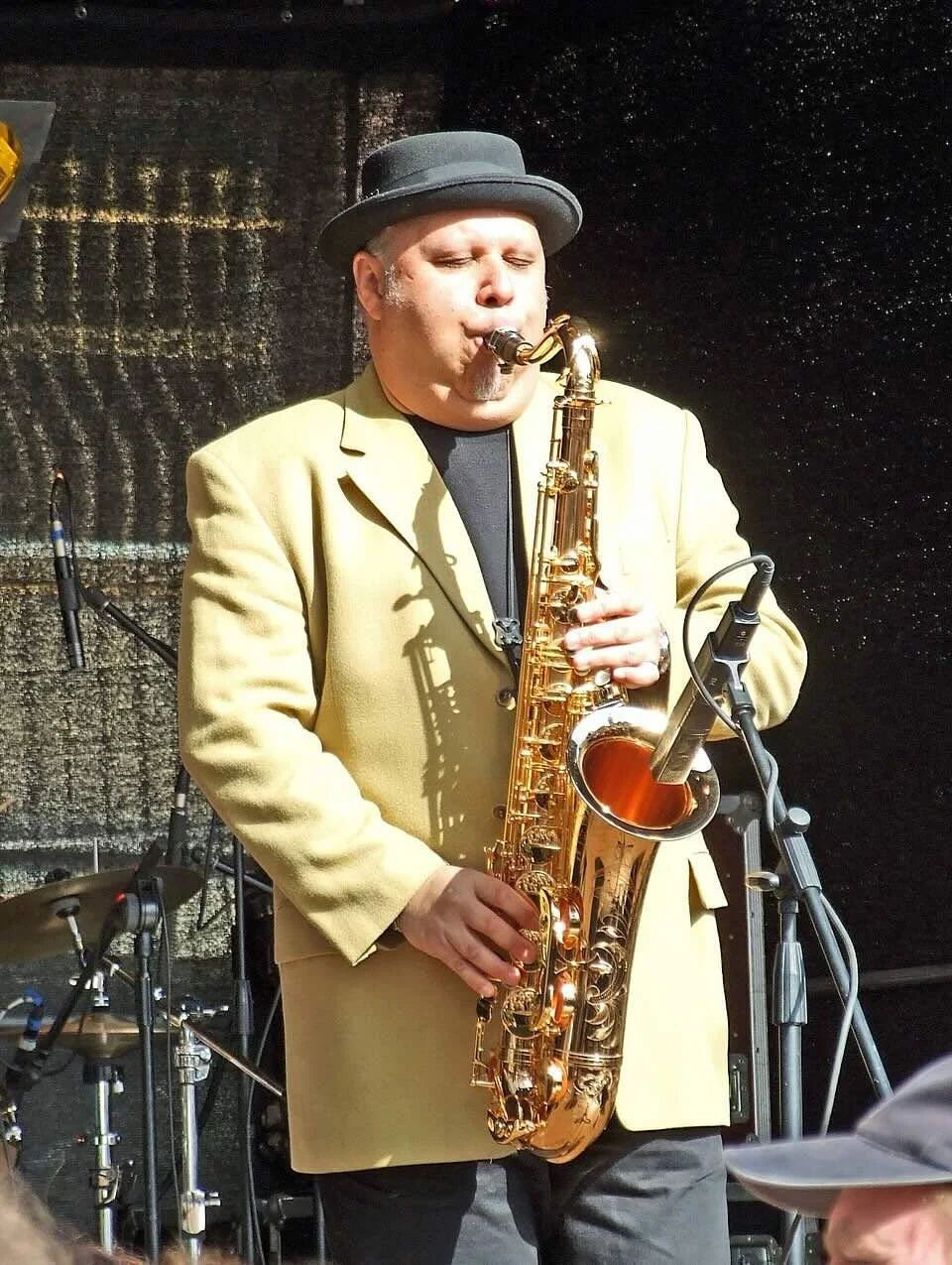
Image credit: Tony Lakatos with the Paul Kuhn Trio at Römerberg, Frankfurt am Main, October 2008. Photograph by Dontworry. CC BY-SA 3.0.

Gershwin with plenty of jazz muscle

The tracklist is an intriguing mixture of familiar standards and more adventurous material. “I Get Along Without You Very Well”, “Georgia On My Mind”, “The Nearness Of You” and “Stardust” sit alongside “Played Twice” — a Thelonious Monk composition — plus two Lakatos originals, “Double Reality” and “Vintage”.

That makes George In Our Minds sound less like a conventional songbook exercise and more like a proper musicians’ session: familiar melodies are the starting point, rather than the destination. Lakatos' tenor saxophone supplies the melodic personality, while Mraz and Nussbaum give the music the conversational rhythmic foundation that only a seasoned trio can really achieve.

The Lakatos–Mraz connection was already well established. Lakatos' 1994 album The News featured George Mraz alongside pianist Kirk Lightsey and drummer Al Foster, while his SKIP Records album I Get Along With You Very Well brought Lakatos, Mraz and Nussbaum together for a programme devoted to Hoagy Carmichael, with Jimmy Scott also appearing.

That history makes the rediscovery of this live recording all the more appealing.

A tribute within a tribute

This double meaning is what gives the record its emotional weight.

The album is fundamentally a celebration of Gershwin's music, but the title and accompanying release information also frame it as a remembrance of Mraz. The bassist had a remarkable career spanning European and American jazz, and his partnership with Lakatos was clearly a meaningful musical one.

Then there is Adam Nussbaum, a drummer whose career has included major associations with John Scofield, Dave Liebman, Stan Getz, Gil Evans and numerous other leading jazz figures. His ability to respond rather than simply accompany is a key part of the classic small-group jazz sound, and it makes this particular trio combination especially compelling.

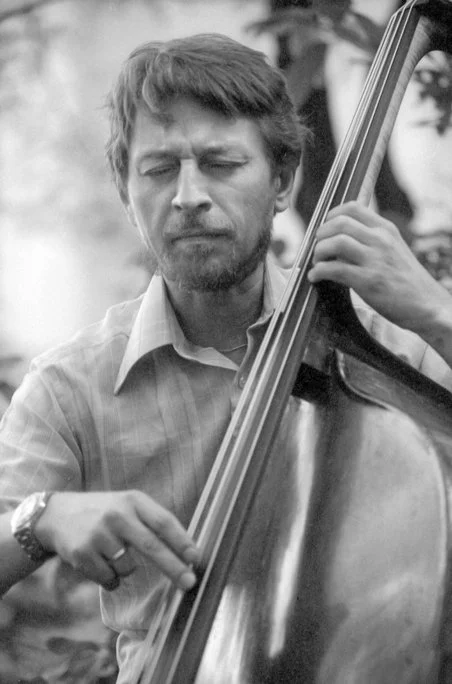
Image credit: George Mraz at Exxon Park, New York City, 7 July 1983, with the Tommy Flanagan Trio and drummer Vernell Fournier. Photograph by Brian McMillen. Licence: CC BY-SA 4.0.

What makes George In Our Minds exciting, then, is that it isn't simply an archival curiosity. It documents three heavyweight musicians interacting in real time, tackling some of the most enduring melodies in American music while leaving plenty of space for improvisation, tension and swing.

For anyone drawn to sophisticated European jazz, the Great American Songbook or classic saxophone-bass-drums interplay, this is a release worth keeping firmly on the radar. And with George Mraz's presence at its centre, George In Our Minds looks set to be more than just another posthumous archival release — it could be a genuinely affecting snapshot of a trio at work.

Comment

Comment

On "We Dream" Lakecia Benjamin Reaches for New Heights

Few artists in contemporary jazz possess the fire, vision and sheer magnetic presence of Lakecia Benjamin, and her latest album, We Dream, is another bold statement from one of the genre's most exciting voices.

Released in June 2026, the New York saxophonist and composer continues to push beyond traditional jazz boundaries, blending hard-hitting improvisation with soul, funk, hip-hop and spoken-word influences. Following the Grammy-nominated success of Phoenix and Phoenix Reimagined (Live), We Dream feels like a natural progression—ambitious in scope while remaining deeply personal.

Rather than simply assembling an all-star cast, Benjamin uses her impressive list of collaborators to enhance the emotional journey of the record. The album features contributions from acclaimed musicians including Terence Blanchard, Hiromi, Chris Potter, Jeff "Tain" Watts, Chief Xian aTunde Adjuah, Bilal, Kassa Overall, and Tarriona "Tank" Ball, each adding their own distinctive flavour while allowing Benjamin's expressive alto saxophone to remain at the centre of the music.

The title track, "We Dream," perfectly captures the album's spirit. Featuring the unmistakable voice of Tarriona "Tank" Ball, the song carries an uplifting message of hope, unity and possibility. Benjamin's soaring saxophone lines weave effortlessly around Tank's soulful vocal performance, creating a piece that feels equally rooted in jazz tradition and modern social consciousness.

Lakecia Benjamin (2018) in NYC by Adjoajo, via Wikimedia Commons. Licensed under CC BY-SA 3.0.

It's a reminder that Benjamin has never been interested in musical boundaries. Throughout her career she's collaborated with artists ranging from Stevie Wonder and Alicia Keys to The Roots, while also paying tribute to jazz legends John and Alice Coltrane. That broad musical background shines throughout We Dream, giving the album an accessibility that should appeal well beyond dedicated jazz audiences.

Production across the album is polished yet organic, allowing each performance room to breathe. The interplay between the musicians is consistently thrilling, whether the arrangements lean into explosive improvisation or settle into reflective, melodic passages. Benjamin's confidence as both composer and bandleader is unmistakable, guiding every performance with energy and purpose.

Ultimately, We Dream is more than just another impressive jazz release—it's an affirmation of Benjamin's growing status as one of the defining artists of her generation. Rich in groove, fearless in its improvisation and driven by an unmistakable sense of optimism, the album demonstrates why she continues to attract critical acclaim and an ever-expanding audience.

For listeners discovering Lakecia Benjamin for the first time, We Dream offers a perfect introduction to an artist who refuses to stand still. For longtime fans, it's yet another exhilarating chapter in a career that continues to redefine what modern jazz can be.

Comment

Comment

Cairiss Return with a Landmark Debut as Wilderness Stakes Its Claim Among 2026's Finest Releases

More than a decade after first turning heads with their acclaimed 2014 demo Disgraced, Southampton's Cairiss have finally delivered the full-length album fans have been waiting for—and it has been worth every second of the wait.

Released on 31 July 2026, Wilderness marks the band's long-awaited debut album, arriving after an extraordinary ten-year silence. Rather than feeling like a comeback built on nostalgia, the record sounds like the work of musicians who have spent years refining every detail before unveiling something deeply personal and emotionally devastating. The album follows themes of trauma, dissociation, grief, identity and healing, with the band describing it as a conceptual journey through recovery after life-altering experiences.

Musically, Wilderness sits comfortably alongside modern blackgaze's most compelling artists while carving out its own identity. The band's combination of soaring post-rock atmospherics, crushing post-metal weight and emotionally charged dual-vocal performances creates an experience that's as cinematic as it is punishing.

Opening track "Nervosa" immediately establishes the emotional landscape, balancing shimmering melodies with explosive heaviness before flowing into "The Guide,"arguably one of the album's defining moments. Elsewhere, the haunting restraint of "Integrate" provides a brief moment to breathe before the colossal "Dissociate" and the sprawling "Retrace" continue the record's emotional ascent. Closing track "Wildfire" brings the journey to an unforgettable conclusion, leaving listeners with a rare sense of catharsis rather than simple closure. The six-track record consists of Nervosa, The Guide, Integrate, Dissociate, Retrace and Wildfire.

One of the album's greatest strengths is its patience. Cairiss resist the temptation to chase instant gratification, instead allowing songs to breathe, build and evolve naturally. Every crescendo feels earned, every quiet passage serves a purpose, and every eruption carries genuine emotional weight.

It's this maturity that separates Wilderness from many of its contemporaries. Rather than relying solely on the familiar blackgaze formula of beauty versus brutality, Cairiss weave together elements of shoegaze, atmospheric black metal and post-metal into something remarkably cohesive and deeply human.

Early critical reaction has been overwhelmingly enthusiastic, with reviewers praising both its emotional depth and its ambitious songwriting. After more than ten years away from the spotlight, Cairiss have achieved something few bands manage: a debut album that not only meets long-held expectations but comfortably exceeds them.

If there is any justice, Wilderness won't simply be remembered as an impressive debut—it deserves to be part of every serious conversation surrounding the very best heavy records released in 2026.

For fans of emotionally immersive, genre-defying heavy music, this isn't merely an album worth hearing. It's one that demands to be experienced from beginning to end.

Comment

Comment

Behind the Legend: James Gavin Explores the Extraordinary Life of Anita O'Day in Cool Heat

Few jazz singers lived a life as exhilarating—or as perilous—as Anita O'Day. Now acclaimed music historian James Gavin turns his attention to one of jazz's most fearless voices with Cool Heat: Anita O'Day and Her Dangerous Jazz Life, a new biography that promises to peel back the layers of a woman whose remarkable talent was matched only by the chaos surrounding her.

For jazz fans, Anita O'Day hardly needs an introduction. Nicknamed the "Jezebel of Jazz," she transformed vocal jazz during the 1940s and '50s with her daring sense of rhythm, razor-sharp phrasing and refusal to imitate anyone who came before her. Rather than relying on vocal theatrics, O'Day approached every song like an improvising instrumentalist, making standards sound fresh, unpredictable and unmistakably her own.

Her career flourished alongside big band legends including Gene Krupa and Stan Kenton before she forged an acclaimed solo career with Verve Records. Albums such as Cool Heat—the 1959 collaboration featuring Jimmy Giuffre's innovative arrangements—remain essential listening for anyone exploring classic vocal jazz.

But as Gavin's title suggests, this isn't simply another celebration of a jazz icon.

Behind the elegant performances lay decades of addiction, abusive relationships, prison sentences, personal tragedy and an almost unbelievable determination to survive. O'Day openly chronicled many of those struggles in her own memoir High Times, Hard Times, but Gavin draws on fresh research, previously unpublished material and interviews to paint what is said to be the fullest portrait of the singer yet.

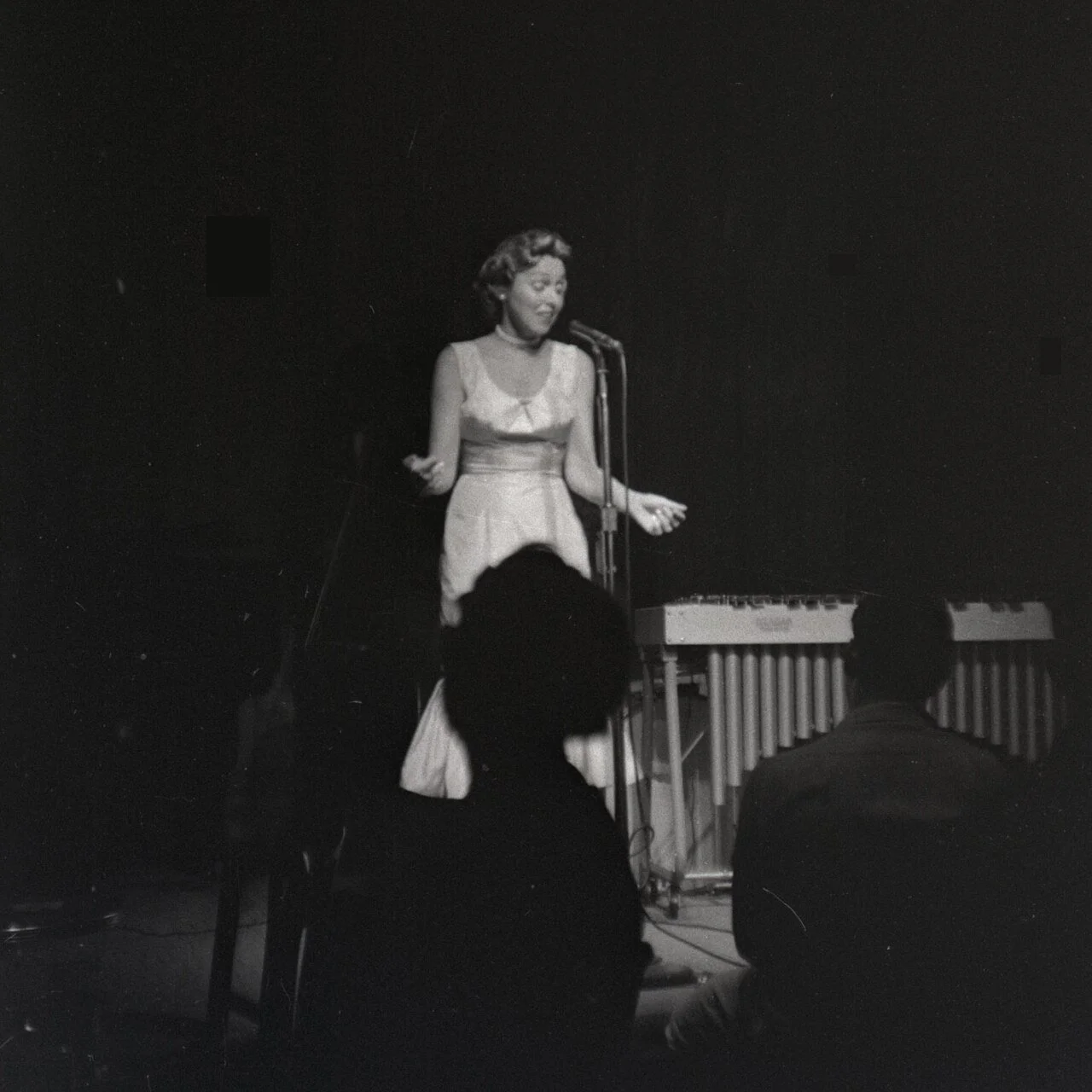
Photo by Mel Levine (via Flickr user "pinelife"), Wikimedia Commons. Licensed under Creative Commons Attribution 2.0 (CC BY 2.0)

It's a fitting subject for Gavin, whose biographies have earned praise for placing musicians within the wider social and cultural landscape rather than simply recounting recording sessions and chart success. That approach appears to continue here, examining how O'Day challenged expectations of women in jazz while navigating an industry dominated by powerful men and relentless touring schedules.

Despite everything life threw at her, O'Day remained an electrifying live performer well into her later years. Her unforgettable appearance in the classic concert film Jazz on a Summer's Day introduced generations of new listeners to her unique stage presence, proving that charisma and musical intelligence could be every bit as compelling as vocal power.

For readers who enjoy music biographies that don't shy away from the darker chapters, Cool Heat looks set to be one of the year's standout jazz books. It's not just the story of an exceptional singer, but of resilience, reinvention and a woman who refused to let her personal demons silence one of the most distinctive voices in American music.

Whether you're already an Anita O'Day devotee or discovering her catalogue for the first time, James Gavin's latest work offers another compelling reason to revisit the life and music of a true jazz original.

Comment