
Comment

When Heavy Metal Looks Back Without Falling Back

In a genre that often reinvents itself by erasing its own past, Lex Legion does something far more stubborn—and arguably more satisfying. Their self-titled debut arrives not as a reinvention of heavy metal, but as a carefully reconstructed memory of it: sharpened, polished, and played by people who were there the first time around.

If the phrase “heavy metal nostalgia done right” sounds like a loaded compliment, that’s because it is. But Lex Legion earns it by refusing to treat nostalgia as decoration. Instead, it becomes the framework.

A lineup built from metal history itself

Lex Legion is, at its core, a reunion of some of the most recognisable names from King Diamond’s late-1980s era. The band brings together guitarist Andy LaRocque, drummer Mikkey Dee, guitarist Pete Blakk, and bassist Hal Patino, with vocals handled by Nils K. Rue of Pagan’s Mind.

That alone would be enough to raise eyebrows in any metal circle, but what makes the project more than a novelty is how naturally the chemistry appears to translate into new material. These are musicians whose shared history stretches back decades, and that familiarity is audible in the way the album leans into tight, deliberate songwriting rather than chaos or experimentation.

There’s a reason comparisons keep circling back to the King Diamond catalog: not because Lex Legion is copying it, but because many of the people who helped define that era are now revisiting its language with more control and less urgency.

“Sleep Eternally” and the sound of deliberate throwback metal

Early singles like “Sleep Eternally” set the tone immediately: galloping rhythms, sharply defined riffs, and a vocal performance that sits somewhere between theatrical classic metal and modern clarity. The production avoids excessive gloss, instead opting for a direct, punchy presentation that recalls the late-80s European metal wave without sounding like a museum piece.

Follow-up tracks such as “Gypsy Tears” continue that approach, leaning into melodic phrasing and structured pacing rather than sprawling excess. The result is music that feels familiar in shape, but not necessarily in execution—like a restored classic car that still drives with modern precision.

Across the album, reviewers consistently point out that Lex Legion’s strength lies in execution rather than innovation: this is a band revisiting a style rather than attempting to redefine it.

Nostalgia, but not imitation

One of the more interesting tensions in Lex Legion is how self-aware the project feels. Interviews with guitarist Andy LaRocque have emphasized that the material is not meant as a continuation of King Diamond songwriting, but rather a return to a shared creative mindset from decades ago.

That distinction matters. Instead of trying to recreate a specific discography, Lex Legion appears to be chasing a feeling: the sense of writing without overthinking, prioritising riffs, dynamics, and melody over conceptual complexity.

It’s also where the album divides opinion slightly. Some listeners hear a lack of risk-taking, while others hear discipline—metal stripped back to its core mechanics.

Final impression: familiar ground, expertly walked

Lex Legion doesn’t try to surprise you. That’s not really the point. The album is built like a well-rehearsed ritual: the same ingredients that defined a golden era of heavy metal, now performed by the people who helped invent it.

If there’s a criticism embedded in that praise, it’s that the record rarely steps outside its chosen boundaries. But within those boundaries, it is confident, cohesive, and unmistakably authentic to the musicians involved.

This is not nostalgia as regression. It’s nostalgia as craftsmanship.

Or put more plainly: Lex Legion sounds like a band remembering exactly how heavy metal used to feel—and playing it like they never forgot.
Comment

Comment

When Rivers Meet Turn Up the Heat on Rhythm Rust & Static

There’s a certain kind of album that sounds less like a studio creation and more like a statement of intent. Rhythm Rust & Static, the latest release from British blues-rock powerhouse When Rivers Meet, falls firmly into that category.

For a band that has built its reputation outside the traditional music industry machine, Grace and Aaron Bond have never sounded more confident in who they are. The duo’s fifth studio album strips away unnecessary polish and heads straight for the heart of what made fans fall in love with them in the first place: gritty guitars, soul-stirring vocals, and songs that feel lived-in rather than manufactured.

From the opening moments, Rhythm Rust & Static crackles with energy. There’s a rough-edged honesty running through the record, a feeling that every riff, vocal line and drum hit has been captured in real time rather than assembled piece by piece. It’s an approach that perfectly suits a band whose story has always been rooted in hard work, relentless touring and a fiercely independent spirit.

Lead single The Tide Is Turning sets the tone beautifully. Inspired by life on the road, the track captures the exhilaration, uncertainty and determination that comes with chasing a dream night after night. It’s an anthem for anyone who has ever kept going despite the odds, fuelled by belief rather than guarantees.

What makes Rhythm Rust & Static particularly compelling is its refusal to chase trends. While modern rock production often leans towards bigger and more layered arrangements, When Rivers Meet have intentionally moved in the opposite direction. The result is a record that feels immediate, organic and refreshingly authentic. Every track carries the sense that it could explode into life on stage exactly as it sounds on record.

Grace Bond’s commanding vocals remain one of the band’s greatest strengths, balancing vulnerability with sheer power, while Aaron Bond’s guitar work delivers the kind of blues-infused fire that has become a signature of the duo’s sound. Together, they create a chemistry that few contemporary rock acts can match.

At a time when so much music is carefully calculated, Rhythm Rust & Static feels gloriously human. It’s raw without being reckless, polished enough to hit hard but never so refined that it loses its edge.

More than anything, this is an album that sounds like When Rivers Meet embracing exactly who they are. No compromises. No distractions. Just great songs, played with conviction.

And that’s precisely why it might be their most powerful release yet.

Comment

Comment

Baltic Jazz Energy Meets British Guitar Brilliance: Rahel Talts Quartet Lights Up London with Ant Law

London’s jazz scene welcomed a compelling international collaboration this month as Estonian pianist and composer Rahel Talts brought her acclaimed quartet back to the capital, joined by one of the UK’s most inventive guitar voices, Ant Law.

Taking to the stage at Jazz Café POSK in Hammersmith, the ensemble delivered a performance that showcased exactly why Talts has become one of the most exciting emerging names on the European jazz circuit. Drawing heavily from the quartet’s latest album, Back and Forth, the evening blended contemporary jazz sophistication with the folk-inspired melodies and rhythmic vitality that have become a hallmark of Talts’ writing.

What immediately sets Talts apart is her ability to balance accessibility with musical depth. Her compositions often draw on Nordic and Baltic influences, weaving memorable themes through richly textured arrangements. That distinctive sound has helped the quartet build a growing reputation across Europe and Asia, while appearances at major festivals have steadily expanded their audience.

Adding another dimension to the London performance was the presence of guitarist Ant Law. Widely regarded as one of Britain’s most innovative jazz guitarists, Law has earned praise for his fearless approach to harmony, rhythm and composition. His playing brought an extra spark to Talts’ material, creating moments where intricate interplay gave way to soaring melodic exchanges and exhilarating improvisation.

The chemistry between the musicians was evident throughout the set. Saxophonist Donatas Petreikis, bassist Mariusz Praśniewski and drummer Jesper Lørup Christensen formed a highly responsive rhythm section, allowing Talts and Law the freedom to explore the music’s dynamic range. From delicate, folk-tinged passages to driving grooves and expansive solos, the group maintained a sense of momentum that kept the audience engaged from start to finish.

Talts’ rise has been rapid. In recent years, the Estonian pianist has performed extensively across Europe, led her large-scale Rahel Talts Ensemble project, represented Estonia in the Euroradio Jazz Orchestra, and released a series of well-received recordings. Back and Forth, the quartet’s latest release, continues that trajectory, capturing the melodic warmth and international outlook that define her work.

For London jazz fans, this concert offered more than a showcase of emerging talent. It was a reminder of how vibrant and interconnected the contemporary European jazz scene has become. By bringing together musicians from Estonia, Lithuania, Poland, Denmark and the United Kingdom, the Rahel Talts Quartet demonstrated how jazz continues to evolve through collaboration, cultural exchange and fearless creativity.

If this performance is any indication, Rahel Talts’ profile is only going to keep growing. And with collaborators of Ant Law’s calibre joining the journey, audiences can expect many more memorable nights ahead.

Comment

Comment

On New Album Like in the Movies: Svante Söderqvist’s THE ROCKET Turns Jazz Into Cinema

There are albums you listen to, and then there are albums you step inside. With Like in the Movies, Swedish bassist, cellist and composer Svante Söderqvist and his evolving ensemble THE ROCKET deliver the latter — a sweeping, cinematic journey that feels less like a traditional jazz record and more like the soundtrack to an unwritten film.

THE ROCKET has steadily grown into one of the most intriguing projects on the Nordic jazz scene. What began as Söderqvist’s acclaimed trio alongside pianist Adam Forkelid and drummer Calle Rasmusson has expanded into a richly textured quartet through the addition of Estonian-Swedish accordionist and sonic explorer Tuulikki Bartosik. The result is a band that moves effortlessly between chamber jazz, folk-inspired melodies and atmospheric soundscapes.

The title Like in the Movies proves remarkably fitting. Across the album’s eight tracks, the quartet creates vivid musical scenes that unfold with the pacing and emotional depth of a carefully crafted film. Delicate piano passages give way to soaring accordion melodies, while Söderqvist’s distinctive blend of double bass, cello and occasional wordless vocals provides a warm, human centre. The music never rushes; instead, it invites listeners to linger in its landscapes.

Critics have already picked up on the album’s cinematic quality. Swedish music publication Lira described the record as a “musical film you want to see again and again,” praising its dreamlike chamber-jazz atmosphere and evocative storytelling. The comparison feels entirely justified. Whether drifting through the reflective moods of “Another Autumn (In the Light of Madness)” or the expansive emotional arcs of tracks such as “One Week” and “Europa 2022,” the music constantly suggests images, memories and stories beyond the notes themselves.

What makes THE ROCKET especially compelling is the group's ability to balance sophistication with accessibility. There is plenty here for jazz aficionados to admire — intricate interplay, nuanced improvisation and exceptional musicianship — yet the melodies remain inviting and emotionally direct. Folk influences weave naturally through the compositions, while Bartosik’s accordion and subtle electronic textures add an extra dimension that broadens the ensemble’s sonic palette.

For Söderqvist, who has spent more than two decades building a reputation as one of Sweden’s most respected jazz bassists, Like in the Movies feels like a creative milestone. The album expands upon the musical language explored on the 2023 release The Rocket, pushing further into cinematic territory while maintaining the lyrical beauty and melodic strength that have become his trademarks.

In an era dominated by short attention spans and algorithm-driven playlists, Like in the Movies stands out as a work designed to be experienced from beginning to end. It's immersive, emotionally resonant and beautifully crafted — a reminder that instrumental music can still tell powerful stories without uttering a single word.

If the best films leave you thinking long after the credits roll, then Like in the Movies achieves the same effect. THE ROCKET has created a record that doesn't just accompany your imagination — it ignites it.

Comment

Comment

On the Mesmerising "Green Prism" Hilary Jeffery Refracts Keith Tippett’s Legacy

There are tribute albums, and then there are records that feel like conversations across time. On Green Prism, Berlin-based British trombonist and composer Hilary Jeffery achieves the latter, transforming the music of the late Keith Tippett into something that is both a heartfelt homage and a bold creative statement in its own right.

The origins of Green Prism stretch back several years. Tippett had originally composed a suite titled Winter's Welcome for Jeffery's brass ensemble Zinc & Copper, premiered in Berlin in 2019. Tragically, ill health prevented Tippett from fully participating in the project before his death in 2020. Rather than allowing the music to remain unfinished, Jeffery returned to the material with fresh perspective, rebuilding it through layers of multi-tracked brass, improvisation and adventurous arrangements.

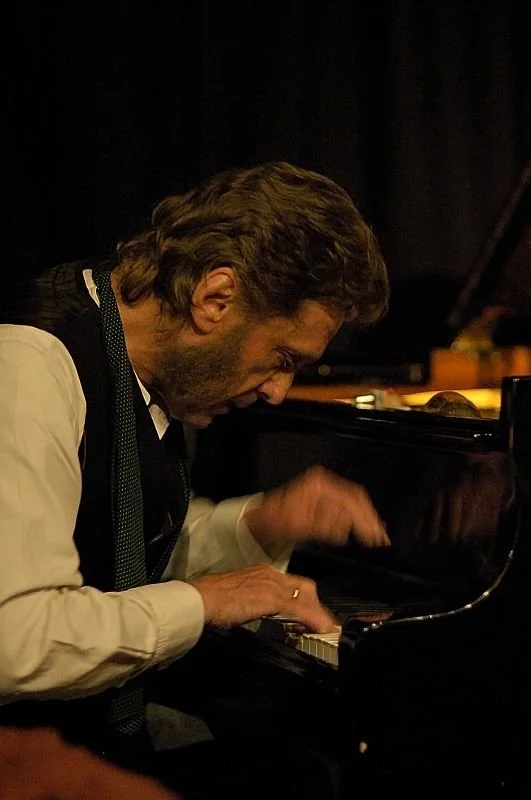
Keith Tippett. Source: Wikimedia Commons.
Licenced under Creative Commons 2.0.
Courtesy of the original photographer and Wikimedia Commons.

The result is a record that feels expansive and cinematic. Jeffery's brass arrangements form the album's backbone, but the surrounding cast brings remarkable colour to the music. Saxophonists Paul Dunmall and Tobias Delius inject moments of urgency and exploration, while Eleni Poulou's synthesizers and electronics add an atmospheric glow that pushes the music beyond conventional jazz territory. At the emotional centre stands Julie Tippetts, whose voice and lyrics provide a direct human connection to Keith Tippett's legacy.

What makes Green Prism especially compelling is its refusal to become a museum piece. Rather than recreating Tippett's compositions note for note, Jeffery treats them like living organisms, allowing them to evolve through improvisation, texture and reinterpretation. The album moves between moments of quiet reflection and powerful brass-driven grandeur, creating a listening experience that feels simultaneously intimate and vast. Critics have highlighted its rich use of space, silence and texture, qualities that give the music an almost filmic quality.

For longtime followers of Keith Tippett's work, Green Prism offers a fresh lens through which to revisit a towering figure of British jazz. For newcomers, it serves as an accessible entry point into a musical world built on curiosity, collaboration and fearless experimentation. The remarkable achievement is that Jeffery manages to honour Tippett's spirit without being constrained by it.

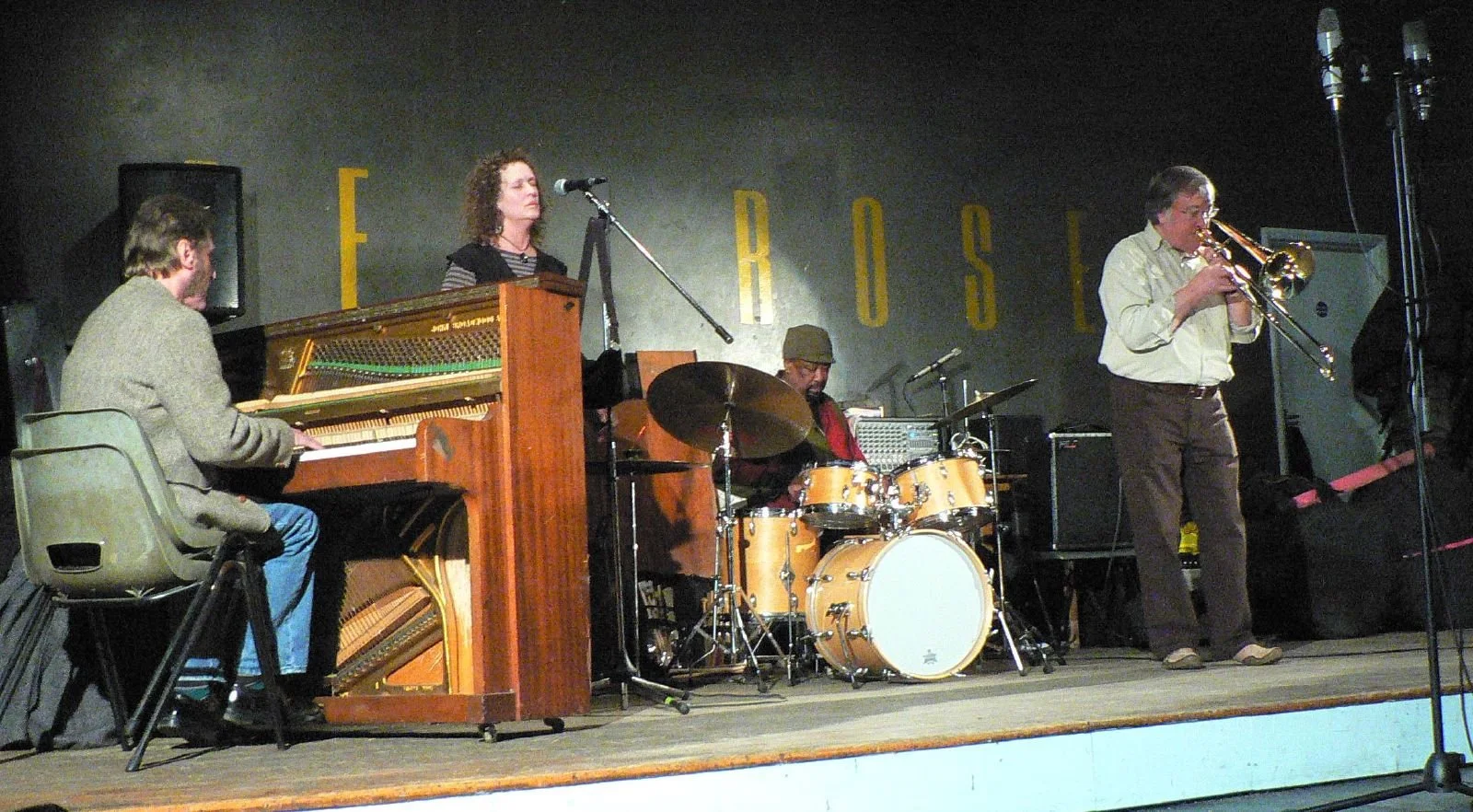
Keith Tippett and Louis Moholo-Moholo performing.
Licenced under Creative Commons 2.0.
Courtesy of the original photographer and Wikimedia Commons.

Released through Discus Music in May 2026, Green Prism stands as one of the most thoughtful and imaginative jazz releases of the year—a record that doesn't simply remember Keith Tippett, but actively extends the reach of his musical imagination.

Comment