
Comment

On Mournhold: Tyrannus Return with a Sharpened, Thrash-Driven Assault on their new album

There’s something brewing in the UK underground again—and it’s loud, hostile, and absolutely unrelenting. Scottish extreme metal outfit Tyrannus have stormed back into view with Mournhold, a record that doesn’t just build on their debut—it tightens the screws and kicks the door clean off its hinges.

Emerging in 2018 with a foundation rooted in blackened death-thrash, the band first made waves with 2022’s Unslayable. Now, their sophomore effort Mournhold—released May 15, 2026 via True Cult Records—pushes that identity into something sharper, broader, and far more deliberate.

A Darker, More Focused Evolution

Mournhold isn’t interested in subtlety—it’s about precision aggression. The band themselves have leaned further into their thrash roots this time, but what makes the album stand out is how seamlessly it blends styles. Expect the bite of ’80s thrash, the icy atmosphere of black metal, and even flashes of post-punk woven into the chaos.

That expanded palette gives the album a dynamic edge. Tracks like “Violent Inheritance” and “Orbus Non Sufficit”twist between tempo shifts and tonal extremes, balancing blistering riff work with eerie melodic passages. Meanwhile, “Seize the Stars” doubles down on classic thrash energy—sharp, driving, and impossible not to headbang to.

Then there’s “Flesh Eternal,” a curveball moment that leans heavily into post-punk textures, letting bass and rhythm take center stage before erupting into something far more intense. Lyrically, it explores body horror and distorted ideas of love—proof that Tyrannus aren’t just riff merchants; they’re storytellers with a taste for the unsettling.

Singles That Hit Like a Hammer Blow

Lead single “Reignfall” wastes no time making a statement. It’s pure thrash fury—razor-edged riffs, barked vocals, and an immediacy that feels almost physical. Critics have pointed out its “tangible anger,” a track that ditches metaphor in favor of raw impact.

It’s the kind of song that reminds you exactly where Tyrannus come from—and why they matter in today’s extreme metal landscape.

Atmosphere Meets Aggression

Despite its relentless core, Mournhold isn’t a one-dimensional assault. Tracks like the title piece and the closing “Back to Grey” stretch into more atmospheric territory, layering haunting melodies over driving rhythms. The result is an album that feels expansive without losing its bite.

Production also plays a huge role here. Recorded in Edinburgh and mastered by Brad Boatright, the record sounds crisp but still dangerous—every riff cutting through with intent, every shift in pace landing with impact.

Final Verdict

With Mournhold, Tyrannus have delivered what many second albums promise but few achieve: a genuine evolution. It’s heavier, more refined, and more confident—an album that doesn’t just reaffirm their place in the underground, but expands it.

If Unslayable was the spark, Mournhold is the wildfire.
Comment

Comment

Into the Abyss: Void of Light’s Monolithic, Haunting "Asymmetries"

There’s heavy music—and then there’s the kind of heavy that feels geological. The kind that doesn’t just hit, but presses down, suffocating and expansive all at once. Enter Void of Light, the Glasgow-based post-metal collective whose debut full-length Asymmetries lands like a slow-moving avalanche of sound and emotion.

A Debut Years in the Making

After building momentum through earlier EPs, Void of Light have finally unveiled Asymmetries, released April 3, 2026 via Ripcord Records.

This isn’t a rushed debut. It’s a carefully constructed, five-track monolith stretching over 48 minutes, each piece unfolding with deliberate weight and intent.

Across those five compositions—each hovering around the ten-minute mark—the band explores the full breadth of post-metal’s emotional spectrum: from crushing, sludge-laden riffs to fragile, almost meditative passages.

Sound: Crushing Meets Catharsis

Void of Light operate in a space familiar to fans of genre titans like Cult of Luna, Neurosis, and Isis—but they’re not content to simply echo their influences.

Instead, Asymmetries thrives on contrast. The band’s three-guitar assault builds towering walls of distortion, only to peel them back into shimmering, post-rock textures moments later.

Tracks like “Mirrorings”—a sprawling ten-minute closer—encapsulate this dynamic perfectly, shifting from pummeling sludge to melodic, almost shoegaze-like passages without losing cohesion.

The result? A sound that feels both suffocating and strangely uplifting—bleak in tone, yet rich with emotional release.

The Anatomy of Weight

What makes Asymmetries stand out isn’t just its heaviness—it’s how intentional that heaviness feels.

This is a band obsessed with dynamics. Every crushing riff is earned. Every quiet moment feels like the aftermath of something seismic. Reviews consistently highlight the album’s meticulous construction, where “nothing is rushed or half-formed.”

The dual vocal approach adds another layer of tension, shifting between harsh, excoriating deliveries and more restrained, atmospheric tones.

A Scene on the Rise

Void of Light aren’t emerging in isolation. The UK—and particularly Scotland—has become a fertile ground for forward-thinking heavy music in recent years.

But Asymmetries feels like a statement piece: a declaration that this band isn’t just part of the scene—they’re here to help define its next chapter.

Final Verdict

Asymmetries isn’t an easy listen, nor is it meant to be. It demands patience, immersion, and a willingness to be swallowed whole by its atmosphere.

But for those who give themselves over to it, Void of Light’s debut offers something rare: a record that feels vast, immersive, and genuinely weighty—not just in sound, but in emotional impact.

This is post-metal at its most enveloping—crushing, haunting, and impossible to ignore.

Comment

Comment

Heaven & Hell’s Final Chapter Immortalised in Powerful New Box Set

There’s something uniquely bittersweet about revisiting the last great creative surge of a legendary band—especially when you know how the story ends. That’s exactly the emotional weight carried by Breaking Out Of Heaven 2007–2009, a newly released box set that captures the final era of Heaven & Hell, the Dio-fronted incarnation of Black Sabbath that burned bright one last time.

Formed in 2006, Heaven & Hell reunited Ronnie James Dio with his classic Sabbath bandmates Tony Iommi, Geezer Butler, and Vinny Appice—a lineup responsible for some of the most revered heavy metal ever recorded. Rather than lean on nostalgia, the quartet carved out a distinct identity under a new name, revisiting their shared legacy while pushing forward with renewed fire.

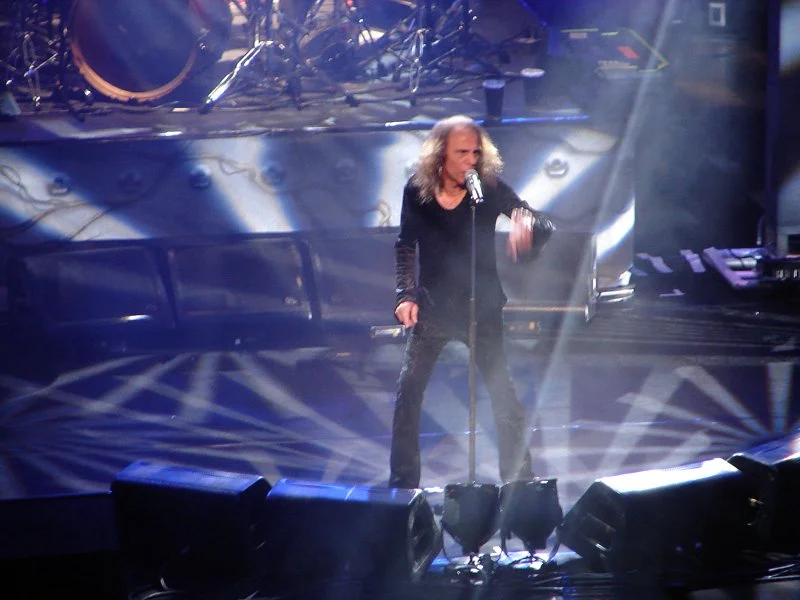
Ronnie James Dio performing live, 2009. Photo by Diego Torres Silvestre / CC BY 2.0 (via Wikimedia Commons)

A Late-Era Renaissance, Captured in Full

At the heart of this release is the band’s lone studio album, The Devil You Know (2009)—a record that proved this wasn’t just a reunion, but a reinvention. Dark, crushing, and unmistakably Sabbathian, it stands as the final studio statement from Dio before his passing in 2010.

The box set goes further, compiling the full scope of Heaven & Hell’s short but explosive second act. Fans get the thunderous Live From Radio City Music Hall (2007) performance and the emotionally charged Neon Nights: Live at Wacken 2009, recorded just months before Dio’s death.

Together, these recordings chart a band not coasting on legacy, but operating at full creative tilt—tight, heavy, and deeply inspired.

More Than a Box Set—A Time Capsule

Available as both a lavish 7LP vinyl collection and a 4CD/Blu-ray edition, Breaking Out Of Heaven 2007–2009 is more than just a compilation. It’s a curated document of a band that, against all expectations, found new life decades into their careers.

Included are extensive liner notes, a replica tour book, and rare memorabilia—details that elevate the set into something closer to a museum piece than a standard release.

But what truly sets it apart is the emotional resonance. These recordings weren’t meant to be a farewell. By all accounts, the band were “on a roll,” with more music likely to come had fate not intervened.

The Voice That Still Echoes

Listening back now, what hits hardest is Dio himself. His voice—operatic, commanding, unmistakable—remains one of heavy metal’s defining instruments. Even decades into his career, there’s no hint of decline—only power, control, and that signature sense of drama.

It’s no surprise that Iommi himself has called Dio the greatest metal vocalist of all time.

Ronnie James Dio performing with Heaven & Hell, 2007. Image released into the public domain via Wikimedia Commons.

Final Thoughts

Breaking Out Of Heaven 2007–2009 isn’t just a box set—it’s a closing chapter, preserved in full force. For longtime fans, it’s a reminder of how potent this lineup truly was. For newer listeners, it’s a gateway into one of metal’s most vital late-period renaissances.

And above all, it’s a fitting tribute to a voice—and a band—that never faded quietly.

Comment

Comment

Anthony Joseph sets sail into Afrofuturist jazz with “The Ark”

There are albums that arrive quietly, and then there are albums that feel like transmissions from another dimension. With The Ark, Anthony Joseph delivers firmly in the latter category—a dense, spiritual, and deeply imaginative voyage through sound, history, and possibility.

Released on April 24, 2026 via Heavenly Sweetness, The Ark is Joseph’s tenth album and a companion piece to 2025’s Rowing Up River To Get Our Names Back. The two records were conceived together, sharing sessions, musicians, and a wider conceptual thread rooted in Afrofuturism—using speculative futures to reframe and reclaim the past.

At the helm once again is Dave Okumu, whose production gives the project its elastic, genre-defying backbone. Jazz improvisation, dub textures, and funk grooves melt into one another, creating a sound that feels both ancient and futuristic at once.

But make no mistake—this is Joseph’s world. His voice, somewhere between spoken word incantation and jazz vocal, remains the gravitational centre. Often described as a leading figure of Britain’s Black avant-garde, Joseph uses language like an instrument, weaving surreal imagery with Caribbean rhythms and political memory.

A vessel of memory, myth, and music

The title track, “The Ark,” is the album’s conceptual heart. It unfolds as a rolling, poetic litany—part roll call, part myth-making exercise—invoking figures from across Black musical, literary, and cultural history. Names like Sun Ra and Octavia E. Butler appear not as references, but as passengers aboard Joseph’s metaphorical vessel.

This “ark” isn’t about escape—it’s about continuity. A moving archive. A refusal to let histories sink. Across the album’s seven tracks—including the expansive “Transposition of Space (Glissant)” and the hypnotic “Blue Susan”—Joseph constructs a fluid geography where London, the Caribbean, and imagined futures bleed into one another.

The sound of collective creation

The record is powered by a formidable ensemble: players like Eska Mtungwazi, Tom Skinner, and Byron Wallencontribute textures that are intricate yet never overwhelming. Every element feels precisely placed, allowing Joseph’s storytelling to remain front and centre.

There’s a sense throughout that The Ark is less a solo statement and more a communal ritual—Joseph acting as conduit, channeling voices across time and space into something unified and urgent.

Final thoughts

The Ark isn’t just an album you listen to—it’s one you enter. It asks for attention, rewards patience, and lingers long after it ends. In an era of quick hits and algorithmic playlists, Anthony Joseph has built something defiantly expansive: a sonic vessel carrying memory, resistance, and imagination forward.

And if you’re willing to step aboard, it’s a journey worth taking.

Comment

Comment

Ezra Collective Turn East London Inside Out

London’s modern jazz torchbearers lit up an intimate East London space this week, as Ezra Collective returned to their roots for a one-off celebration that felt less like a gig—and more like a full-circle moment.

A Homecoming in the Heart of the Scene

The setting: Colour Factory. The occasion: a special, fan-only event marking ten years since the band’s breakout EP Chapter 7. The result? A night soaked in gratitude, sweat, and the kind of communal energy that’s become synonymous with Ezra Collective’s rise through London’s jazz underground.

This wasn’t just another stop on a tour. The show was tied to the 10th anniversary reissue of Chapter 7, the 2016 release that first captured the band’s restless, genre-blurring energy.

And in keeping with their ethos, tickets weren’t sold—they were gifted via ballot. A thank-you to the community that’s been with them since day one.

The Sound of a Movement

For the uninitiated, Ezra Collective aren’t your standard jazz outfit. Formed in London in 2012, the five-piece—led by drummer Femi Koleoso—blend jazz with Afrobeat, hip-hop, reggae and more, creating a sound that’s as club-ready as it is technically sharp.

That fusion was on full display at Colour Factory. From explosive horn lines to groove-heavy bass sections, the band delivered a set that felt alive—constantly shifting, reacting, and pulling the crowd deeper into the moment.

It’s this live-wire chemistry that’s helped them break barriers, from becoming the first jazz act to win the Mercury Prize in 2023 to taking home Group of the Year at the BRIT Awards 2025.

Community at the Core

But what truly defined the night wasn’t just the music—it was the message.

Gratitude was the throughline, with the band reflecting on the youth clubs, mentors, and grassroots organisations that shaped them. That connection isn’t just lip service; it’s baked into everything they do.

The event itself was organised in partnership with Jazz re:freshed, one of the earliest platforms to support the band. The collaboration brought things back to where it all began—small rooms, big energy, and a crowd that feels like family.

And judging by the atmosphere, the feeling was mutual. Reports from the night describe a euphoric exchange—gratitude flowing just as strongly from the audience back to the band.

Intimate, But Monumental

There’s something special about seeing a band of this stature in a room this size. Ezra Collective have played major venues—like London’s arenas—but here, every note felt personal.

Moments of improvisation stretched and snapped back into tight, rhythmic unison. Smiles were exchanged between bandmates mid-jam. The crowd didn’t just watch—they moved, responded, became part of the performance.

It’s the kind of show that reminds you why live music matters.

The Bigger Picture

With their latest album Dance, No One’s Watching continuing to push their sound forward, and accolades stacking up, Ezra Collective could easily stay in the big-league circuit.

Instead, they chose to step back into a smaller room—and in doing so, reinforced exactly what got them here in the first place.

Not hype. Not industry machinery.

Community.

Final Word

In an era where success often means distance, Ezra Collective are doing the opposite—pulling closer, reaching back, and bringing everyone with them.

At Colour Factory, that philosophy wasn’t just talked about.

It was felt.

Comment