Neil Cowley Trio Rewire the Baroque on Built on Bach

There’s something quietly radical happening in the world of contemporary jazz right now—and it’s coming from a trio who’ve never been afraid to blur the lines. With Built on Bach, the Neil Cowley Trio return not with a straight tribute, but with something far more intriguing: a conversation across centuries with Johann Sebastian Bach.

Not Bach As You Know It

Let’s get one thing straight—Built on Bach is not a jazz reworking of Bach’s greatest hits. Instead, it’s something far more subtle. The trio—Cowley on piano, alongside long-time collaborators Rex Horan and Evan Jenkins—use Bach’s music as a starting point, not a blueprint.

Think of it less as reinterpretation and more as absorption. Bach isn’t quoted so much as he’s felt, embedded deep within the harmonic DNA of the compositions.

And that’s exactly the point.

A Spark in Leipzig

The origins of the project are as poetic as the music itself. Cowley has spoken about a chance moment in Leipzig, where he unexpectedly found himself standing at Bach’s grave—a moment that triggered a flood of musical reflection and ultimately inspired the project.

From that spark came a collection of pieces that imagine—without ever stating outright—what might happen if Bach sat in on a modern piano trio session.

The Sound: Intimate, Inventive, Unmistakably Cowley

Longtime fans might notice a shift here. The trio, known for their explosive crescendos and rhythmic intensity, dial things back slightly on Built on Bach. In its place: precision, space, and a more reverential tone—without sacrificing the emotional punch.

Tracks like “Sales Technique” and “John Wayne” still carry the group’s signature interplay, but there’s a new lightness—almost as if the music is breathing differently.

It’s jazz that nods to the Baroque without ever becoming pastiche.

A Trio Still at the Top of Their Game

Since forming in the mid-2000s, the Neil Cowley Trio have carved out a unique space in UK jazz—melding classical training, groove-driven energy, and a flair for melody.

After a hiatus and a recent return with Entity (2024), Built on Bach feels like both a continuation and a detour: a companion piece that reinforces just how adaptable—and inventive—this trio remains.

More Than a Tribute

Ultimately, Built on Bach succeeds because it refuses to be obvious. It doesn’t lean on nostalgia or name recognition. Instead, it asks a more interesting question:

What does Bach sound like after he’s been filtered through decades of jazz, improvisation, and modern composition?

The answer, as it turns out, is something quietly beautiful—and unmistakably alive.
Comment

Godsticks Sharpen Their Edge on the Fierce and Focused VOiD

There’s a point in every band’s career where refinement meets raw intent—and for Godsticks, that moment has arrived with VOiD. Not a reinvention, but a tightening of everything that already made them compelling, this seventh studio album feels like a band stripping away excess and doubling down on impact.

Released on March 27, 2026 via Kscope, VOiD lands as their darkest and most uncompromising record to date, both musically and thematically.

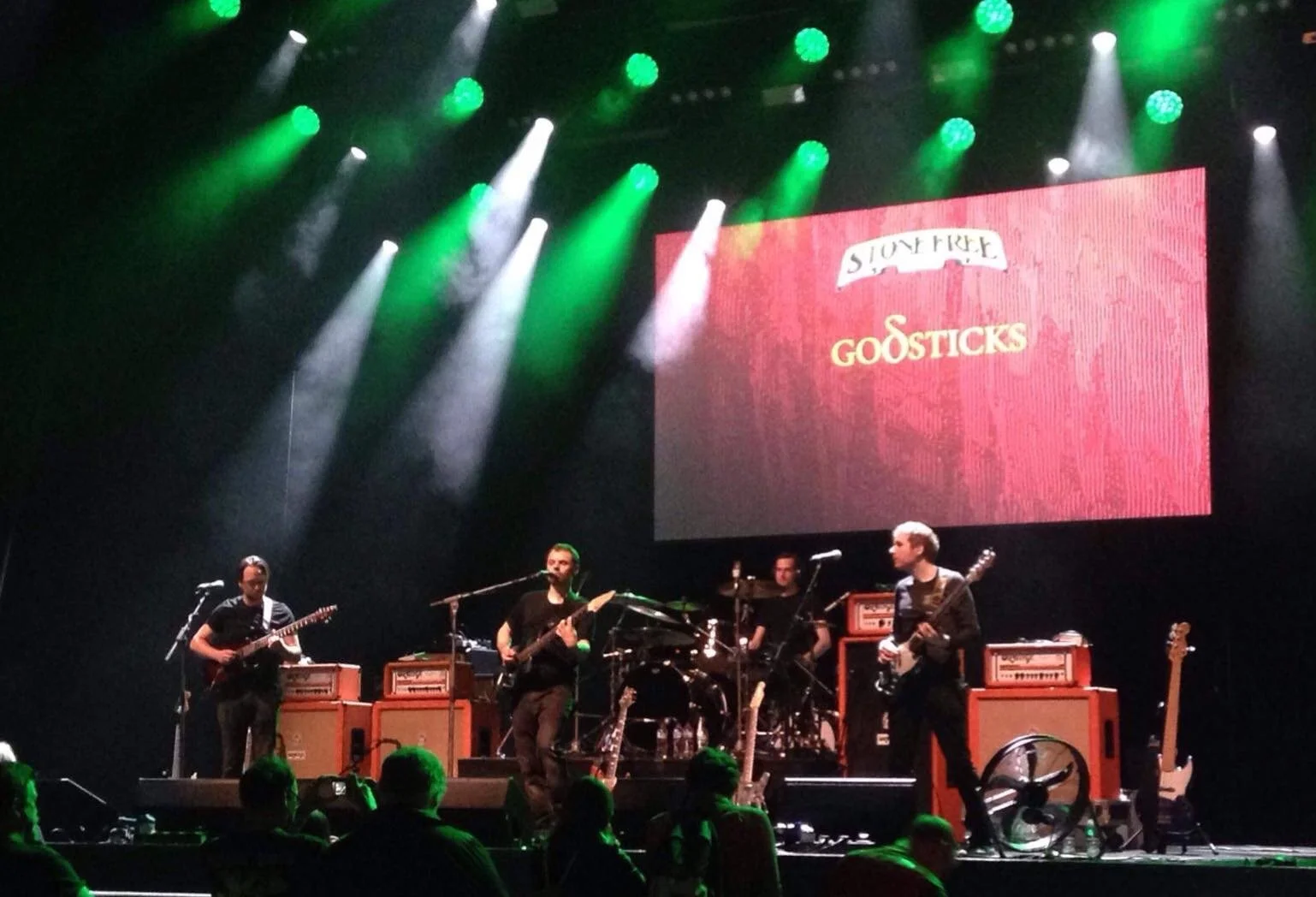
Godsticks live at Stone Free Festival London 2018 – Photo via Wikimedia Commons (CC BY-SA license)

A Leaner, Meaner Godsticks

For those who’ve followed the Newport, Wales outfit since their late-2000s beginnings, the trajectory has been clear: intricate progressive rock steadily mutating into something heavier, sharper, and more emotionally direct.

On VOiD, that evolution hits a new peak.

Produced by James Loughrey (known for work with bands like Def Leppard and Skindred) and mastered by Maor Appelbaum, the album benefits from a polished but punchy sonic framework. Drums tracked at the legendary Rockfield Studios only add to the record’s muscular feel.

But make no mistake—this isn’t about sheen. It’s about precision.

Into the Void: Themes of Disconnection and Defiance

At its core, VOiD is a reaction to the modern world’s increasingly polarised discourse. The band has spoken openly about the frustration of living in a culture defined by rigid binaries and ideological shouting matches.

Instead of leaning into confrontation, the album retreats inward.

It’s a record that explores isolation, introspection, and the uneasy balance between misanthropy and hope—largely channelled through frontman Darran Charles’ lyrical lens.

Tracks like “M.I.A” and “Hold Back” pulse with tension, pairing angular riffs with a sense of psychological unrest, while deeper cuts such as “Talking Through Walls” stretch the band’s progressive instincts without losing their newfound focus.

Precision Over Excess

What makes VOiD stand out isn’t just its heaviness—it’s how controlled everything feels. The songwriting process was reportedly “exacting and punishing,” with material reworked repeatedly in pursuit of emotional clarity.

That discipline shows.

There’s no indulgence here. No sprawling excess for its own sake. Instead, VOiD delivers a tightly wound 44-minute statement that hits hard and lingers longer. Critics have already noted how the band’s trademark aggression has been “levelled up,” pushing their sound into even more intense territory.

A Subtle Shift in the Machine

One of the more understated changes comes with the introduction of bassist Francis George—the band’s first line-up shift in over a decade. It’s not a dramatic overhaul, but there’s a noticeable shift in the rhythmic feel, adding nuance to an already formidable foundation.

Combined with the long-standing chemistry between Charles, Tom Price, and Gavin Bushell, the result is a band that sounds both reinvigorated and ruthlessly efficient.

Godsticks press photo – Photo by Eleanor Jane (courtesy of Kscope / Godsticks press)

The Verdict

VOiD isn’t just another entry in Godsticks’ catalogue—it’s a statement of intent.

Focused. Fierce. Uncompromising.

In a musical landscape often bloated with overproduction and underwritten ideas, Godsticks have done the opposite: cut the fat, sharpen the edges, and delivered one of the most direct and powerful records of their career.

And if this is what stepping into the void sounds like, it’s a place worth visiting—again and again.

Comment

Ripping Through the Highlands: Hellripper’s Thunderous “Coronach” Sets Blackened Thrash Aflame

When a fierce one‑man project like Hellripper crashes back into the metal fray, fans take note — and with Coronach, Scotland’s blackened thrash mercenary James McBain has delivered one of the year’s most invigorating metal statements.

Due for release on 27 March 2026 via Century Media Records, Coronach is Hellripper’s fourth studio album and arguably the most ambitious yet from the Aberdeen‑born speed metal veteran.

Ancestral Fury Meets Razor‑Edge Riffs

Hellripper has carved out a visceral niche in the extreme metal underground: lightning‑fast riffs, snarling blackened vocals, and intoxicatingly apocalyptic energy. What began in 2014 as McBain’s solo project has grown into a full‑on sonic assault — one that’s still rooted in the feral thrill of old school thrash and the occult mystique of black metal.

Coronach leans even deeper into McBain’s Scottish roots. A coronach itself is a traditional Highland funeral lament — a fitting metaphor for an album that feels like both a tribute and a dirge. From arcane folklore to battles carved in tartan and steel, the record’s eight tracks weave histories and horrors into a wholly immersive metal experience.

Tracks like the blistering opener “Hunderprest” — already unleashed alongside a live video — hit like a maelstrom, setting the tone with unrelenting velocity and atmosphere. Meanwhile, the title track melds melody and gravitas — balancing raw aggression with eerie, almost ritualistic hooks.

Epic Scope, Personal Vision

What’s thrilling about Coronach is how it expands Hellripper’s sonic palette while staying true to its core identity. McBain produced and mixed the album himself in Coronach Studios (Scotland) before it was mastered in the U.S., a testament to the DIY ethos that’s defined his career.

Throughout the album, McBain channels influences from thrash forebears like Metallica and Kreator to darker, atmospheric textures reminiscent of Watain or early Bathory. It’s a clever fusion: blistering speed and crushing weight, atmospheric dread and classic metal bravado — all wrapped in the unmistakable personality of Hellripper’s blackened thrash aesthetic.

The vinyl variants alone — from “Black Cuillin” to “Bean Nighe” editions — offer plenty of treasure for collectors and fans who like their metal packaged in both art and lore.

Legacy Riffs and Future Rituals

If recent fan reactions are anything to go by, Coronach might be the one that cements Hellripper’s cult status beyond the underground. Early reactions praise the record’s relentless pace, inventive songwriting, and genre‑hopping bravado. For many, this might be McBain’s best work yet — a true feast for followers of both blackened speed metal and technically adept thrash.

Whether you’re drawn in by folklore, enthralled by ferocious guitar work, or just here for the chaos, Coronach rips with stunning clarity — an album that’s equal parts homage and evolution. Hellripper isn’t just ripping through the blackened thrash canon… he’s redefining it.

Comment

John McLaughlin Unveils Soundscapes for Abandoned Heights — A Sonic Journey from Fusion to Film

John McLaughlin, the British jazz‑fusion guitar titan whose career spans over six decades, has released a deeply atmospheric new album titled Soundscapes for Abandoned Heights (sometimes referenced as Music for Abandoned Heights). This latest project — a dramatic, cinematic suite composed initially as a film score — solidifies his status not just as a guitarist’s guitarist, but as a storyteller in sound.

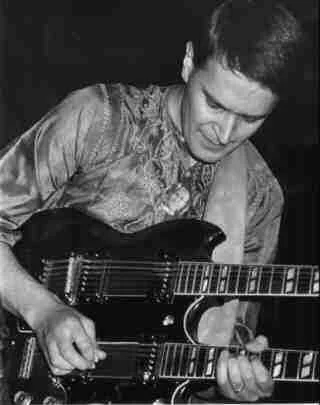
John McLaughlin performing at Zirkus Krone, Munich, Germany — June 1973. Public domain image from Wikimedia Commons.

A Legacy Meets a New Horizon

McLaughlin first rose to prominence in the late 1960s and early 1970s, playing with giants like Miles Davis before founding the genre‑defining Mahavishnu Orchestra, which fused jazz, rock, and world music in ways that reshaped modern music. Over the years, he’s collaborated with names from Carlos Santana to Paco de Lucía, always refusing to repeat himself.

What sets Soundscapes for Abandoned Heights apart is how it blends these instincts into a cinematic context. Rather than an album of standalone tracks, this is atmospheric writing: evocative, fluid, and rich in texture. The project reportedly emerged from McLaughlin’s work on a (still unreleased) film, with music shaped directly by narrative cues — a reminder of the composer’s lifelong ability to push into new forms of expression.

What Abandoned Heights Sounds Like

Critics and early listeners describe the album as a poignant blend of dense fusion motifs and open, cinematic spaces — an evocative departure from McLaughlin’s sometimes furious electrified legacy into something more reflective and dramatic. The ensemble features veteran players including Gary Husband, Julian Siegel, and dual bassists Misha Mullov‑Abbado and Etienne Mbappé — a setup that allows the music to breathe and shift organically between moods.

Tracks reportedly range from tense, ensemble‑driven pieces to quieter, introspective sound portraits. This isn’t simply guitar fireworks; it’s a composed world of feeling, one that speaks of narrative arcs rather than isolated solos.

McLaughlin Then & Now

It’s remarkable to consider that McLaughlin has maintained such continual evolution. From the incendiary energy of early Mahavishnu Orchestra fusion to this newest project’s cinematic elegance, his work remains rooted in curiosity and emotional exploration.

Even now, well into his 80s, he refuses to rest on laurels — instead, he reimagines them, crafting music that’s as challenging as it is rewarding.

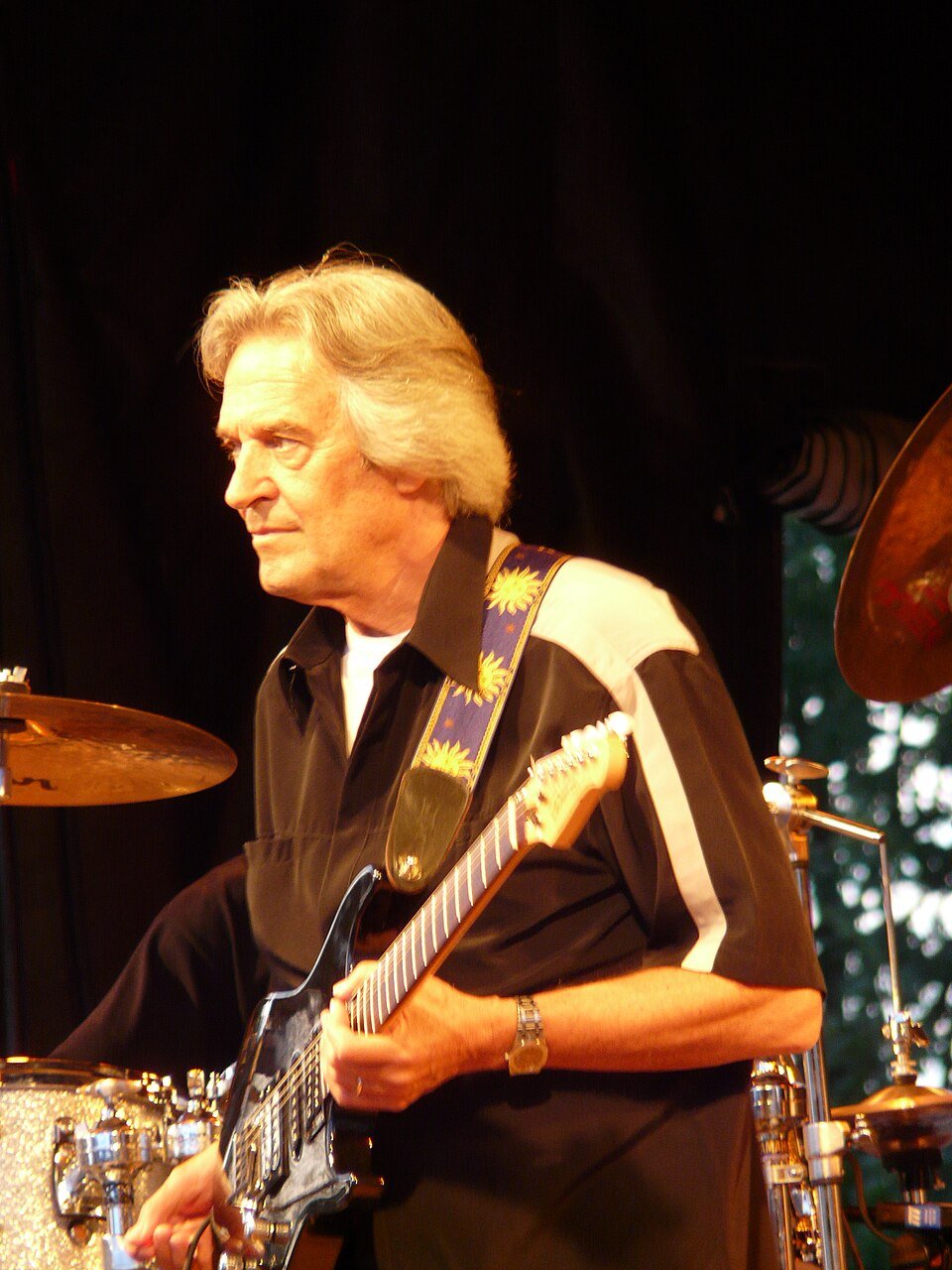
John McLaughlin performing live, Limburgerhof, Germany (2008). Licensed under Creative Commons Attribution‑ShareAlike 4.0 International.

Final Thought

Soundscapes for Abandoned Heights is more than a new release — it’s a reminder that John McLaughlin has never been content to look back. Instead, he keeps moving forward, always in search of the next musical horizon.

Comment

Comment

London’s Most Chaotic New Duo Are Turning Electro-Twee Into Something Gloriously Unhinged

If you’ve spent any time lurking around the weirder corners of the UK’s DIY pop underground lately, chances are you’ve already encountered The Femcels—and if you haven’t, consider this your warning shot.

Formed in London in 2024 by Rowan Miles and Gabriella Turton, the duo have quickly become one of the most talked-about new acts in the capital’s hyper-online music scene, fusing sugar-rush electro-pop with jagged, diaristic lyricism and a deliberately chaotic aesthetic.

Meet the internet’s strangest pop provocateurs

At first glance, the name alone feels like a bait post. The term “femcel”—short for “female involuntary celibate”—originates from online subcultures rooted in loneliness, self-image struggles, and internet-era identity crises.

But The Femcels aren’t here to manifesto—they’re here to mutate that language into something absurd, funny, and weirdly heartfelt.

The duo met online before forming the project in early 2024, quickly embedding themselves in a loose London scene orbiting artists like Bassvictim and Worldpeace DMT. Their debut album I Have to Get Hotter, released in January 2026, is less a polished statement and more like eavesdropping on two hyperactive minds bouncing off each other in real time.

Electro-twee, but make it feral

Trying to pin down their sound is half the fun. Critics have thrown around phrases like “electro-twee,” “glitchy pop,” and “lo-fi sitcom-core,” but none quite capture the full picture.

Their music pulls from an unlikely cocktail:

  • chiptune and electroclash textures

  • twee-pop sweetness

  • bratty spoken-word bursts

  • and a constant layer of irony that never fully cancels out sincerity

Recent coverage describes their work as “a chaotic and sincere blend” tackling everything from body image to social media neurosis and awkward romance.

Tracks veer wildly between cutesy hooks and deranged tangents, often within the same minute. One moment you’re in a pastel indie-pop daydream, the next you’re dropped into a stream-of-consciousness rant about coding, crushes, or existential cringe.

Turning insecurity into spectacle

What makes The Femcels compelling isn’t just the sound—it’s the perspective.

Their lyrics mine a very specific Gen Z emotional terrain:
hyper-awareness, self-deprecation, digital overstimulation, and the constant negotiation between irony and genuine feeling.

Pitchfork noted how their songs transform “insecurities into corny-giddy art,” leaning into awkwardness rather than smoothing it out.

There’s a sense that nothing is too embarrassing to say out loud—as long as you say it loudly enough, and maybe over a bouncy MIDI beat.

More than just a meme

It would be easy to dismiss The Femcels as another irony-poisoned internet band with a provocative name and a short shelf life. But that misses the point.

Yes, the project plays with aesthetics pulled from online subcultures. Yes, it thrives on chaos. But underneath the shitposting energy is something surprisingly traditional: two musicians building a shared language out of their influences, their friendship, and their very specific corner of modern life.

And crucially—they’re fun.

In a moment where so much indie music leans toward either polished detachment or confessional gloom, The Femcels sit in a rare middle ground: messy, hyper, emotionally exposed, and completely unafraid to get a little weird with it.

Verdict:
Erratic? Absolutely.
Overstimulating? Probably.
One of the most interesting new UK acts right now? Without a doubt.

Comment