
Comment

John McLaughlin Unveils Soundscapes for Abandoned Heights — A Sonic Journey from Fusion to Film

John McLaughlin, the British jazz‑fusion guitar titan whose career spans over six decades, has released a deeply atmospheric new album titled Soundscapes for Abandoned Heights (sometimes referenced as Music for Abandoned Heights). This latest project — a dramatic, cinematic suite composed initially as a film score — solidifies his status not just as a guitarist’s guitarist, but as a storyteller in sound.
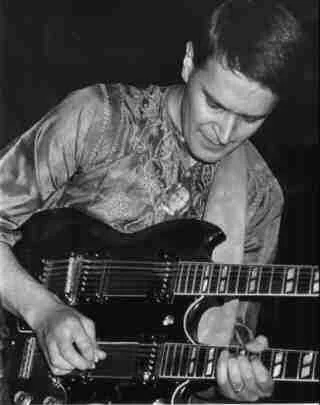
John McLaughlin performing at Zirkus Krone, Munich, Germany — June 1973. Public domain image from Wikimedia Commons.

A Legacy Meets a New Horizon

McLaughlin first rose to prominence in the late 1960s and early 1970s, playing with giants like Miles Davis before founding the genre‑defining Mahavishnu Orchestra, which fused jazz, rock, and world music in ways that reshaped modern music. Over the years, he’s collaborated with names from Carlos Santana to Paco de Lucía, always refusing to repeat himself.

What sets Soundscapes for Abandoned Heights apart is how it blends these instincts into a cinematic context. Rather than an album of standalone tracks, this is atmospheric writing: evocative, fluid, and rich in texture. The project reportedly emerged from McLaughlin’s work on a (still unreleased) film, with music shaped directly by narrative cues — a reminder of the composer’s lifelong ability to push into new forms of expression.

What Abandoned Heights Sounds Like

Critics and early listeners describe the album as a poignant blend of dense fusion motifs and open, cinematic spaces — an evocative departure from McLaughlin’s sometimes furious electrified legacy into something more reflective and dramatic. The ensemble features veteran players including Gary Husband, Julian Siegel, and dual bassists Misha Mullov‑Abbado and Etienne Mbappé — a setup that allows the music to breathe and shift organically between moods.

Tracks reportedly range from tense, ensemble‑driven pieces to quieter, introspective sound portraits. This isn’t simply guitar fireworks; it’s a composed world of feeling, one that speaks of narrative arcs rather than isolated solos.

McLaughlin Then & Now

It’s remarkable to consider that McLaughlin has maintained such continual evolution. From the incendiary energy of early Mahavishnu Orchestra fusion to this newest project’s cinematic elegance, his work remains rooted in curiosity and emotional exploration.

Even now, well into his 80s, he refuses to rest on laurels — instead, he reimagines them, crafting music that’s as challenging as it is rewarding.
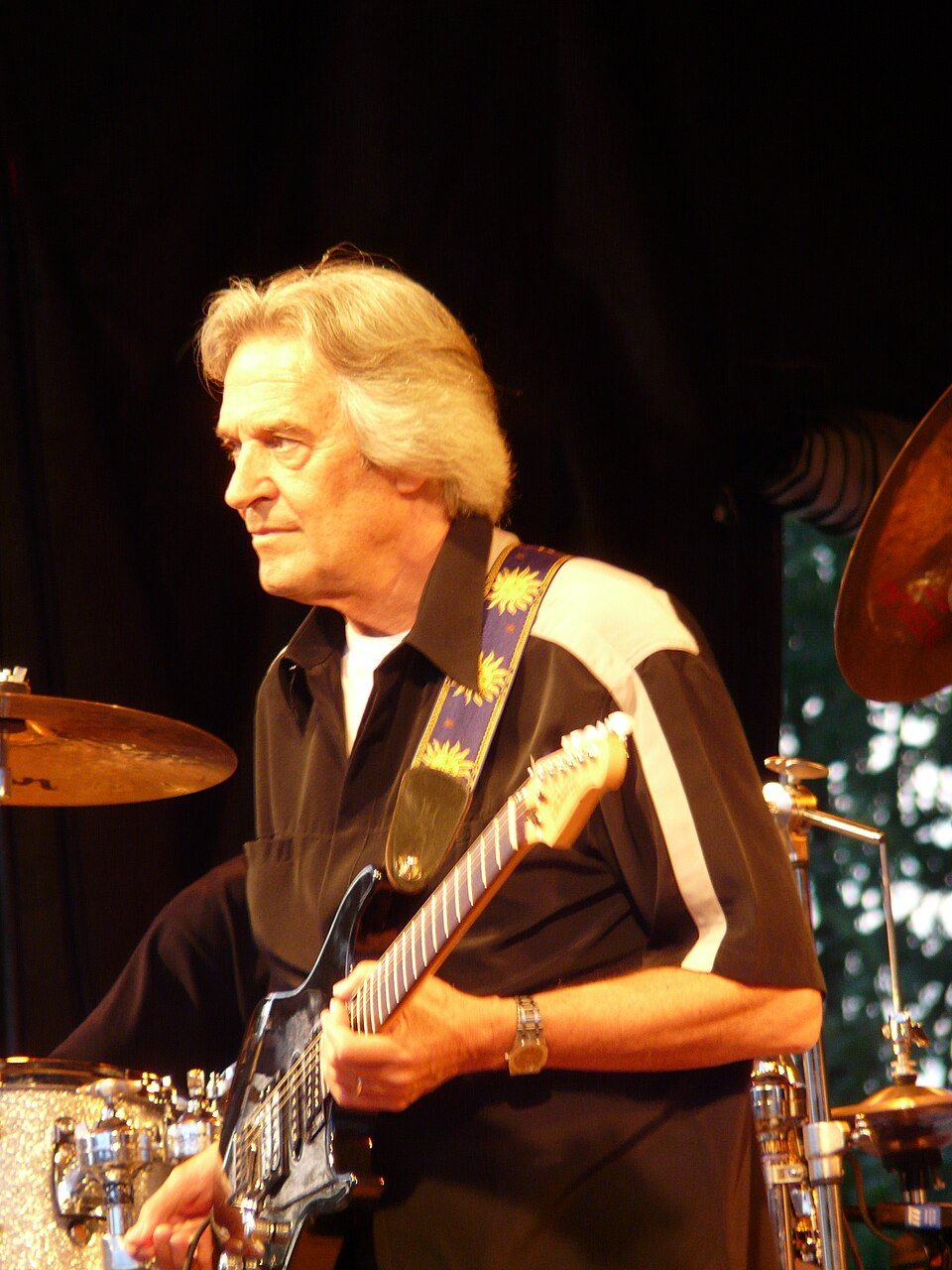
John McLaughlin performing live, Limburgerhof, Germany (2008). Licensed under Creative Commons Attribution‑ShareAlike 4.0 International.

Final Thought

Soundscapes for Abandoned Heights is more than a new release — it’s a reminder that John McLaughlin has never been content to look back. Instead, he keeps moving forward, always in search of the next musical horizon.
Comment

Comment

London’s Most Chaotic New Duo Are Turning Electro-Twee Into Something Gloriously Unhinged

If you’ve spent any time lurking around the weirder corners of the UK’s DIY pop underground lately, chances are you’ve already encountered The Femcels—and if you haven’t, consider this your warning shot.

Formed in London in 2024 by Rowan Miles and Gabriella Turton, the duo have quickly become one of the most talked-about new acts in the capital’s hyper-online music scene, fusing sugar-rush electro-pop with jagged, diaristic lyricism and a deliberately chaotic aesthetic.

Meet the internet’s strangest pop provocateurs

At first glance, the name alone feels like a bait post. The term “femcel”—short for “female involuntary celibate”—originates from online subcultures rooted in loneliness, self-image struggles, and internet-era identity crises.

But The Femcels aren’t here to manifesto—they’re here to mutate that language into something absurd, funny, and weirdly heartfelt.

The duo met online before forming the project in early 2024, quickly embedding themselves in a loose London scene orbiting artists like Bassvictim and Worldpeace DMT. Their debut album I Have to Get Hotter, released in January 2026, is less a polished statement and more like eavesdropping on two hyperactive minds bouncing off each other in real time.

Electro-twee, but make it feral

Trying to pin down their sound is half the fun. Critics have thrown around phrases like “electro-twee,” “glitchy pop,” and “lo-fi sitcom-core,” but none quite capture the full picture.

Their music pulls from an unlikely cocktail:

  • chiptune and electroclash textures

  • twee-pop sweetness

  • bratty spoken-word bursts

  • and a constant layer of irony that never fully cancels out sincerity

Recent coverage describes their work as “a chaotic and sincere blend” tackling everything from body image to social media neurosis and awkward romance.

Tracks veer wildly between cutesy hooks and deranged tangents, often within the same minute. One moment you’re in a pastel indie-pop daydream, the next you’re dropped into a stream-of-consciousness rant about coding, crushes, or existential cringe.

Turning insecurity into spectacle

What makes The Femcels compelling isn’t just the sound—it’s the perspective.

Their lyrics mine a very specific Gen Z emotional terrain:
hyper-awareness, self-deprecation, digital overstimulation, and the constant negotiation between irony and genuine feeling.

Pitchfork noted how their songs transform “insecurities into corny-giddy art,” leaning into awkwardness rather than smoothing it out.

There’s a sense that nothing is too embarrassing to say out loud—as long as you say it loudly enough, and maybe over a bouncy MIDI beat.

More than just a meme

It would be easy to dismiss The Femcels as another irony-poisoned internet band with a provocative name and a short shelf life. But that misses the point.

Yes, the project plays with aesthetics pulled from online subcultures. Yes, it thrives on chaos. But underneath the shitposting energy is something surprisingly traditional: two musicians building a shared language out of their influences, their friendship, and their very specific corner of modern life.

And crucially—they’re fun.

In a moment where so much indie music leans toward either polished detachment or confessional gloom, The Femcels sit in a rare middle ground: messy, hyper, emotionally exposed, and completely unafraid to get a little weird with it.

Verdict:
Erratic? Absolutely.
Overstimulating? Probably.
One of the most interesting new UK acts right now? Without a doubt.

Comment

Comment

Innings Festival 2026 Set Ablaze by Cage the Elephant

Under the desert night sky at Tempe Beach Park, Innings Festival 2026 delivered another stacked lineup—but it was Cage the Elephant who injected a jolt of raw, kinetic energy into the weekend that fans won’t soon forget.

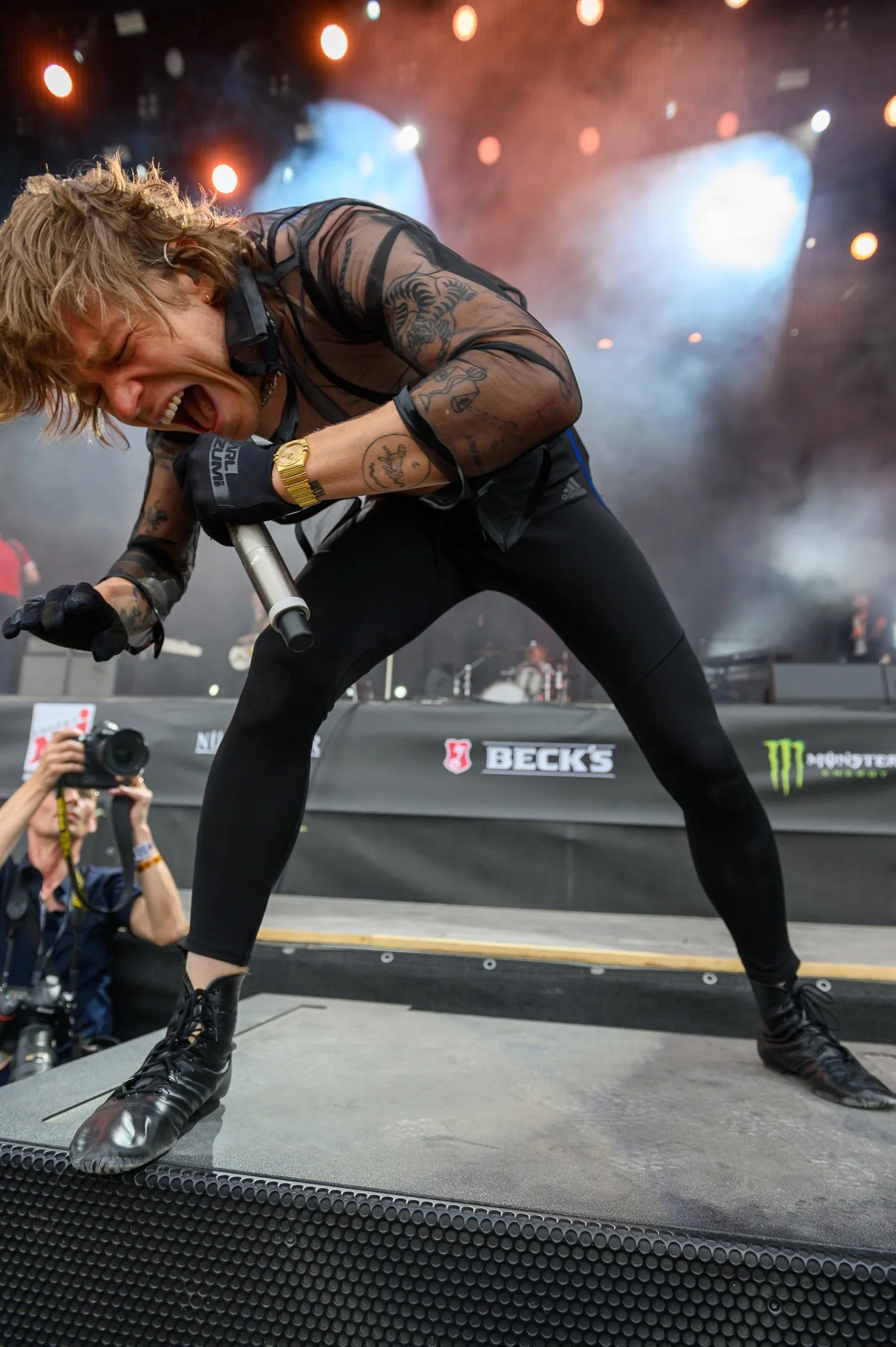
Matt Shultz performing with Cage the Elephant at Rock im Park 2019 - Photo by Stefan Brending (2eight), licensed under Creative Commons Attribution-ShareAlike 3.0 / 4.0 via Wikimedia Commons.

A Frenzied Entrance That Set the Tone

From the moment frontman Matt Shultz stormed the stage, it was clear this wouldn’t be a laid-back festival set. Opening with “Broken Boy,” the band wasted no time unleashing a wall of distorted guitars and pounding rhythm, backed by towering stage flames that framed Shultz’s theatrical presence.

Known for his unpredictable and high-octane performances, Shultz leaned fully into his reputation—darting across the stage, dancing with reckless abandon, and commanding the crowd with the kind of charisma that has long defined the band’s live shows.

The Setlist: Hits, Deep Cuts, and Festival Anthems

The band’s 75-minute, 18-song set pulled heavily from across their catalog, blending gritty fan favorites with radio staples. Tracks like “Cry Baby,” “Ready to Let Go,” and “Cold Cold Cold” kept the momentum surging, while “Trouble” offered a brief, melodic breather mid-set.

But it was the closing stretch that truly sealed the performance. As the opening riff of “Come a Little Closer” rang out, the crowd erupted—singing along to every word as the band delivered a finale built for festival euphoria.

A Festival Built for Big Moments

The 2026 edition of Innings Festival expanded to three days, blending music with baseball culture and drawing major acts like Mumford & Sons, Twenty One Pilots, and Blink-182 to its lineup.

Amid such heavy hitters, Cage the Elephant’s performance stood out not for spectacle alone, but for its visceral, unpolished edge—reminding everyone why they remain one of alternative rock’s most compelling live acts.

Matt Shultz live performance, Rock im Park 2019 — Photo by Stefan Brending (2eight), licensed under Creative Commons Attribution-ShareAlike 4.0 via Wikimedia Commons.

The Verdict

Festival sets can sometimes feel rushed or overly polished—but Cage the Elephant struck a different chord. Their Innings Festival appearance was loud, loose, and unapologetically alive.

It wasn’t just a performance—it was a reminder that, even on a massive stage, rock music still thrives on chaos, connection, and a frontman willing to risk everything for the moment.

Comment

Comment

YUNGBLUD Cracks America: A Defining Top 10 Moment for Modern Rock

If there was ever a question about whether rock music could still punch its way into the mainstream in 2025, YUNGBLUD just answered it—loudly.

The Doncaster-born disruptor (real name Dominic Harrison) has officially landed his first-ever U.S. Billboard Top 10 album, thanks to his explosive collaborative EP One More Time with rock legends Aerosmith. And it’s not just a chart milestone—it’s a cultural signal that guitar-driven chaos is far from dead.

A Transatlantic Breakthrough

Released in late 2025, One More Time didn’t just perform well—it stormed the charts, hitting the Top 10 on the Billboard 200 while also topping the Rock & Alternative Albums chart in the U.S.

For YUNGBLUD, this moment carries serious weight. While he’s long been a dominant force in the UK—scoring multiple No.1 albums including Idols in 2025—cracking America’s upper chart tier marks a whole new level of global impact.

Even more symbolic? He did it alongside one of the most iconic rock bands of all time.

Bridging Generations of Rock

On paper, a YUNGBLUD x Aerosmith collaboration might sound like a wild swing—but in practice, it’s a perfect storm.

The EP represents a collision of eras: the swaggering, bluesy DNA of Aerosmith meeting YUNGBLUD’s emotionally raw, genre-bending alt-rock. The result? A project that feels both nostalgic and forward-facing.

Critics have pointed out that the release “serves its purpose” as a tight, impactful collaboration—one that reinforces the idea that rock’s future might just belong to a new generation led by artists like YUNGBLUD.

And clearly, audiences are buying in.

More Than a Chart Position

This isn’t just about numbers—it’s about timing.

In recent years, UK artists have struggled to consistently break into global Top 10 charts, making YUNGBLUD’s achievement even more significant in the wider industry context.

At the same time, his rise has been anything but traditional. Built on a fiercely loyal fanbase, relentless touring, and a refusal to fit neatly into genre boxes, YUNGBLUD represents a new kind of rock star—one shaped as much by community as by radio play.

His 2025 run alone—festival headlines, major collaborations, and multiple chart-toppers—has positioned him as arguably the UK’s most visible modern rock export right now.

Rock Isn’t Dead—It’s Evolving

What makes this moment hit harder is what it represents: rock music adapting rather than fading.

Instead of chasing past formulas, YUNGBLUD leans into vulnerability, chaos, and hybrid sounds—pulling from punk, pop, and alternative influences. Pair that with Aerosmith’s legacy, and you get something that doesn’t just look backward—it reintroduces rock to a new generation.

And if a Top 10 U.S. debut is anything to go by, that generation is listening.

Final Thoughts

YUNGBLUD breaking into the U.S. Top 10 isn’t just a personal win—it’s a statement.

A statement that rock still matters.
A statement that new voices can carry old legacies forward.
And maybe most importantly—a statement that the genre still has something to say in 2026.

Comment

Comment

KATSEYE Embrace the Madness on Explosive New EP

There’s something fitting about a group built on global ambition choosing to dive headfirst into disorder—and coming out stronger for it. KATSEYE’s second EP Beautiful Chaos isn’t just a comeback; it’s a statement. Released on June 27, 2025, via HYBE x Geffen, the five-track project captures a group rapidly evolving in both sound and identity.

KATSEYE in 2024 — Photo by 티비텐 TV10 via Wikimedia Commons (CC BY 3.0)

A New Era: Louder, Bolder, Less Predictable

Following their 2024 debut EP SIS (Soft Is Strong), KATSEYE return with a sharper, more chaotic sonic palette—by design. The six-member group (Daniela, Lara, Manon, Megan, Sophia, and Yoonchae) lean into a genre-blurring mix of pop, R&B, hyperpop, and Latin influences, reflecting both their international makeup and their refusal to be boxed in.

Lead single “Gnarly” set the tone early—abrasive, polarizing, and impossible to ignore. It became their first entry on the Billboard Hot 100, signalling that risk-taking was already paying off.

Then comes “Gabriela,” a sultry, Latin-tinged track with a Spanish-language bridge, followed by “Gameboy,” a glossy, sugar-rush dance-pop moment that nods to early 2000s nostalgia.

But it’s “Mean Girls” that cuts deepest—an emotional R&B-leaning track that’s already being praised for its inclusive, empowering messaging—before closer “M.I.A.” pulls everything back into late-night club energy.

“Beautiful Chaos” Means Exactly That

The EP’s title isn’t subtle, and it isn’t meant to be. The project explores “celebrating confusion” and the messy overlap between digital life, identity, and growing up in the spotlight.

In interviews around the release, the group have been open about embracing mixed reactions—especially to “Gnarly.” Rather than playing it safe, they’ve leaned into unpredictability as a core part of their artistry, framing criticism as fuel rather than failure.

That attitude extends across the entire record: it’s experimental, occasionally divisive, but always intentional.

From Survival Show to Global Stage

KATSEYE’s rise has been anything but typical. Formed through a global audition process and documented in Popstar Academy, the group has quickly transformed from a reality-show experiment into a serious contender in the global pop space.

Beautiful Chaos reflects that growth. It debuted across multiple international charts—including top 10 placements in the US, South Korea, and parts of Europe—marking a major leap from their debut era.

And they didn’t stop there: the project launched a full Beautiful Chaos Tour later in 2025, bringing every track from the EP to life on stage.

Megan of KATSEYE in Seattle — Photo by David Lee via Wikimedia Commons (CC BY 4.0)

Controlled Chaos, or the Future of Pop?

Whether you hear Beautiful Chaos as daring innovation or genre overload probably depends on your tolerance for risk. Critics have been split—but even the skeptics agree on one thing: KATSEYE aren’t playing it safe.

In a pop landscape often driven by algorithms and predictability, that alone makes them worth watching.

Because if Beautiful Chaos proves anything, it’s this: KATSEYE are at their most compelling when things get messy.

Comment